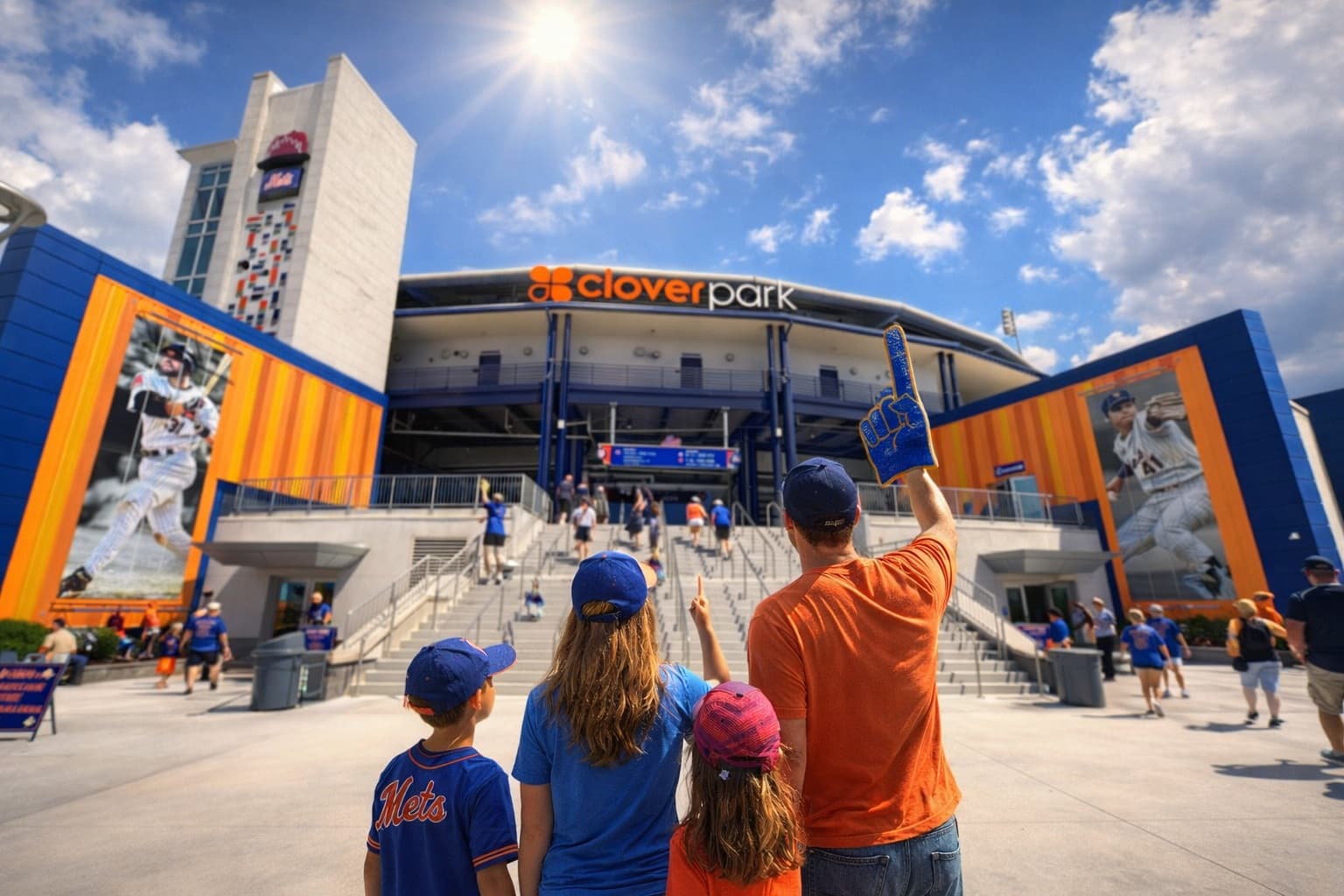
The Mets broke ground on a player development complex at Clover Park on February 18, 2026. The project is a substantial addition to their Port St. Lucie operations; follow team and city updates for construction milestones.
That by itself would matter. But the bigger signal is the combination of facts around it: the project is being fully funded by the Mets at roughly $60 million, it replaces development infrastructure that had fallen badly behind the modern game, and it sits inside a lease structure that could keep the franchise in Port St. Lucie through 2052.
Related reads
Keep going without starting from scratch.
Quick list
Quick take
- The Mets broke ground on the new complex on February 18, 2026
- The building is scheduled to open for Spring Training 2027
- The project is described as roughly $60 million and fully funded by the Mets
- The lease structure tied to the project could keep the club in Port St. Lucie through 2052
- This is as much a player-development and long-term-city-commitment story as it is a construction story
A Facility Built for the Modern Game
This project matters first because of what it replaces. Sports Business Journal reported that the Mets' minor league facilities in Port St. Lucie had remained largely unchanged since 1988, which is a clean way of saying the old setup no longer matched what player development operations require in 2026.
The replacement is designed around the full daily workflow of development, not just around giving players a place to dress and lift. In the club's official announcement, the planned features include a 7,000-square-foot weight room with a 1,500-square-foot cardio mezzanine, a 5,000-square-foot locker room with 180 lockers, a 1,300-square-foot training room, a 1,800-square-foot hydrotherapy area, six batting and pitching tunnels, and a 20,000-square-foot synthetic-turf agility field.
That is what modern development infrastructure looks like now. Teams increasingly treat strength work, recovery, nutrition, instruction, and training flow as one integrated system. The Mets' own project language leans hard into efficiency, recovery, and year-round support, which supports the broader inference that this building is meant to change daily development habits, not just refresh the visuals.
- Replaces development facilities that SBJ said had remained largely unchanged since 1988
- 55,000-square-foot complex centered on training, recovery, and daily workflow
- Includes major weight room, locker room, hydrotherapy, tunnels, and synthetic-turf field
- Built for integrated player development, not just spring occupancy
Why This Matters for the Mets
For the Mets, this is really a competitive infrastructure decision. In the official announcement, President of Baseball Operations David Stearns framed the facility as part of the organization's effort to become a premier player-development operation, with MLB.com also quoting him more directly that the project would help cement the Mets as a leading development organization.
That framing matters because it shifts the conversation away from the Mets as only a payroll-and-stars story. This project says the club wants the foundation underneath the major league roster to improve too. A stronger pipeline is not built only through scouting and draft picks. It is also built through the environments where prospects train, recover, and get coached every day.
The timing also fits a broader development push. MLB.com tied the Port St. Lucie project to the club's larger player-development plan, which also includes facility investment in the Dominican Republic. Read together, that suggests the Mets are trying to modernize development from the international pipeline through the domestic system.
- Best read as competitive infrastructure, not just construction
- David Stearns tied the project directly to the Mets' development goals
- Signals more attention to organizational depth, not only the major league roster
- Part of a broader development-upgrade pattern beyond Port St. Lucie alone
Local tip
Use the article for evergreen ideas and the newsletter for what is happening right now.
That combination gives you the best shot at finding something that fits the season, your schedule, and what is actually open or active this week.
Why This Matters for Port St. Lucie and St. Lucie County
For Port St. Lucie, the symbolic message is hard to miss. A privately funded roughly $60 million project says the Mets view the city as more than a temporary spring address. MLB.com reported that the lease structure connected to the agreement could keep the club in Port St. Lucie through 2052, which reinforces the city's place as a durable home for spring training and development work.
The local value is not only symbolic. The Mets' official release says the building is being designed with flexible spaces that can host community fundraisers, private gatherings, and organizational events throughout the year. Sports Business Journal described the same idea in more business terms: the project is meant to keep the facility useful beyond baseball operations alone.
That is an important detail because sports facilities create the most local value when they stay active outside a narrow seasonal window. If the complex truly becomes a year-round event-capable asset, its footprint in Port St. Lucie becomes bigger than spring camp tourism alone.
- Signals a deeper long-term Mets commitment to Port St. Lucie
- Lease structure could keep the team in the city through 2052
- Designed for year-round non-baseball uses as well as baseball operations
- Best local upside comes if the building stays active beyond spring training
The Project Also Reflects an Ownership Philosophy
One of the most notable facts in this story is who is paying. MLB.com reported that the approximately $60 million cost is being paid entirely by owner Steve Cohen, while the Mets' formal release says the project is fully funded by the club. That separates this complex from the bigger Clover Park renovation cycle completed earlier this decade, which MLB.com noted was largely publicly funded.
That private financing changes the tone of the project in two ways. First, it helps explain the compressed schedule. MLB.com described the buildout as moving at warp speed, with completion targeted for April 2027 so the facility is ready for the 2027 spring cycle. Second, it avoids the more familiar taxpayer-versus-team argument that often hangs over sports-infrastructure projects.
In that sense, the complex is not only a baseball asset. It is also a credibility signal from ownership that the less glamorous parts of winning, like prospect space, recovery, and development workflow, are worth real money too.
- Roughly $60 million fully funded by the Mets, not a new public-funding ask
- Private funding helps explain the aggressive Spring Training 2027 target
- Different political and civic dynamic from the earlier publicly backed park renovations
- Shows ownership willingness to invest in back-end baseball infrastructure
What to Watch Next
Between now and Spring Training 2027, the real question is not whether the building will look better than the old one. It will. The more important question is whether better infrastructure translates into better player outcomes over time.
The ingredients are there: larger training space, upgraded recovery resources, integrated support areas, and a long-term commitment to keeping development anchored in Port St. Lucie. What follows will determine whether this becomes merely a nicer facility or a genuine competitive advantage.
Even before the first workout happens inside it, though, the broader message is already clear. The Mets are treating player development as core infrastructure, not background support, and Port St. Lucie is where they are making that investment visible.
- The building itself is only the first step
- The real test is whether development outcomes improve
- The signal value is already strong even before opening day
- Port St. Lucie remains central to the Mets' future planning
FAQ
Common questions
When will the new Mets player development complex in Port St. Lucie open?
The Mets say the new Player Development Complex at Clover Park is scheduled to open for Spring Training 2027, with MLB.com also describing completion as targeted for April 2027.
How much is the new Mets Port St. Lucie complex expected to cost?
MLB.com reported the investment at roughly $60 million and said it is being fully funded by the Mets and owner Steve Cohen.
Could the Mets stay in Port St. Lucie long term because of this project?
Yes. MLB.com reported that the lease structure tied to the project could keep the Mets in Port St. Lucie through 2052, which is one of the clearest long-term signals attached to the investment.
Sources
Reference links
Written by
Derek Brumby
We publish Treasure Coast guides for residents, newcomers, and weekend planners. Our goal is to combine local context, linked source material, and ongoing page updates so a reader can act on the guide instead of just skim it.
Derek Brumby is the sole author and editor. On The Treasure Coast is owned and published by Brumby LLC.
Research and updates
Last verified March 14, 2026
This guide was written and edited by Derek Brumby using linked local and official sources, then reviewed for Treasure Coast planning context.