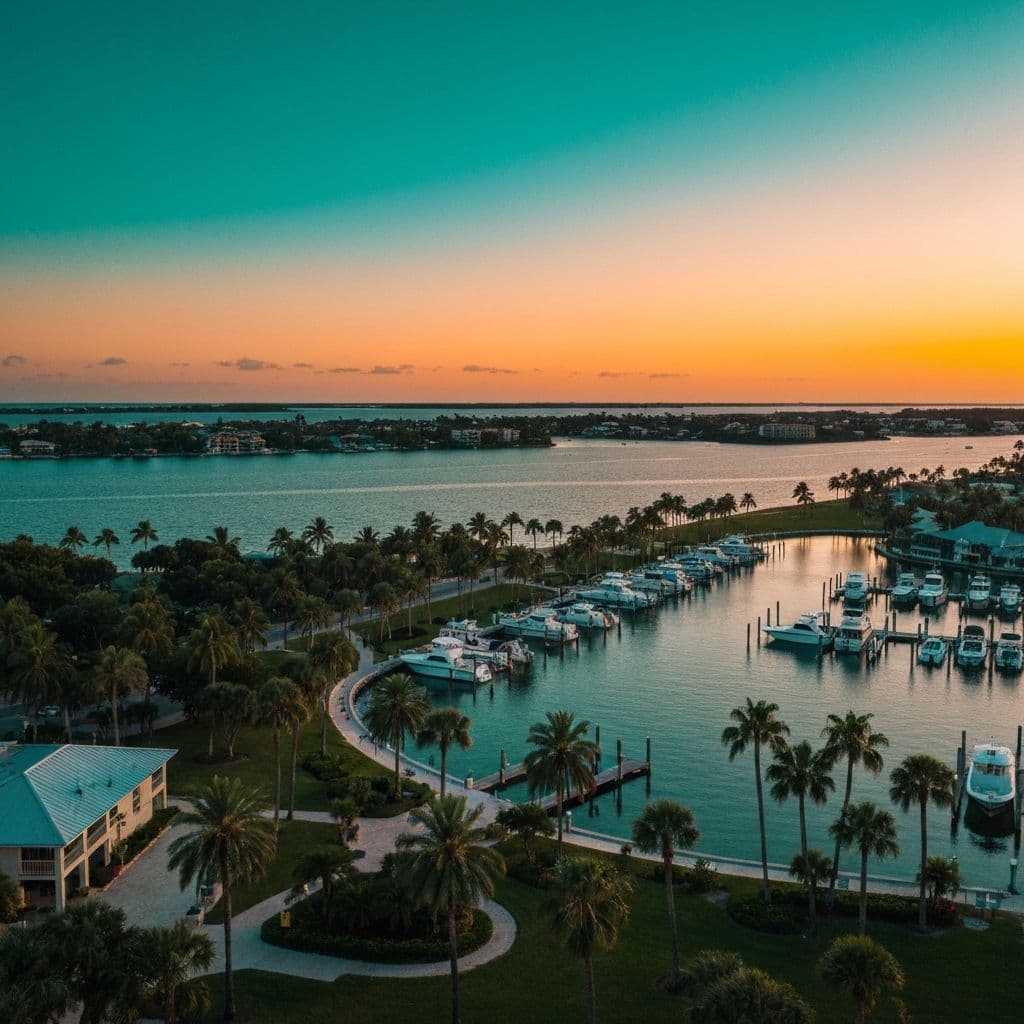
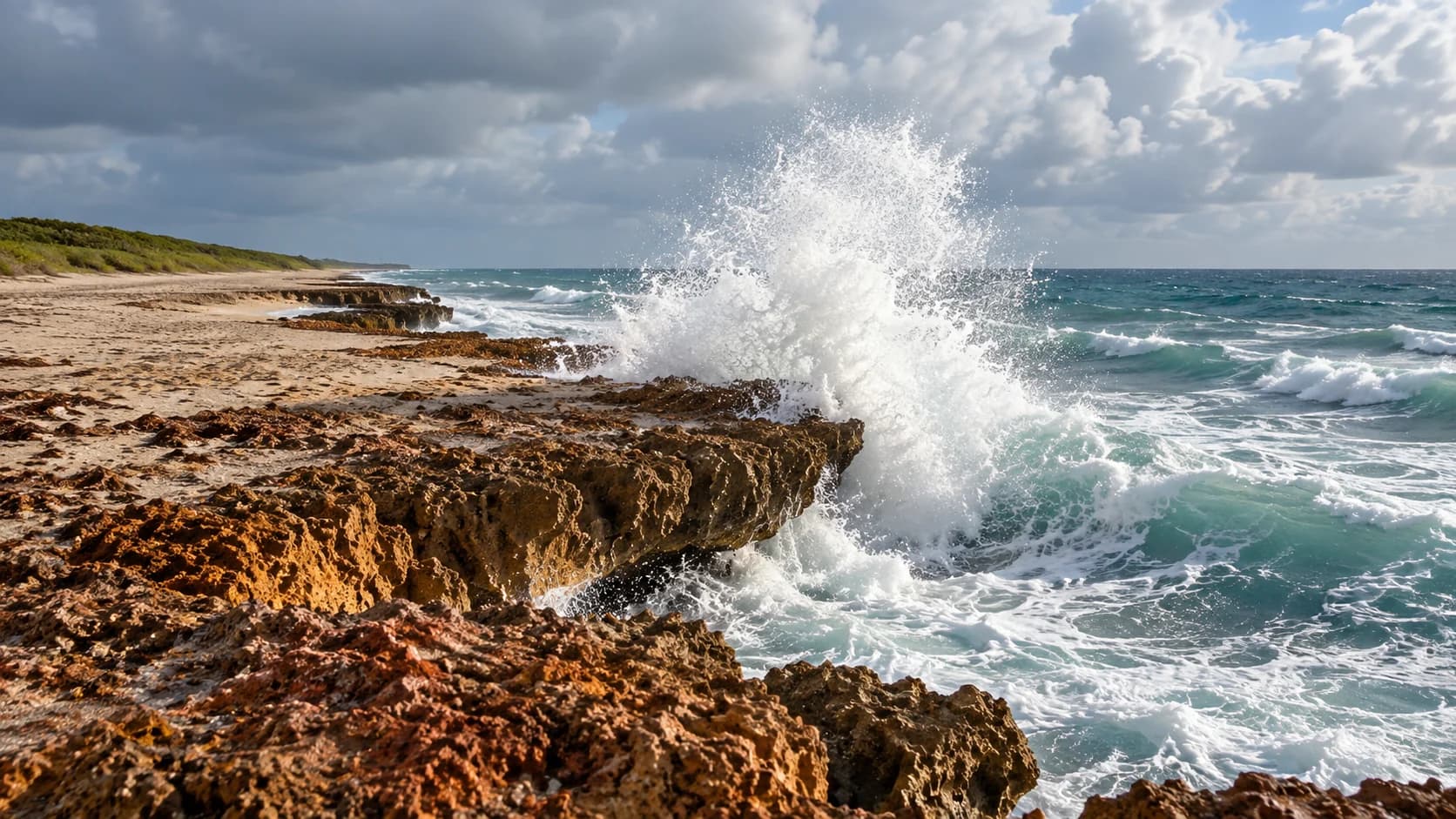
Blowing Rocks Preserve is one of those rare Florida places that feels more like a geological event than a beach stop. Set on Jupiter Island in Hobe Sound, the 73-acre preserve is protected by The Nature Conservancy and is known for its rocky Anastasia limestone shoreline, the largest of its kind on the Atlantic coast. On rough days at high tide, incoming waves can blast seawater through the rock and send spray high into the air.
The preserve works best when you understand that it delivers two very different experiences depending on the conditions. Winter tends to bring rougher seas and the famous blowing action. Summer is usually calmer and clearer, which makes the preserve better for swimming and snorkeling. The right visit depends less on the calendar than on your goal.
Related reads
Keep going without starting from scratch.
Quick list
Best ways to use Blowing Rocks Preserve
- Best for dramatic wave action: rough days at high tide in cooler months
- Best for swimming and snorkeling: calmer summer water
- Best first-visit plan: dune trail, beach timing, then boardwalk and lagoon side
- Best planning habit: check both the preserve page and tide schedule before leaving
What Makes Blowing Rocks Preserve Special
The preserve's biggest draw is that it does not feel like a standard Florida beach. The Nature Conservancy still describes the shoreline as Anastasia limestone, also known as coquina, and its companion geology page explains that the rock is made largely of shell fragments, coral material, fossils, and sand. The shoreline is full of solution pipes, notches, caves, abrasion platforms, and blow holes, which is why the place feels more like a natural stone sculpture garden than a normal stretch of sand.
That geology is also what makes the preserve visually memorable. The same rocky shelf that creates the dramatic blow effect in rough conditions also creates a completely different mood on calmer days, when the shoreline feels more like an exposed living reef edge than a surf overlook.
- Largest exposed Anastasia limestone shoreline on the Atlantic coast
- Feels more geological than beachy
- Best for visitors who want a distinctive coastal landscape, not just sand
- One of Florida's most unusual shoreline experiences
When to Go Depends on What You Want to See
The preserve itself says the best chance to see the rocks blow is on a day with rough seas at high tide. The key is that preserve hours do not shift with the tide, so both conditions need to line up. If you want the dramatic wave action, look for rougher weather and a high tide that falls within open hours.
That does not make low tide or calmer days a mistake. Low tide exposes more of the rock and makes the formations easier to study, while summer's calmer, clearer water makes swimming and snorkeling far more realistic. This is one of the few Treasure Coast stops where a gentle day and a rough day are both rewarding for completely different reasons.
- Rough seas plus high tide give the best chance to see the rocks blow
- Winter tends to be better for wave drama
- Summer is usually better for swimming and snorkeling
- Low tide is still useful for studying the rock shelf and shoreline detail
Local tip
Use the article for evergreen ideas and the newsletter for what is happening right now.
That combination gives you the best shot at finding something that fits the season, your schedule, and what is actually open or active this week.
It Is More Than a Beach Staircase
Blowing Rocks is more than a lookout point. The Nature Conservancy says the preserve features five short trails and scenic walks, including the Beach Trail, Dune Trail, Mangrove Boardwalk, and Lagoon Trail. Visitors can also swim and snorkel when conditions are calm, contribute wildlife observations through iNaturalist, and use the Chronolog station on the dune trail to help document shoreline change over time.
That makes the preserve much more useful than a quick photo stop. A first visit can easily turn into a half-day if you treat the Atlantic side and lagoon side as two separate experiences instead of walking straight to the beach and leaving.
- Beach Trail: shortest direct access route
- Dune Trail: best elevated coastal views
- Mangrove Boardwalk: accessible lagoon-side boardwalk
- Lagoon Trail: quieter inland loop with Indian River Lagoon views
Wildlife Is a Major Reason the Preserve Matters
The preserve is not only about geology. The Nature Conservancy says the shoreline provides nesting habitat for leatherback, loggerhead, and green sea turtles, and that the beach sees around 1,000 sea turtle nests annually. The same rock features that make the coast memorable can also create challenges for hatchlings, which is why staff and volunteers are involved in rescue efforts during nesting season.
For visitors, the rule is simple: treat the preserve as wildlife habitat first and a scenic stop second. Keep your distance from animals, avoid disturbing nests or hatchlings, and follow the preserve's own guidance about filling holes and flattening sandcastles before leaving so the beach is safer for sea turtles.
- Important nesting habitat for leatherback, loggerhead, and green sea turtles
- Strong wildlife value beyond the rock formations
- Best reminder that the preserve is habitat, not just scenery
- Small visitor behaviors can meaningfully affect turtle safety
Hours, Parking, Rules, and One Important Current Caveat
The preserve's standard public hours are currently listed as seven days a week from 9 a.m. to 4:30 p.m., with last entry at 4:15 p.m. The preserve also says it is closed on Easter Sunday, Thanksgiving Day, Christmas Eve, Christmas Day, and New Year's Day. Parking is free, but limited, and The Nature Conservancy warns that lots often fill by late morning on busy weekends and holidays. The closest overflow parking is at Coral Cove Beach Park about a mile south.
The Nature Conservancy currently lists Blowing Rocks Preserve as open to the public from 9 a.m. to 4:30 p.m., with last entry at 4:15 p.m. It closes on several holidays and can close for weather, so check its visitor page on the day you go. Pets and street parking are not permitted.
- Standard hours listed: 9 a.m. to 4:30 p.m., last entry 4:15 p.m.
- Parking is free but often fills by late morning on busy days
- Coral Cove Beach Park is the nearest overflow option
- Check the live preserve page before leaving because a closure notice is currently posted
A Good First Visit Is Simple
The smartest first visit is straightforward: arrive early, walk the Dune Trail for elevated views, head to the beach if high tide and rough surf line up with your timing, then circle back through the Mangrove Boardwalk and Lagoon Trail for a quieter Indian River Lagoon-side finish. If the ocean is calm, bring snorkel gear. If the sea is active, focus on the overlook and the rock formations instead of forcing a water day.
That flexibility is a big part of the preserve's appeal. Blowing Rocks rewards visitors who treat it less like a checklist stop and more like a living coastline that changes by weather, season, and tide.
- Arrive early for the best parking odds
- Use the Dune Trail first for context and elevated views
- Choose beach time or lagoon-side time based on surf conditions
- Best first-time mindset: adapt to the preserve, do not force one fixed plan
Bottom Line
Blowing Rocks Preserve is one of Florida's most distinctive coastal experiences, not because it is polished or heavily built out, but because it still feels wild. It offers rare geology, short but rewarding trails, strong wildlife value, and a natural spectacle that you cannot reliably script on command.
Check the preserve page and the current tide schedule before you go, and you will give yourself the best chance of seeing why this shoreline remains one of the state's most memorable nature stops.
- One of Florida's most distinctive preserved shorelines
- Best when timed to conditions rather than treated as a generic beach stop
- Strong mix of geology, wildlife, and short-walk accessibility
- A must-know Martin County nature stop
FAQ
Common questions
When is the best time to see the rocks blow at Blowing Rocks Preserve?
Your best chance is on a day with rough seas at high tide. The preserve's own page says both factors matter, and its hours do not change to match the tide.
Can you swim or snorkel at Blowing Rocks Preserve?
Yes, when conditions are calm. The Nature Conservancy says visitors can swim and snorkel there, but there is no lifeguard, so ocean conditions deserve caution.
Is Blowing Rocks Preserve open every day?
The Nature Conservancy currently lists the preserve as open daily from 9 a.m. to 4:30 p.m., with last entry at 4:15 p.m. Check its page for weather and holiday closures before leaving.
Sources
Reference links
Written by
Derek Brumby
We publish Treasure Coast guides for residents, newcomers, and weekend planners. Our goal is to combine local context, linked source material, and ongoing page updates so a reader can act on the guide instead of just skim it.
Derek Brumby is the sole author and editor. On The Treasure Coast is owned and published by Brumby LLC.
Research and updates
Last verified September 29, 2026
This guide was written and edited by Derek Brumby using linked local and official sources, then reviewed for Treasure Coast planning context.