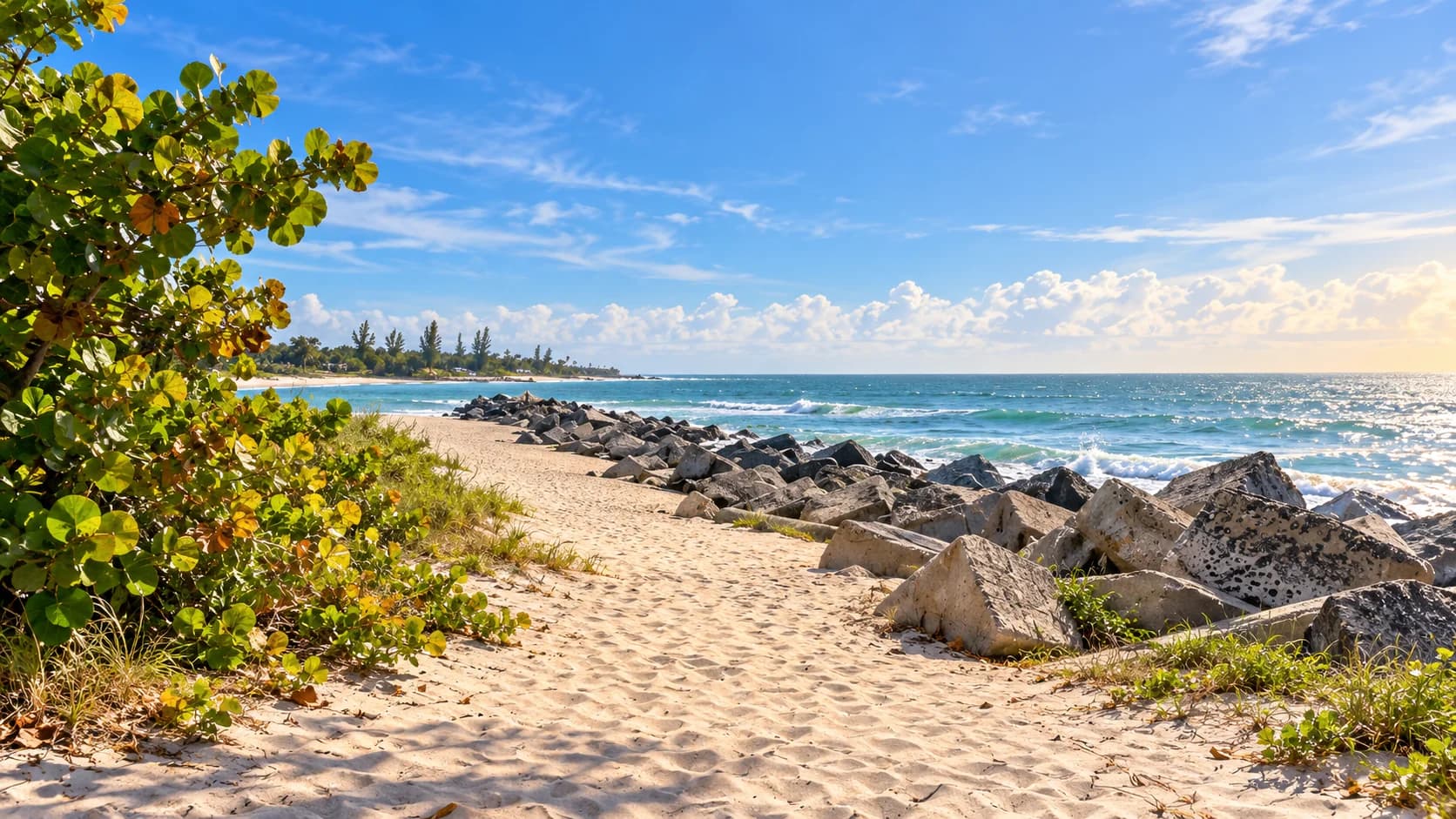
Treasure Coast beaches, lagoon, and coastal communities

Regional Basics

What Is the Treasure Coast? Cities, Counties, Map, and What It's Known For

A practical explainer on Florida's Treasure Coast, including which counties and cities are usually included, why some maps show three counties and others show four, and what the region is best known for.

9 min readWritten by Derek BrumbyLast verified March 13, 2026Publisher review: Brumby LLC

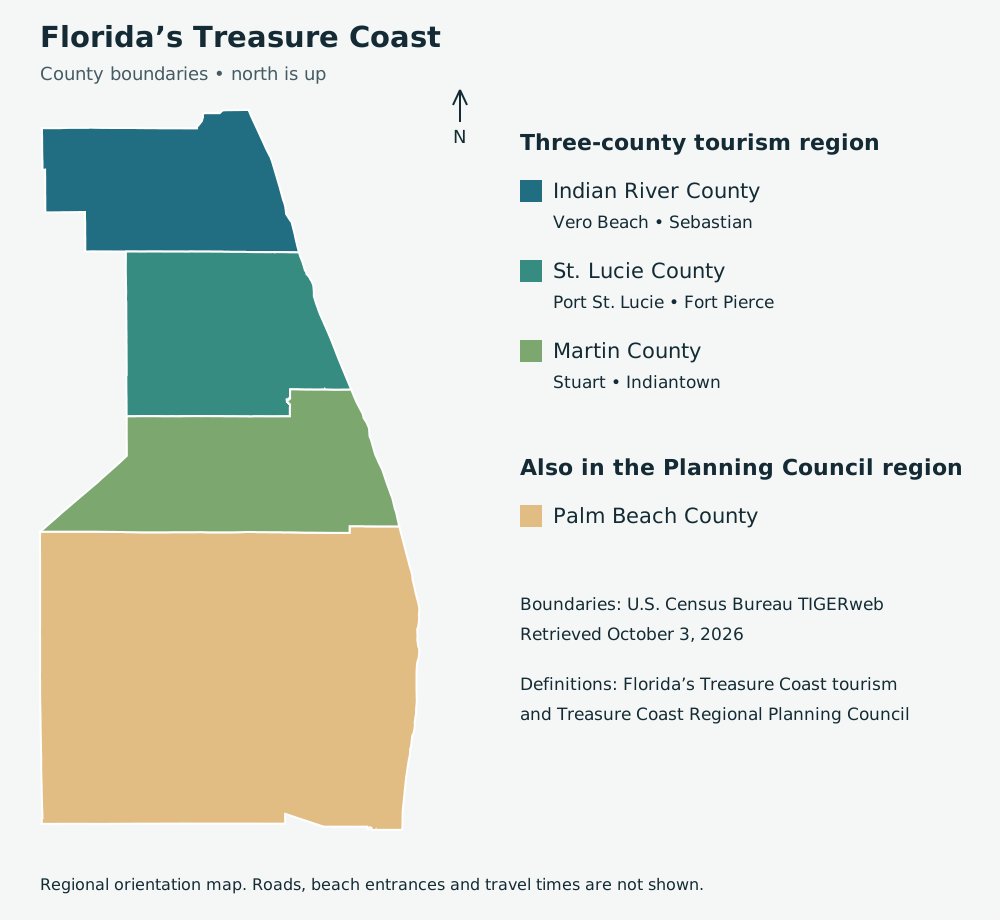
Florida's Treasure Coast is one of those regional names people recognize immediately while defining a little differently depending on whether they mean tourism, geography, or state planning. In everyday use, the Treasure Coast usually means the three-county Atlantic stretch made up of Indian River, St. Lucie, and Martin counties.

In state-planning language, though, the Treasure Coast Regional Planning Council district is broader and includes Palm Beach County too. That is why some maps show three counties and others show four. The difference is not random. It depends on which system the source is using.

Related reads

Keep going without starting from scratch.

Quick list

Quick answer

  • Most people mean Indian River, St. Lucie, and Martin counties when they say Treasure Coast
  • In one important state-planning context, Palm Beach County is also included
  • The biggest headline cities are Vero Beach, Sebastian, Fort Pierce, Port St. Lucie, and Stuart
  • The region is best known for the 1715 treasure-fleet history, uncrowded Atlantic beaches, the Indian River Lagoon, fishing, boating, and quieter coastal towns
  • The three-county versus four-county difference is a definition issue, not a mistake

The Short Answer

Most people mean the three-county coastal region when they say Treasure Coast. In ordinary travel, relocation, and local-lifestyle language, that usually means Indian River County in the north, St. Lucie County in the middle, and Martin County in the south.

That everyday version of the Treasure Coast is anchored by places like Vero Beach and Sebastian in Indian River County, Fort Pierce and Port St. Lucie in St. Lucie County, and Stuart, Jensen Beach, and Hobe Sound in Martin County.

Regional tourism sources describe the area as a quieter, less built-up Atlantic coast with more than 60 miles of beaches and a strong mix of nature, water access, and small-town character.

Where Is the Treasure Coast on a Map?

On a Florida map, the Treasure Coast sits on the Atlantic side of the peninsula, with barrier-island beaches facing the ocean and mainland communities closely tied to lagoons, rivers, and inlets.

One of the region's defining geographic features is the Indian River Lagoon, a 156-mile estuary that stretches along about 40 percent of Florida's east coast and supports more than 4,300 species connected to its ecosystem. That lagoon is one of the main reasons the region feels like a water-first landscape rather than just a string of beach towns.

The simplest way to picture the commonly used map is Indian River County in the north, St. Lucie County in the middle, and Martin County in the south. If you are looking at a state regional-planning map instead, add Palm Beach County on the southern end.

Local tip

Use the article for evergreen ideas and the newsletter for what is happening right now.

That combination gives you the best shot at finding something that fits the season, your schedule, and what is actually open or active this week.

By subscribing, you agree to receive email updates from On The Treasure Coast. Unsubscribe anytime.

Treasure Coast Counties and Main Cities

Indian River County is best known for Vero Beach, Sebastian, and Fellsmere. Official tourism materials position those communities together and lean heavily into beaches, ecotourism, Pelican Island, arts, and history tied to shipwrecks and old Florida landscapes.

St. Lucie County is centered on Fort Pierce and Port St. Lucie, with St. Lucie Village and Hutchinson Island communities also part of the local identity. The county itself notes that Fort Pierce is the county seat and Port St. Lucie is the largest city.

Martin County is anchored by Stuart but is also strongly associated with Jensen Beach, Hobe Sound, Indiantown, Palm City, Port Salerno, Rio, and Sewall's Point. Martin County tourism leans into a naturally quaint identity shaped by preserved land, beaches, and water recreation.

So if someone asks what cities are on the Treasure Coast, the headline answer is usually Vero Beach, Sebastian, Fort Pierce, Port St. Lucie, and Stuart, with places like Jensen Beach, Hobe Sound, Fellsmere, and Indiantown included in broader local usage.

  • Indian River County: Vero Beach, Sebastian, Fellsmere
  • St. Lucie County: Fort Pierce, Port St. Lucie, St. Lucie Village
  • Martin County: Stuart, Jensen Beach, Hobe Sound, Palm City, Indiantown, Port Salerno

Why Is It Called the Treasure Coast?

The name comes from the region's connection to the 1715 Spanish treasure fleet wrecks off Florida's east coast. Local history sources describe Spanish treasure ships driven ashore by a hurricane, scattering gold, silver, and other cargo offshore and along the beaches.

That shipwreck history is still central to the region's identity, especially around Sebastian Inlet and the McLarty Treasure Museum area. It is not just branding. The story still shapes museums, beachcombing lore, heritage markers, and the region's modern name recognition.

What the Treasure Coast Is Known For

The Treasure Coast is best known for beaches that feel quieter and less built up than larger South Florida markets, but that is only part of the story. The region also stands out for treasure-fleet history, shipwreck culture, and the water-heavy geography created by the Indian River Lagoon.

Fishing, boating, and inlet culture are core parts of the regional identity. Martin County still leans into the Sailfish Capital of the World branding, St. Lucie markets world-class fishing and coastal access, and Sebastian is widely promoted as a fishing-village and inlet gateway.

The region also has stronger cultural assets than outsiders sometimes assume. Vero Beach is a serious arts anchor, Fort Pierce brings a historic downtown and culture layer, and Port St. Lucie adds the region's newer suburban-growth side along with Mets spring training at Clover Park.

A final defining feature is the conservation footprint. Martin County emphasizes more than 100,000 acres of park and conservation land, Indian River County promotes major habitat and eco-tourism assets, and the broader region still feels shaped by outdoor quiet in a way denser parts of Florida's Atlantic coast often do not.

So, Is Palm Beach Part of the Treasure Coast or Not?

For travel, relocation, and local-lifestyle conversations, the safest answer is usually no. Most people are talking about Indian River, St. Lucie, and Martin counties when they say Treasure Coast.

For state planning and regional-government purposes, the answer can be yes. Florida law places Palm Beach County inside the Treasure Coast Regional Planning Council district, which is why some more official maps and institutional references use a four-county version instead of the more common three-county tourism version.

Once you know which definition a source is using, the confusion usually disappears.

Bottom Line

The Treasure Coast is Florida's historic beach-and-lagoon corridor best known for Vero Beach, Sebastian, Fort Pierce, Port St. Lucie, Stuart, and their neighboring communities. It is famous for 1715 treasure-ship history, uncrowded Atlantic beaches, the Indian River Lagoon, fishing and boating, wildlife refuges, and a quieter coastal identity than the bigger metro stretches farther south.

In common use, it is a three-county region. In one important state-planning context, it is a four-county region that includes Palm Beach. That is the cleanest way to explain both versions without pretending one of them is fake.

FAQ

Common questions

What counties are on the Treasure Coast?

In everyday use, the Treasure Coast usually means Indian River, St. Lucie, and Martin counties. In the Treasure Coast Regional Planning Council district, Palm Beach County is also included.

What are the main cities on the Treasure Coast?

The headline Treasure Coast cities are usually Vero Beach, Sebastian, Fort Pierce, Port St. Lucie, and Stuart, with places like Jensen Beach, Hobe Sound, Fellsmere, and Indiantown often included in broader local usage.

Why is it called the Treasure Coast?

The name comes from the 1715 Spanish treasure fleet wrecks off Florida's east coast. That history still shapes the region's identity, especially around Sebastian Inlet and related museums and heritage sites.

Sources

Reference links

Written by

Derek Brumby

We publish Treasure Coast guides for residents, newcomers, and weekend planners. Our goal is to combine local context, linked source material, and ongoing page updates so a reader can act on the guide instead of just skim it.

Derek Brumby is currently the sole author and editor. Publisher review is handled by Brumby LLC, the company that owns and operates On The Treasure Coast.

Research and updates

Last verified March 13, 2026

This guide was written and edited by Derek Brumby using linked local and official sources, then reviewed for Treasure Coast planning context.

Keep exploring

Related Treasure Coast guides

Hidden Gems

Real Hidden Gems on the Treasure Coast

The Treasure Coast's most rewarding hidden gems, from Blowing Rocks Preserve and Delaplane Preserve to McLarty Treasure Museum, Donald B. Moore Preserve, and quieter riverfront nature walks in Port St. Lucie.

Read guide

Weekend Guide

Treasure Coast Weekend Guide: How to Build a Better Two-Day Plan

A practical two-day Treasure Coast weekend guide built around better pacing, north-vs-south clustering, indoor anchors, and walkable waterfront districts across Indian River, St. Lucie, and Martin counties.

Read guide

Restaurants

Best Restaurants on Florida's Treasure Coast

A practical guide to the best restaurants on Florida's Treasure Coast, including Ocean Grill, The Tides, Citrus, 12A Buoy, Kyle G's, Oak & Ember, Riverwalk Cafe, 11 Maple, Dolphin Bar, and The Grove.

Read guide

Events

Treasure Coast Events Worth Planning Around

A guide to the Treasure Coast's most trip-worthy annual events, from the Fellsmere Frog Leg Festival and ArtsFest to the Highwaymen festival, Zora Experience, Under the Oaks, and the Stuart Air Show.

Read guide

Regional Basics

Treasure Coast Cities List: Which Towns Are on Florida's Treasure Coast?

A practical list of the incorporated cities, towns, and villages on Florida's Treasure Coast, plus the broader community names travelers often mean when they ask about Treasure Coast towns.

Read guide

Things to Do

Best Indoor Things to Do in the Treasure Coast

When Florida weather gets too hot, too rainy, or too unpredictable, the Treasure Coast still delivers. This stretch of Southeast Florida includes Martin, St. Lucie, and Indian River counties, so you have a broad mix of indoor attractions ranging from hands-on marine centers and children’s museums to art museums, live theater, and large-scale entertainment venues.

Read guide