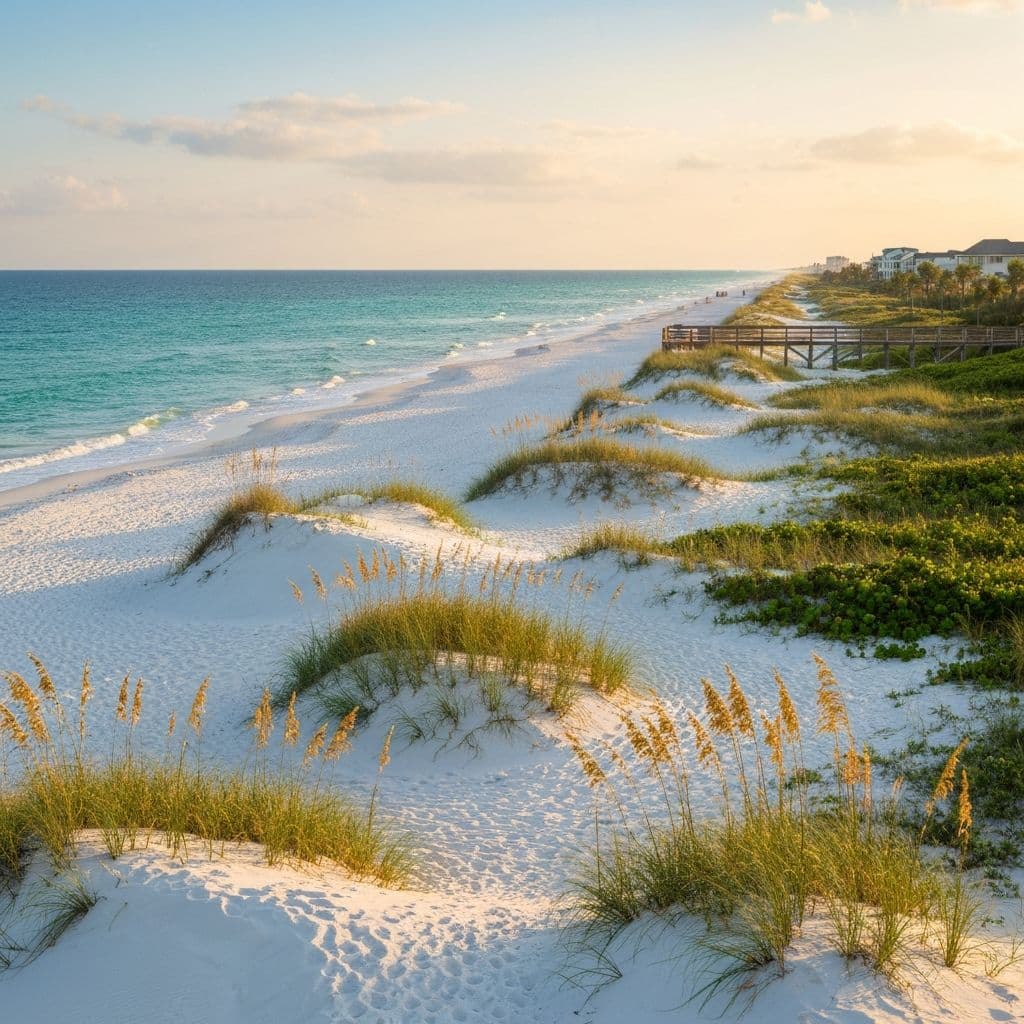
If you are thinking about moving to Vero Beach, the appeal is easy to understand: Atlantic beaches, a slower pace than South Florida, and a coastal setting that still feels manageable day to day. But like any move, the real decision comes down to more than the postcard version.
Vero Beach can be a strong fit for retirees, remote workers, families, and buyers who want a relaxed Florida lifestyle without the scale or intensity of Miami, Fort Lauderdale, or many parts of Palm Beach County. The tradeoffs are real too: storm and flood exposure, housing costs that can still feel high for a smaller market, and a car-dependent routine for many residents.
Here is what to know before you make the move.
Related reads
Keep going without starting from scratch.
Quick list
What to know before you move
- Why people choose Vero Beach
- What daily life actually feels like
- Housing costs, insurance, and other ownership tradeoffs
- Taxes, schools, jobs, and transportation basics
Why people move to Vero Beach
Vero Beach is the county seat of Indian River County on Florida’s Treasure Coast. It sits between larger population centers without feeling swallowed by them. County planning documents place Vero Beach roughly 100 miles southeast of Orlando and about 135 miles north of Miami.
That location helps explain the city’s appeal. You get a smaller-community feel, beach access, and room to breathe, while still staying within driving distance of larger airport, healthcare, and employment networks along the coast.
For many movers, Vero Beach is less about big-city energy and more about everyday livability:
- Beach access without a Miami pace
- A quieter residential environment
- A strong retirement and second-home presence
- Easy access to boating, nature, and golf
- Florida tax advantages for households relocating from other states
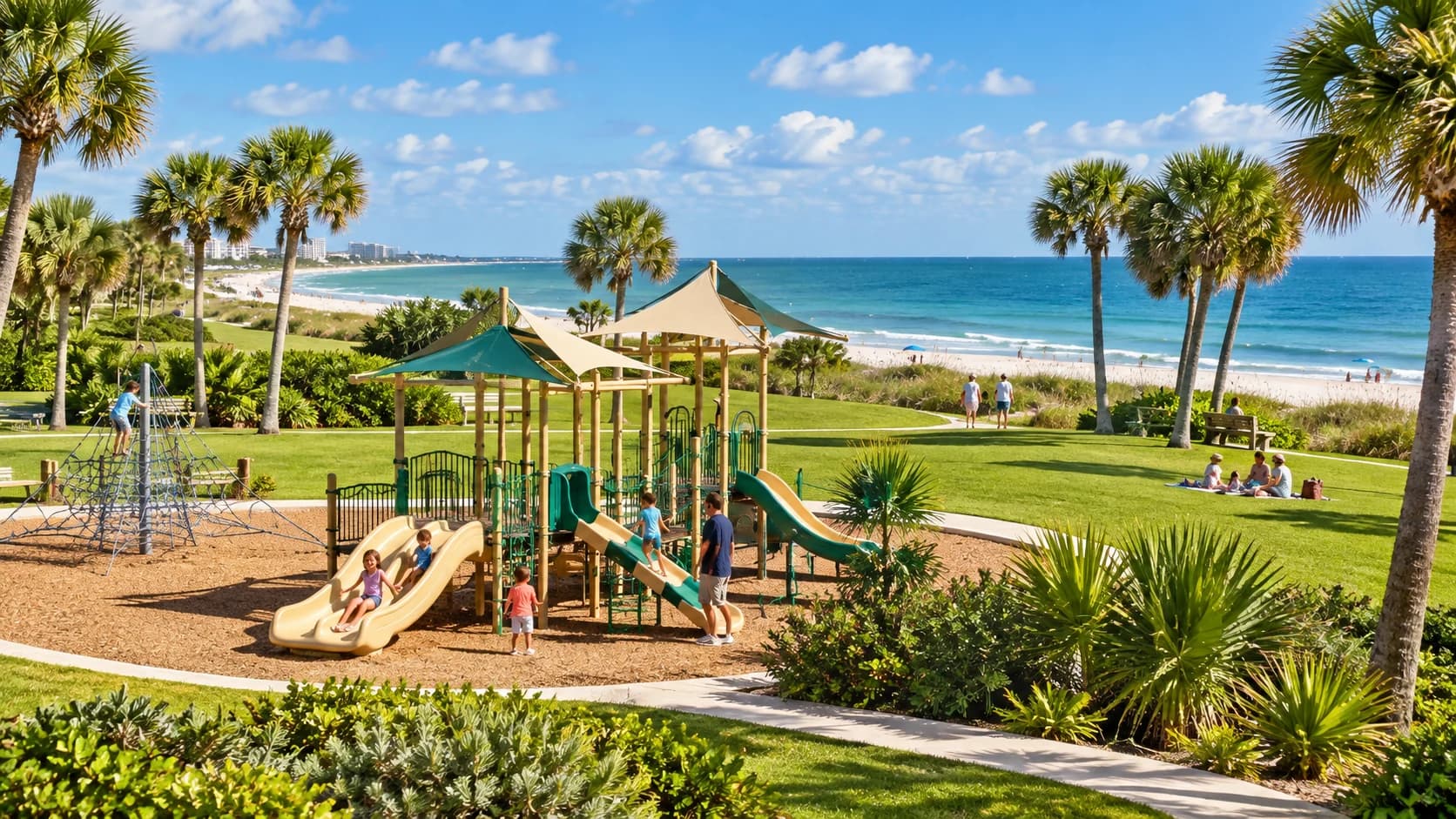
What Vero Beach is really like day to day
Vero Beach is not a late-night, high-density city. It is more residential, more routine-driven, and more lifestyle-oriented than entertainment-oriented. For some households that is exactly the point; for others it can feel too quiet.
Daily life often centers around:
If you want a place that feels calmer than South Florida but still coastal, Vero Beach lands in that middle ground well. If you want dense nightlife, constant new openings, or major-city amenities at your doorstep, it may feel limited.
- Running most errands by car
- Spending more time outside during the cooler months
- Regular beach and water access
- A social calendar built around local dining, community events, and seasonality
- Practical commutes within Indian River County or to nearby areas
Local tip
Use the article for evergreen ideas and the newsletter for what is happening right now.
That combination gives you the best shot at finding something that fits the season, your schedule, and what is actually open or active this week.
Cost of living: expect Florida tradeoffs, not bargain-basement prices
One of the biggest mistakes newcomers make is assuming smaller coastal Florida cities are automatically cheap. Vero Beach can be more manageable than many premium South Florida markets, but it is not bargain beachfront living.
According to the U.S. Census Bureau’s 2020–2024 QuickFacts for Vero Beach city, the median value of owner-occupied homes was $391,900, median gross rent was $1,221, and median monthly owner costs with a mortgage were $1,988.
Those figures are useful baselines, but they do not tell the whole story. Prices and carrying costs can vary sharply between mainland neighborhoods, beachside properties, and unincorporated county areas.
The bigger lesson is simple: do not stop at the listing price. Coastal ownership costs are often shaped by flood exposure, roof age, wind mitigation, insurance premiums, HOA rules, and property-specific upkeep.
- Renters may still find Vero Beach more approachable than larger coastal Florida metros
- Buyers should not expect inland-Florida pricing near the coast
- Insurance, taxes, HOA fees, and maintenance can change the real monthly cost quickly
Taxes: one of Florida’s biggest draws still matters
For many relocating households, Florida’s tax structure is part of the draw. The Florida Department of Revenue says Florida does not impose personal income tax, inheritance tax, gift taxes, or tax on intangible personal property.
That can be especially meaningful for:
But tax savings should be weighed against the full cost picture. Florida still has sales tax, property taxes, insurance costs, and a long list of fees that matter in day-to-day budgeting. The state’s general sales tax rate is 6% before any local surtaxes.
If Vero Beach will be your primary Florida residence, review the Indian River County Property Appraiser’s homestead exemption resources early. They are also useful for understanding portability if you are moving from another Florida homestead.
- Retirees drawing income from investments or retirement accounts
- Remote workers moving from higher-tax states
- Business owners evaluating a relocation
- Households seeking a lower ongoing state tax burden
Housing: choose your location carefully
The biggest practical decision is not just whether to move to Vero Beach. It is where in the area you want to live.
In broad terms, movers usually compare:
This is one of those markets where a beautiful listing can hide an expensive long-term cost profile. Before you buy, check:
That is not alarmism. It is simply smart coastal buying.
- Barrier-island and beachside neighborhoods, which offer obvious lifestyle upside but usually come with more flood, wind, and insurance exposure
- Mainland residential areas, which often provide better value, more inventory, and easier access to schools, shopping, and major roads
- County locations outside the city core, where lot size, price point, and neighborhood feel can vary widely
- Flood zone
- Elevation and drainage
- Insurance quotes based on the actual property
- Roof age and wind-mitigation details
- HOA rules, reserves, and assessments
- Your likely commute during season
Weather: great winters, hot summers, real storm risk
The weather is one of the main reasons people move here. It is also one of the biggest adjustment points.
The National Weather Service climate summary for Vero Beach shows a 2025 annual mean temperature of 74.0°F, with an average maximum of 83.2°F and an average minimum of 64.9°F. The same report recorded 95 days at or above 90°F in 2025.
In plain English: winters are a major quality-of-life advantage, and summers are hot, humid, and long enough to shape your routine.
Flood and storm planning should be part of your relocation checklist. Indian River County directs residents to current FEMA flood map information, the City of Vero Beach maintains local flood resources, and FEMA’s Map Service Center is the official public source for flood hazard information.
A smart move to Vero Beach includes:
- Winters are one of the area’s biggest selling points
- Summer heat and humidity are not minor
- Outdoor routines shift with the season
- Hurricane season is part of life, not a remote possibility
- Check flood maps before making an offer
- Budget for insurance before you fall in love with a property
- Know your evacuation zone
- Assume that 'near the water' and 'easy during storms' are rarely the same thing
Jobs and the local economy: know your income plan first
Vero Beach can work well if you are retired, bringing your job with you, or relocating with a clear employment plan. It can feel much tighter if you are moving first and planning to figure out income later.
U.S. Bureau of Labor Statistics data for Indian River County showed 58,842 total employment and an average weekly wage of $1,180 in fourth-quarter 2024.
That does not capture every opportunity, but it does underscore an important point: this is not a major-metro job market. For many households, the best-fit scenarios are:
The safest approach is to solve the income question before the moving truck is booked.
- Remote or hybrid work
- Retirement income
- Healthcare-related employment
- Locally rooted business ownership
- Trades and service businesses tied to a growing coastal population
Schools: stronger district momentum than some people expect
If you are moving with kids, school quality will shape your search area quickly.
The School District of Indian River County says it has earned an 'A' rating for three consecutive years beginning in 2022–2023 and ranks #5 in Florida for 2024–2025. The district also provides new-student enrollment and school choice resources online.
That does not mean every school is identical or every address will fit every family equally well. It does mean families should look beyond outdated assumptions and compare:
- Zoned-school assignment
- School choice options
- Commute to school and work
- Extracurricular access
- How close you want to be to the beach versus inland convenience
Getting around: this is still largely a car market
Most movers should assume they will drive often. That is true even though the area does have public transit.
GoLine, the Indian River County transit system, operates 14 fixed routes, is fare-free, and serves much of the county’s urbanized area, including Vero Beach, Sebastian, Gifford, Wabasso, and Fellsmere. Weekday service generally runs from 6:00 a.m. to 9:00 p.m., with Saturday service on most routes.
That is genuinely useful, but it does not fully replace car convenience for many households.
Regional access is better than some newcomers expect:
The big picture is this: Vero Beach is connected, but not in a walk-out-the-door-and-catch-the-train kind of way.
- Indian River County transportation planning identifies I-95, the Florida Turnpike, and State Road 60 west of I-95 as key regional corridors.
- Melbourne Orlando International Airport markets flights that can get travelers anywhere in the world with one stop or less.
- Brightline does not currently have a Vero Beach station; its Florida stations are Orlando, West Palm Beach, Boca Raton, Fort Lauderdale, Aventura, and Miami.
Who Vero Beach is best for
Vero Beach is usually a strong fit for:
It is less ideal for:
- Retirees who want a quieter coastal lifestyle
- Remote workers prioritizing pace and weather
- Households leaving denser South Florida areas
- Buyers who want a beach-adjacent market without Miami-level intensity
- Families who value a calmer environment and can be selective about location
- People who want a major-city job market on their doorstep
- Buyers expecting cheap beachfront living
- Renters seeking highly urban, transit-first daily life
- Households that dislike heat, humidity, or hurricane prep
- People who want constant nightlife and big-city entertainment
What to do before you move
A high-confidence move to Vero Beach usually comes down to doing the unglamorous homework before you commit to a lease or closing date.
1. Price the full cost of housing
Get real quotes for homeowners insurance, flood insurance when relevant, HOA costs, taxes, and likely maintenance instead of relying on rough estimates.
2. Check flood and storm exposure early
Use local flood resources and FEMA mapping before you make an offer, not after you are emotionally committed to a property.
3. Test your real commute
Drive the routes that will matter most, including school drop-off, groceries, healthcare, work, and beach access.
4. Match your location to your life stage
Barrier-island appeal is different from mainland convenience. Retirees, families, and remote workers often prioritize very different tradeoffs.
5. Clarify your income plan
Vero Beach works best when you already know how your household income will function locally.
6. Visit in more than one season
A February impression and an August reality can feel like two different places. Visit in more than one season if you can.
Final takeaway
Moving to Vero Beach makes sense for people who want a coastal Florida lifestyle with a slower rhythm, strong winter weather, and less intensity than the state’s biggest beach markets. The area’s biggest strengths are quality of life, tax appeal, and day-to-day livability.
The biggest cautions are housing carry costs, storm exposure, and the importance of choosing your exact location carefully. The buyers and renters who do best here tend to approach Vero Beach less like a vacation fantasy and more like a long-term lifestyle decision.
FAQ
Common questions
Is Vero Beach a good place to live?
For many people, yes. Vero Beach offers a coastal lifestyle, a slower pace, and easy beach access without the density of larger South Florida cities. It is especially appealing to retirees, remote workers, and households looking for a calmer environment. The main tradeoffs are heat, storm prep, and a housing market that still requires careful budgeting.
Is Vero Beach expensive?
It can be, especially once you include the full cost of coastal ownership. Census data for Vero Beach city shows a median owner-occupied home value of $391,900 and median gross rent of $1,221, but your real monthly cost can rise quickly once insurance, taxes, HOA fees, and maintenance are factored in.
Does Florida’s tax structure help when moving to Vero Beach?
Usually, yes. Florida does not impose a personal income tax, which can be a meaningful advantage for retirees, remote workers, and higher-income households relocating from higher-tax states. That said, it is still important to budget for sales tax, property taxes, insurance, and other recurring costs.
Are schools in Vero Beach good?
The School District of Indian River County reports strong recent momentum, including an 'A' district rating for three consecutive years beginning in 2022–2023 and a #5 statewide ranking for 2024–2025. Families should still research school zones, school choice options, and individual campus fit before choosing a home.
Do you need a car in Vero Beach?
Usually, yes. GoLine provides free local transit with 14 routes, but most residents will still find daily life easier and more flexible with a car.
Is Vero Beach safe from hurricanes and flooding?
No coastal Florida city is immune to hurricane or flood risk. Indian River County, the City of Vero Beach, and FEMA all provide flood-zone tools and preparedness resources, so checking a specific property’s risk profile should be part of every move decision.
Is Vero Beach good for retirees?
It often is. The slower pace, warm climate, beach access, and Florida tax advantages are a strong combination for many retirees. The main caveats are housing carry costs, healthcare planning, and storm preparedness.
Is Vero Beach good for remote workers?
It can be an excellent fit for remote workers who want a quieter coastal environment and do not need a major-city office market nearby. The key question is less whether you can work from Vero Beach and more whether the local pace and daily routine match how you want to live.
Sources
Reference links
- Indian River County 2030 Comprehensive Plan: Introductory Element
- U.S. Census Bureau QuickFacts: Vero Beach city, Florida
- Florida Department of Revenue: Tax Information for New Residents
- Florida Department of Revenue: Florida Sales and Use Tax
- Indian River County Property Appraiser: Exemptions
- Indian River County Property Appraiser: Portability
- City of Vero Beach: Flood Resources and Maps
- FEMA Flood Map Service Center
- National Weather Service: Vero Beach Annual Climate Summary
- U.S. Bureau of Labor Statistics: County Employment and Wages in Florida, Fourth Quarter 2024
- School District of Indian River County
- GoLine Indian River Transit
- Indian River County MPO: List of Priority Projects
- Melbourne Orlando International Airport
- Brightline Stations
Written by
Derek Brumby
We publish Treasure Coast guides for residents, newcomers, and weekend planners. Our goal is to combine local context, linked source material, and ongoing page updates so a reader can act on the guide instead of just skim it.
Derek Brumby is the sole author and editor. On The Treasure Coast is owned and published by Brumby LLC.
Research and updates
Last verified April 3, 2026
This guide was written and edited by Derek Brumby using linked local and official sources, then reviewed for Treasure Coast planning context.