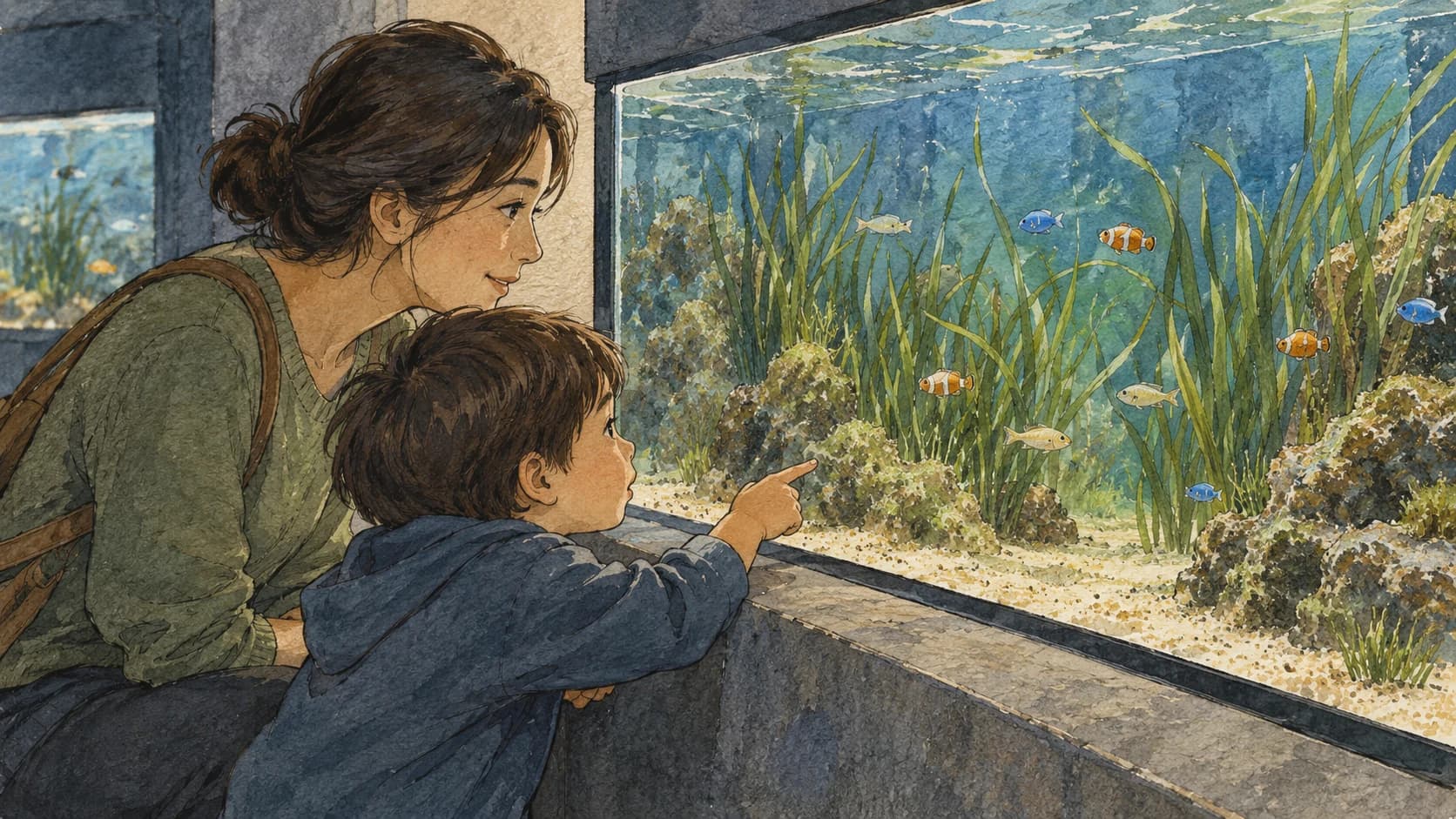
Yes, the St. Lucie County Aquarium has a regular free-admission day: the first Tuesday of each month. Both the county's calendar and the Smithsonian's current event page identify that program. Ordinary admission on other dates is paid. The aquarium is at 420 Seaway Drive in Fort Pierce, and its compact marine exhibits make it a useful family stop when you want to understand the water around the Treasure Coast.
This is the home of the Smithsonian Marine Ecosystems Exhibit, with living displays of connected marine habitats. It is not a large theme-park aquarium with an all-day show schedule. For planning, allow around an hour to ninety minutes for a self-guided visit, an editorial estimate that gives you time to look closely and ask questions. Add time if you arrange a program or a staff-led activity.
Related reads
Keep going without starting from scratch.
Quick list
The question this guide answers
- The county and Smithsonian identify the first Tuesday of every month as free-admission day. Check the official calendar for temporary closures or changes.
Free admission and ordinary ticket prices
The Smithsonian's event calendar confirms first-Tuesday free admission. The county calendar provides dated examples of the same monthly program. Check for a closure or special notice before driving; a recurring policy does not guarantee that a facility can never close unexpectedly.
The Smithsonian visitor page checked September 30, 2026 listed general admission at $5 for adults and $4 for seniors fifty-five and older and children ages four through seventeen. Its wording says children "under 3" are free but leaves the treatment of a three-year-old unclear. Ask the aquarium directly if that age applies to your party. Joint tickets with the Regional History Center and group rates are listed separately.
What the Smithsonian connection means
The aquarium's exhibit is operated through the Smithsonian Marine Station, a Fort Pierce research center studying marine biodiversity and ecosystems. The county owns and maintains the exhibit building. The Smithsonian's historical account dates the Fort Pierce public exhibit's opening to August 2001. Research and public education are connected here, but the research station and aquarium are separate visitor destinations.
A museum name can suggest a familiar national collection, yet the subject here is unusually local. You can use the displays to make sense of the lagoon, mangrove shorelines, and offshore waters you pass during an ordinary drive. Before looking for a favorite fish, ask what kind of habitat a tank represents. The water, substrate, plants, and smaller organisms are part of the exhibit, too.
Local tip
Use the article for evergreen ideas and the newsletter for what is happening right now.
That combination gives you the best shot at finding something that fits the season, your schedule, and what is actually open or active this week.
Look at habitats, not just the largest fish
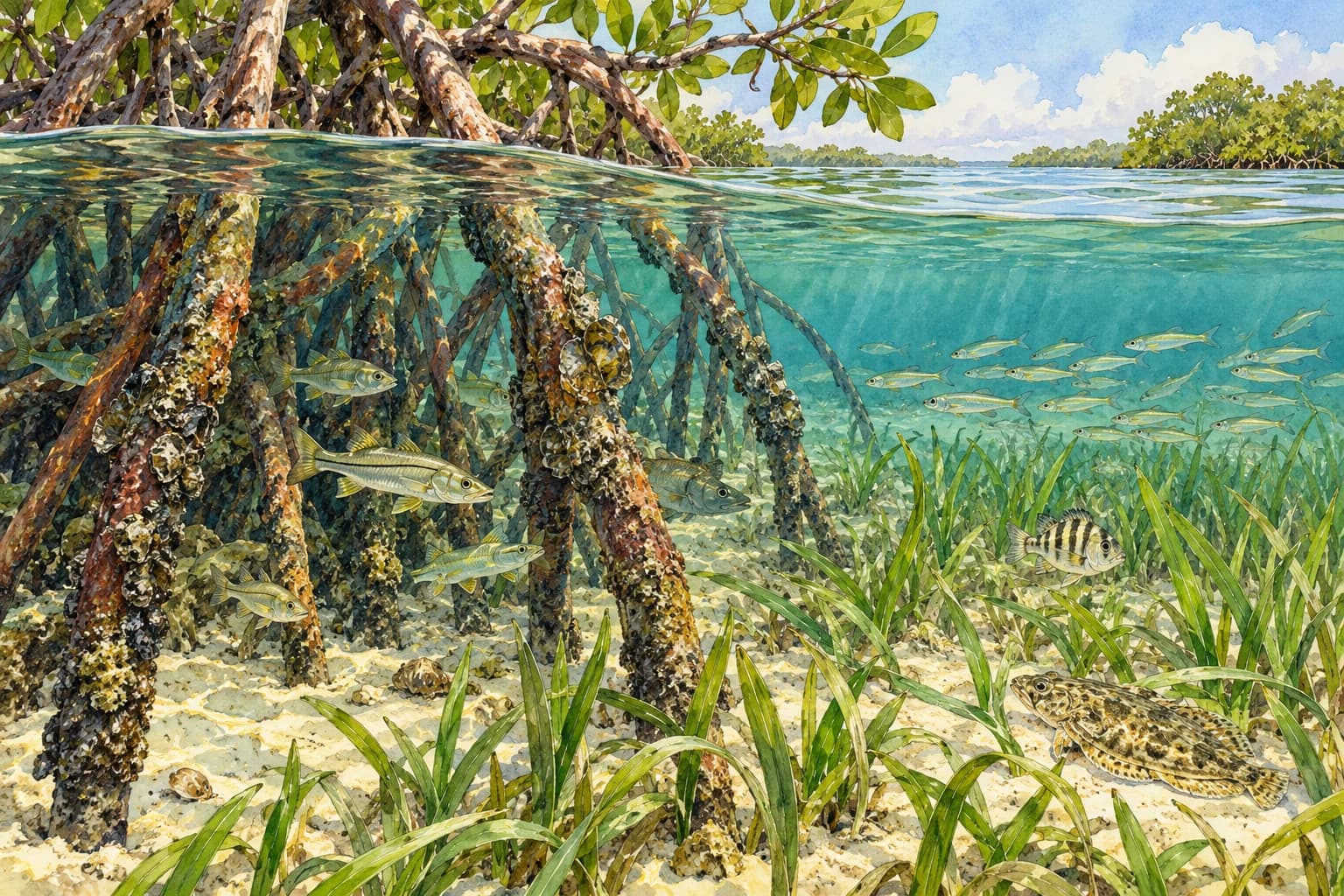
The Smithsonian describes the tanks as model ecosystems, with representations of the Indian River Lagoon and Atlantic Ocean. Its exhibit materials include reef, mangrove, and seagrass environments. A touch tank and interactive activities add another way to engage, subject to the instructions in effect during your visit. Do not assume an animal can be handled simply because you have seen it in an old visitor photograph.
For children, choose one comparison. How does a fish use a seagrass bed differently from a reef? What does a mangrove root create that an open sandy area lacks? You can keep those questions simple. Spend time watching an apparently quiet patch of habitat; small animals and changes in movement can become visible once the group stops moving from tank to tank. The aquarium's scale makes that slower approach practical.
Feedings, tours, and group visits
The Smithsonian event page names Feeding Frenzy and Snack Time tours in connection with the exhibit. Confirm the day's times with staff instead of planning around an old timetable from a review. Feeding activities depend on the animals and operating arrangements, so an ordinary admission ticket should not be treated as a guarantee of every program you have seen advertised.
Groups need a different plan. The operator appreciates advance notice for groups attending a free day and says staff-facilitated educational programs cannot be scheduled on that day. If the reason for your visit is an organized lesson, contact the education staff about a separate date. A free-admission outing and a structured field trip can both be useful, but one does not automatically include the staffing and activities of the other.
The aquarium and research-station tours are different
The current Smithsonian calendar also lists tours of the Marine Station's research facilities on the third Wednesday of the month at 2 p.m., with limited space and registration required. That is a separate activity from walking into the aquarium. Read the meeting instructions and reservation terms for the research tour you book. Do not arrive at the exhibit front desk assuming that a laboratory visit is included.
For a first family outing, the aquarium is the simpler starting point. Afterward, an older child who wants to know how marine scientists work may be interested in the research-station tour. You can also use the Smithsonian's virtual exhibit views before a trip to see the general layout. Those views help prepare a visitor; they are not a live record of today's tanks or access arrangements.
Hours and a manageable Fort Pierce outing
The Smithsonian currently lists Tuesday through Saturday hours of 10 a.m. to 4 p.m. and Sunday noon to 4 p.m. It identifies Monday closure outside the January-to-March season, when Mondays are listed as open. Confirm holiday and seasonal arrangements for your date. The morning is a useful option when you want to add an outdoor waterfront stop afterward, but there is no need to fill the entire day.
Bring questions about accessibility, stroller space, or a group member's needs to the staff before committing to a larger visit. For a regional comparison, our Fort Pierce guide for families gives other options. Choose the aquarium when the group wants a close look at local marine life and can enjoy a small exhibit. A carefully observed hour here can be more useful than racing through the displays to stretch the outing.
FAQ
Common questions
Is there free admission to the St. Lucie County Aquarium?
The county and Smithsonian identify the first Tuesday of every month as free-admission day. Check the official calendar for temporary closures or changes.
Is this a Smithsonian museum?
It houses the Smithsonian Marine Ecosystems Exhibit, operated through the Smithsonian Marine Station in a county-owned building. The public aquarium and research laboratories have separate visiting arrangements.
How long should a family allow?
Around an hour to ninety minutes is our editorial allowance for a self-guided visit. A booked education program or research-station tour requires its own time and arrangements.
Sources
Reference links
Written by
Derek Brumby
We publish Treasure Coast guides for residents, newcomers, and weekend planners. Our goal is to combine local context, linked source material, and ongoing page updates so a reader can act on the guide instead of just skim it.
Derek Brumby is the sole author and editor. On The Treasure Coast is owned and published by Brumby LLC.
Research and updates
Last verified September 30, 2026
This guide was written and edited by Derek Brumby using linked local and official sources, then reviewed for Treasure Coast planning context.