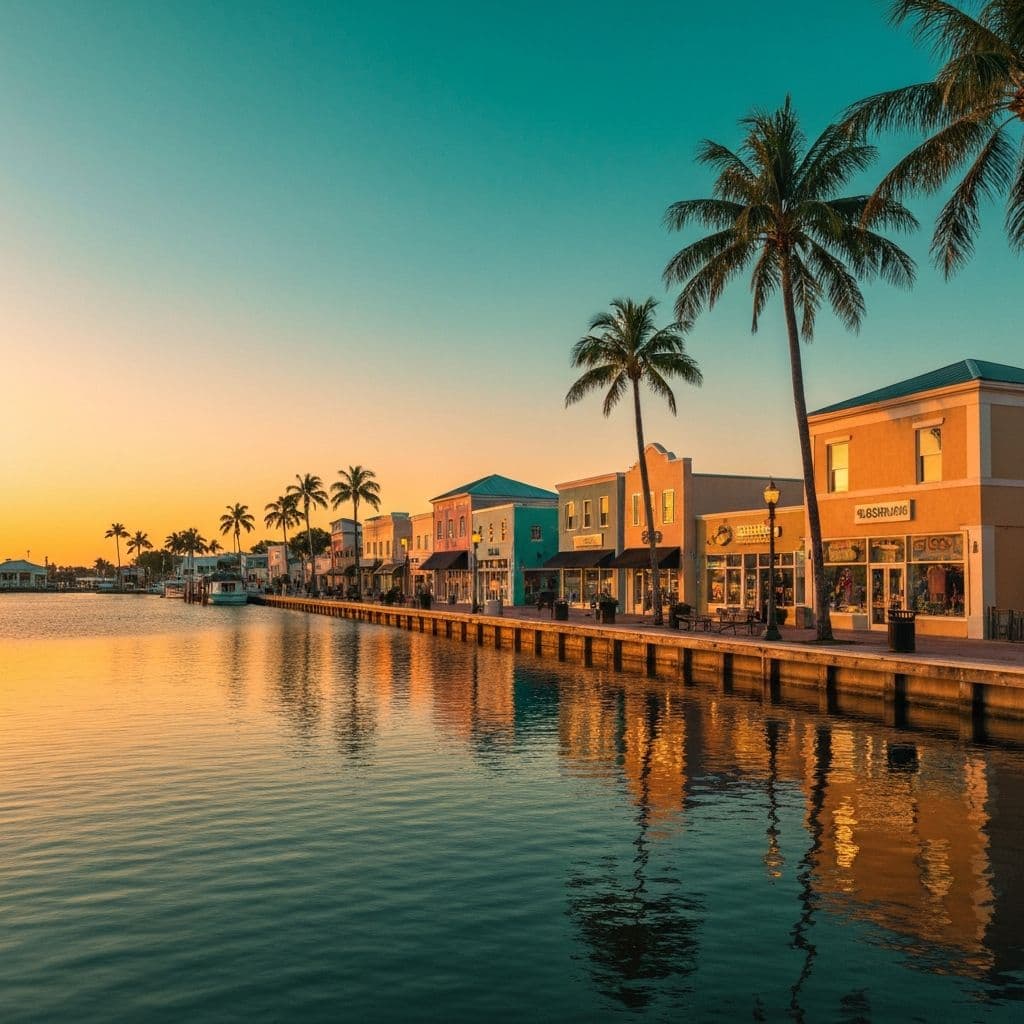
For retirees choosing between Indiantown and Palm City, the real question is not which place is “better” in the abstract. It is which one fits your retirement priorities. Palm City is the more established, older-skewing, higher-income community with stronger day-to-day convenience and easier access to healthcare. Indiantown is the more affordable, rural option with a much lower housing-cost profile, a quieter pace, and a strong small-town identity. Based on the latest available data, Palm City is the better fit for most retirees who value convenience, healthcare access, and an age profile that feels more retirement-oriented, while Indiantown is the better fit for retirees who care most about affordability and a simpler, less suburban lifestyle.
Related reads
Keep going without starting from scratch.
Quick list
Start with these angles
- The quick answer
- 1) Housing costs and affordability
- 2) Which community feels more retirement-friendly?
- 3) Healthcare access: a major separator
The quick answer
Choose Palm City if you want:
Choose Indiantown if you want:
- Better access to hospital care and walk-in medical services.
- A community with a larger 65+ population and a more retirement-oriented feel.
- Closer access to Stuart, waterways, parks, golf, and major roads like I-95 and the Turnpike.
- Far lower housing costs.
- A rural, quieter setting with a more local, small-town character.
- Basic local healthcare, community programming, parks, and library access without Palm City pricing.
1) Housing costs and affordability
This is where the gap is biggest. In Palm City, the Census Bureau reports a median owner-occupied home value of $563,400 and median monthly owner costs with a mortgage of $2,824. In Indiantown, the comparable figures are $204,900 and $976. Median gross rent also runs much higher in Palm City ($2,013) than in Indiantown ($923).
For retirees living on a fixed income, that difference matters more than almost anything else. Palm City may be comfortable for retirees arriving with significant home equity, investment income, or a larger retirement budget. Indiantown, by contrast, gives budget-conscious retirees a much better chance of keeping housing, taxes, and monthly carrying costs under control. In plain terms: Indiantown wins affordability by a wide margin.
Local tip
Use the article for evergreen ideas and the newsletter for what is happening right now.
That combination gives you the best shot at finding something that fits the season, your schedule, and what is actually open or active this week.
2) Which community feels more retirement-friendly?
Palm City has the stronger demographic profile for retirees. The Census reports that 28.9% of Palm City residents are age 65 or older, versus 16.7% in Indiantown. Palm City also has a very high owner-occupied housing rate (89.7%) and substantially higher median household income ($125,820) than Indiantown (73.5% owner-occupied; $55,520 median household income).
That suggests Palm City is more naturally aligned with what many retirees picture when they think about an established retirement setting: more homeowners, more peers in similar life stages, and a more suburban-residential pattern. Indiantown is not “anti-retiree,” but it is a broader, more multigenerational rural community. The Village itself describes Indiantown as a rural community in Florida’s Treasure Coast with strong resident engagement and a small-town scale.
3) Healthcare access: a major separator
For many retirees, healthcare access is the deciding factor, and this is where Palm City has the clearest edge. Palm City has the Martin North Health and Wellness Center in town, including Express Care, and Cleveland Clinic’s Martin North Hospital in nearby Stuart provides a 24/7 emergency department. The nearby Stuart Family Health Center also offers urgent care, imaging, lab services, and specialty offices under one roof.
Indiantown does have meaningful local medical access. Florida Community Health Centers’ Indiantown location offers adult primary care, dental, lab testing, Medicare-related services, telehealth, and more, and the Florida Department of Health maintains an Indiantown location as well. But those are more basic local-care options than full hospital infrastructure. For higher-acuity care, more specialty care, and faster emergency access, Palm City is better positioned.
For retirees aging in place, that difference is not minor. Palm City is the safer pick for convenience-driven retirement planning; Indiantown is workable if you are comfortable trading medical convenience for lower housing costs.
4) Daily lifestyle, recreation, and local amenities
Palm City offers a more polished day-to-day lifestyle. Martin County’s tourism site describes Palm City as just west of the ocean and Stuart, near I-95 and the Turnpike, with parks and activities like golfing, rowing, and horseback riding. Leighton Park includes a walking path, fishing pier, boat ramps, picnic tables, and grills. Palm City also has its own branch library, the Peter & Julie Cummings Library.
Indiantown is more local and more low-key, but not empty. The Village parks department says it is focused on programming around sports, exercise, family gatherings, concerts, volunteering, and community events. Big Mound Park includes multipurpose fields, basketball, playgrounds, pavilions, and even a little library. Indiantown also has the Elisabeth Lahti Library, which Martin County notes was built specifically to serve rural Indiantown.
The county also supports seniors more broadly regardless of which community you choose. Martin County offers free recreational programs for adults 50+ at the Log Cabin Senior Center, and the Council on Aging of Martin County provides services such as care management, Meals on Wheels access, senior navigation, and support for aging in place.
So the lifestyle split is clear:
- Palm City feels more convenient, connected, and recreation-rich.
- Indiantown feels more community-rooted, simpler, and slower paced.
5) Taxes and retiree savings
On state taxes, both places benefit equally because both are in Florida. The Florida Department of Revenue says the state does not impose personal income, inheritance, or gift taxes, which is one reason Florida remains attractive to retirees.
For homeowners, Martin County’s homestead rules also help. The county property appraiser notes that Florida’s homestead exemption includes an initial $25,000 exemption, plus an additional $25,000 on assessed value above $50,000, and once homesteaded, assessed value increases are generally capped by Save Our Homes at 3% or CPI, whichever is lower. Portability may also allow eligible homeowners to transfer accumulated homestead benefit when moving within Florida.
There is one nuance that slightly favors Indiantown for some homeowners: Martin County offers a low-income senior exemption, and the Property Appraiser says the Village of Indiantown adopted an additional municipal senior homestead exemption for qualified seniors on Village taxes. That will not matter to every retiree, but for the right homeowner profile, Indiantown can create a modest extra tax advantage.
6) Transportation and practical convenience
Palm City has a location advantage for retirees who expect frequent trips to appointments, shopping, restaurants, or visiting family. Martin County’s tourism page places Palm City near I-95 and the Turnpike, and near Stuart and the coast.
Indiantown is more remote by design. Official Village material describes it as a small, rural community in western Martin County. Martin County Public Transit helps, though: MARTY’s ride guide says the system is fare-free, weekday-focused, offers ADA paratransit, and even provides deviated route service in Indiantown only, along with commuter service. That said, many retirees in either community will still prefer having a car, especially for medical flexibility.
Final verdict: Which is better for retirees?
For most retirees, Palm City is better.
It has the stronger retiree demographic profile, better healthcare access, better day-to-day convenience, and easier access to Stuart, parks, libraries, and coastal Martin County amenities. If your retirement plan prioritizes comfort, access, and aging-in-place logistics, Palm City is the more complete option.
But for value-focused retirees, Indiantown deserves serious consideration.
Its housing costs are dramatically lower, it has local clinics, library access, village-run parks and events, and a true small-town feel that some retirees will prefer over a more suburban environment. If your budget matters more than polish, and you are comfortable with a more rural lifestyle, Indiantown may be the smarter retirement choice.
Best overall for retirees: Palm City Best for affordable retirement: Indiantown
FAQ
Common questions
Is Palm City more expensive than Indiantown for retirees?
Yes. Census data shows Palm City’s median owner-occupied home value at $563,400 versus $204,900 in Indiantown, with much higher monthly owner costs and rent as well. For retirees on a fixed budget, that is one of the strongest arguments for Indiantown.
Is Indiantown a good place to retire on a budget?
Yes, especially for retirees who prioritize lower housing costs and do not need top-tier medical infrastructure right outside their neighborhood. Indiantown also has local primary care, dental, lab testing, public library access, parks, and community programming.
Which area has better healthcare access for retirees?
Palm City. It has local Express Care at the Martin North Health and Wellness Center, and Martin North Hospital’s 24/7 emergency department is nearby in Stuart. Indiantown has local clinic access, but Palm City is better for hospital and specialty convenience.
Which area feels more retirement-oriented?
Palm City. Nearly 28.9% of Palm City residents are 65 or older, compared with 16.7% in Indiantown. That does not make Indiantown a bad choice, but Palm City has a stronger demographic fit for retirees seeking peers in the same life stage.
Do both areas offer Florida tax advantages for retirees?
Yes. Both benefit from Florida’s lack of personal income tax, and both are covered by Martin County homestead and senior exemption rules. Qualified homeowners in the Village of Indiantown may also have access to an additional village-level senior exemption on municipal taxes.
Sources
Reference links
- U.S. Census Bureau QuickFacts: Palm City CDP, Florida
- Martin North Hospital | Cleveland Clinic Florida
- Palm City | Martin County
- Who We Are/History | Indiantown FL
- Indiantown - Florida Community Health Centers, Inc.
- Urgent Care & Express Care Clinics
- Martin North Health and Wellness Center, Palm City - Palm City - FL - Hospital
- Parks & Recreation | Indiantown FL
- Senior Programs | Martin County Florida
- Martin County Property Appraiser - Homestead Exemption General Information
- Martin County Property Appraiser - Senior Exemptions
- Village of Indiantown, Florida Continuity of Operations Plan
- U.S. Census Bureau QuickFacts: Indiantown village, Florida
Written by
Derek Brumby
We publish Treasure Coast guides for residents, newcomers, and weekend planners. Our goal is to combine local context, linked source material, and ongoing page updates so a reader can act on the guide instead of just skim it.
Derek Brumby is the sole author and editor. On The Treasure Coast is owned and published by Brumby LLC.
Research and updates
Last verified March 18, 2026
This guide was written and edited by Derek Brumby using linked local and official sources, then reviewed for Treasure Coast planning context.