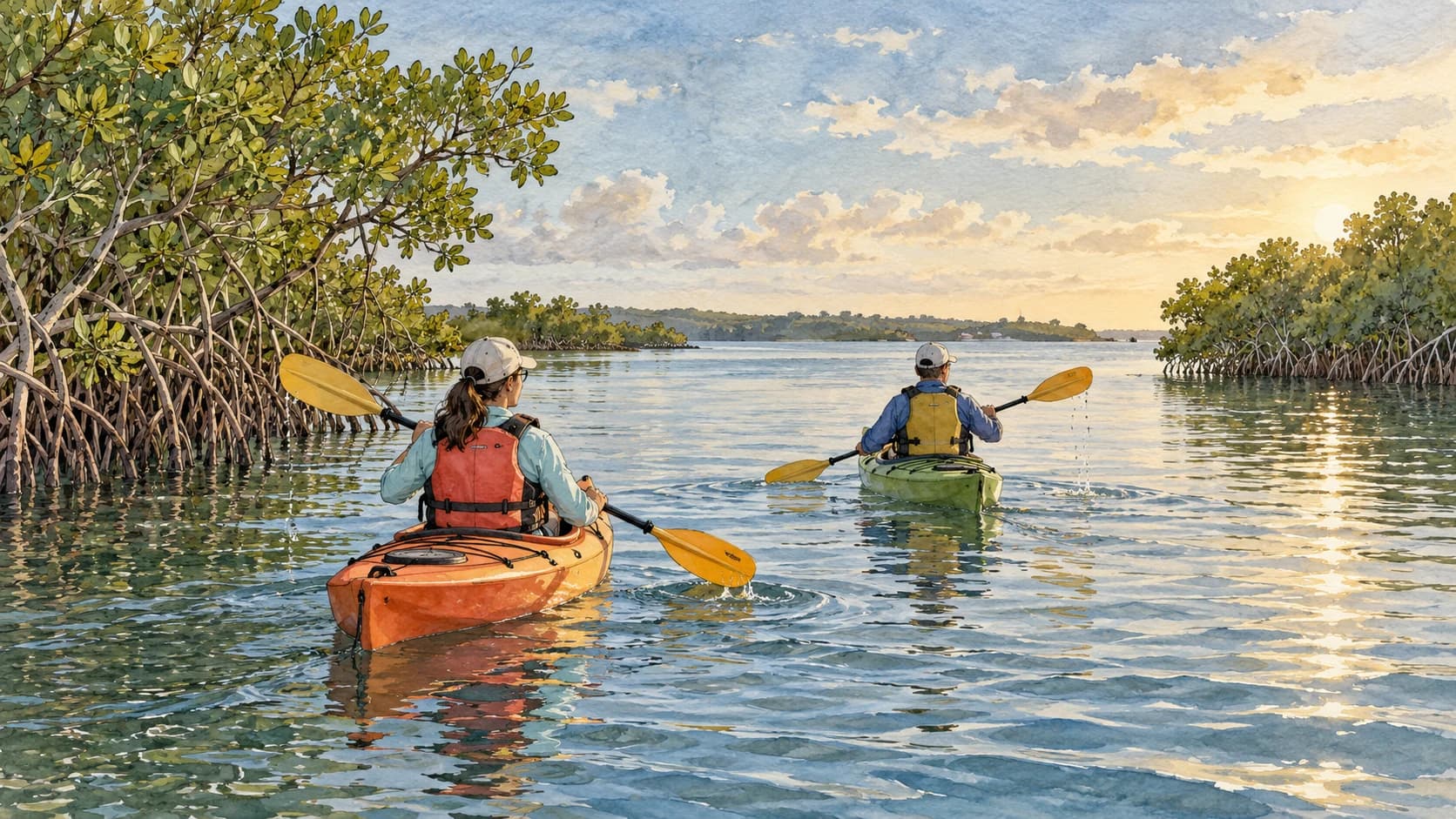
Kayaking where alligators live carries a real wildlife risk, alongside the risks from weather, boat traffic and being on the water. There is no blanket guarantee that an “alligator-infested” waterway is safe to paddle. FWC says serious alligator injuries are rare, but calls for keeping your distance and avoiding behavior that brings people and animals into conflict. Choose a route with informed local advice, stay away from wildlife, and cancel when you cannot maintain appropriate separation or conditions exceed your abilities.
The North Fork of the St. Lucie River is documented alligator and manatee habitat. A public kayak launch establishes an access point; it does not establish safe conditions for your group that day. This guide uses FWC, park, county and National Weather Service information checked September 30, 2026. It complements the Treasure Coast kayak-launch directory, which addresses where you can enter the water.
Related reads
Keep going without starting from scratch.
Quick list
The question this guide answers
- There is no universal safety guarantee. FWC calls for keeping a safe distance and never feeding alligators. Get informed advice on the exact route, avoid approaching wildlife and choose another outing when separation, conditions or your skills are inadequate.
Treat the river as wildlife habitat
Florida DEP’s St. Lucie County coastal-access information identifies alligators and manatees among wildlife supported by the North Fork aquatic preserve. FWC’s alligator guidance says to keep a safe distance and never feed an alligator. Do not approach a resting animal, paddle toward one for a photograph, or use food to attract wildlife. An animal being still or not immediately visible does not establish that a narrow shoreline route is clear.
Give yourself space to choose another route or turn back without crowding the animal. Avoid treating a fixed distance mentioned in an informal paddling story as protection in every situation. If an alligator occupies a narrow passage, the objective is not to squeeze past and complete the planned loop. Speak with a knowledgeable guide about the route and present wildlife conditions before departure. For a beginner who is uneasy about the habitat or cannot confidently maneuver the kayak, a guided learning outing or a shore walk can be the more suitable choice.
Select a launch and a route separately
St. Lucie County lists boat and kayak access at River Park Marina, 500 E. Prima Vista Boulevard, and an accessible canoe/kayak launch at Richard E. Becker Preserve. Check the current site information and signs before using either. An accessible launch is useful for getting aboard; it does not mean every part of the river or return landing has the same accessibility.
Decide how far to paddle, where to turn around and how to return before launching. A short out-and-back plan can be easier to revise than a one-way trip requiring transport at the far end. Ask about boat traffic, narrow sections, tidal influence and alternative landing access on the exact route. Do not assume that a convenient-looking private dock or riverbank is available for a planned stop. Keep the route within the least experienced paddler’s ability, including the effort needed to return rather than just the easy outward leg.
Local tip
Use the article for evergreen ideas and the newsletter for what is happening right now.
That combination gives you the best shot at finding something that fits the season, your schedule, and what is actually open or active this week.
Check weather and water conditions before committing
Review the NWS Melbourne forecast for the specific area and the period covering your whole outing. Wind direction and strength, thunderstorms, heat and rain can change the trip. Ask a local outfitter how the current wind and water conditions affect the proposed route. A favorable launch area may be sheltered while a wider reach is exposed. If you cannot judge how the return will work, shorten the plan or get instruction before entering the water.
The National Weather Service’s thunderstorm advice warns that storms can bring rapid changes, lightning and strong winds. Its guidance recommends avoiding a boating trip when thunderstorms are a possibility rather than relying on outrunning them. Check again shortly before departure and remain alert to changes. Do not count a tree, open picnic shelter or kayak as lightning protection. A morning plan should include a realistic end time and a reason to return early, with a land-based alternative if the forecast makes the paddle unsuitable.
Wear the right equipment and prepare for the return
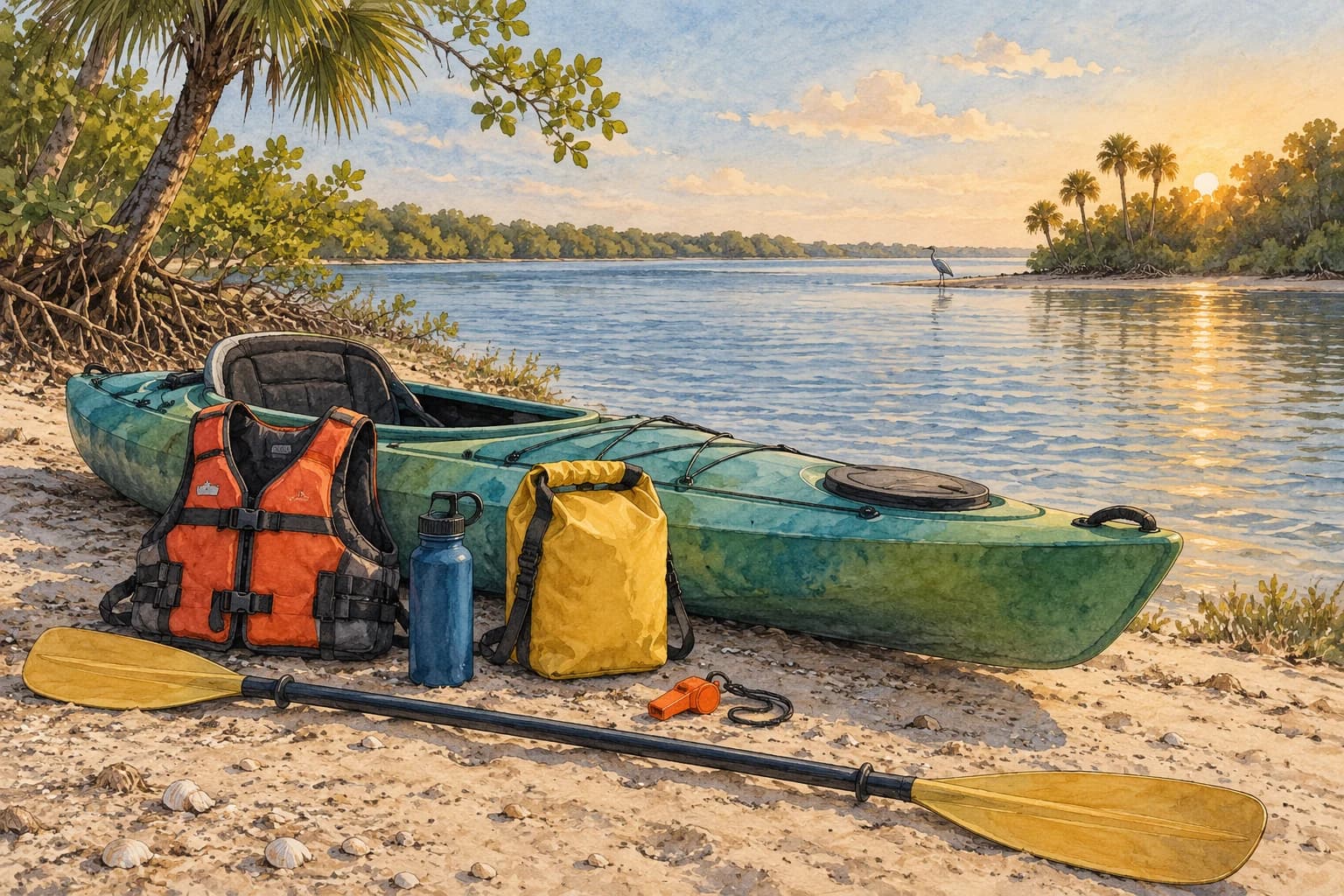
FWC’s human-powered vessel page lists a U.S. Coast Guard-approved wearable life jacket for each person aboard, a suitable sound-producing device and applicable lighting requirements. Children younger than six must wear a life jacket under the requirements described there; FWC strongly recommends wearing one for everyone. Wear a properly fitted jacket throughout the trip, including on a route that seems calm. Review additional requirements for the water and operating hours rather than treating this short list as a complete equipment inspection.
Carry drinking water, sun protection and a way to communicate that stays usable if gear gets wet. Inspect the kayak and equipment before boarding. FWC recommends paddling with others and leaving a float plan with someone who knows where you are going and when you expect to return. Learn paddling and recovery skills in an appropriate instructional setting before choosing a river route that depends on them. A telephone and a life jacket are important equipment, but they do not replace the ability to control the craft and get help when conditions change.
Boat traffic, children and pets change the decision
FWC’s boating safety advice emphasizes awareness and wearing a life jacket. Its paddlecraft page also provides navigation and visibility guidance, including restrictions relevant to the Intracoastal Waterway. Read those before planning a route that reaches the broader lagoon or a marked boating channel. Never assume that a powerboat operator has seen a low kayak, particularly in glare or choppy water. Choose an outing that avoids unnecessary exposure to busy traffic and get local instruction on any required crossing.
For children, consider paddling ability, appropriate seating and the supervising adult’s ability to control the craft for the whole trip. Keep hands and feet aboard rather than dangling them into the water. FWC’s alligator precautions warn that pets near the water can resemble prey. Leaving the dog at home simplifies a paddle through this habitat. A pet-friendly park listing should not be interpreted as a recommendation to bring an animal into the kayak on every river route.
Know when to change plans
Cancel or choose another activity when storms, strong or unfamiliar current, high water, closures, poor visibility or your group’s skills make the planned trip unsuitable. A guide or rental provider can help assess a route, but ask about the exact conditions and support offered. FWC’s livery information describes rental safety requirements. Choose a permitted operator, participate in the required instruction and clarify where the craft may be taken. Receiving a rental does not oblige you to launch if the briefing leaves essential questions unanswered.
Also check the correct park. Savannas Preserve State Park currently lists a canoe-launch road closure to vehicles because of high water; it is a marsh outing distinct from a North Fork river paddle. If you encounter a manatee while already on the water, follow FWC’s paddler guidance and move away when the animal responds to your presence. Treat wildlife and access restrictions as reasons to revise the trip, not obstacles to work around for a predetermined route.
FAQ
Common questions
Is it safe to kayak in alligator-infested waters?
There is no universal safety guarantee. FWC calls for keeping a safe distance and never feeding alligators. Get informed advice on the exact route, avoid approaching wildlife and choose another outing when separation, conditions or your skills are inadequate.
Are there alligators in the St. Lucie River?
Florida DEP documents alligators in the North Fork aquatic preserve. Do not assume an animal-free route because none is visible at the launch.
Is a public kayak launch a guarantee that conditions are suitable?
No. A launch identifies access. Check weather, current, traffic, closures, equipment and the whole group’s abilities separately before entering the water.
Sources
Reference links
- Florida DEP: North Fork wildlife habitat
- FWC: living with alligators
- St. Lucie County: River Park Marina access
- St. Lucie County: Richard E. Becker Preserve access
- NWS Melbourne: current forecasts
- National Weather Service: boating and thunderstorms
- FWC: paddlecraft equipment and navigation
- FWC: boating safety
- FWC: alligator precautions around water
- FWC: rental livery requirements
- Florida State Parks: Savannas access notices
- FWC: manatee guidance for paddlers
Written by
Derek Brumby
We publish Treasure Coast guides for residents, newcomers, and weekend planners. Our goal is to combine local context, linked source material, and ongoing page updates so a reader can act on the guide instead of just skim it.
Derek Brumby is the sole author and editor. On The Treasure Coast is owned and published by Brumby LLC.
Research and updates
Last verified September 30, 2026
This guide was written and edited by Derek Brumby using linked local and official sources, then reviewed for Treasure Coast planning context.