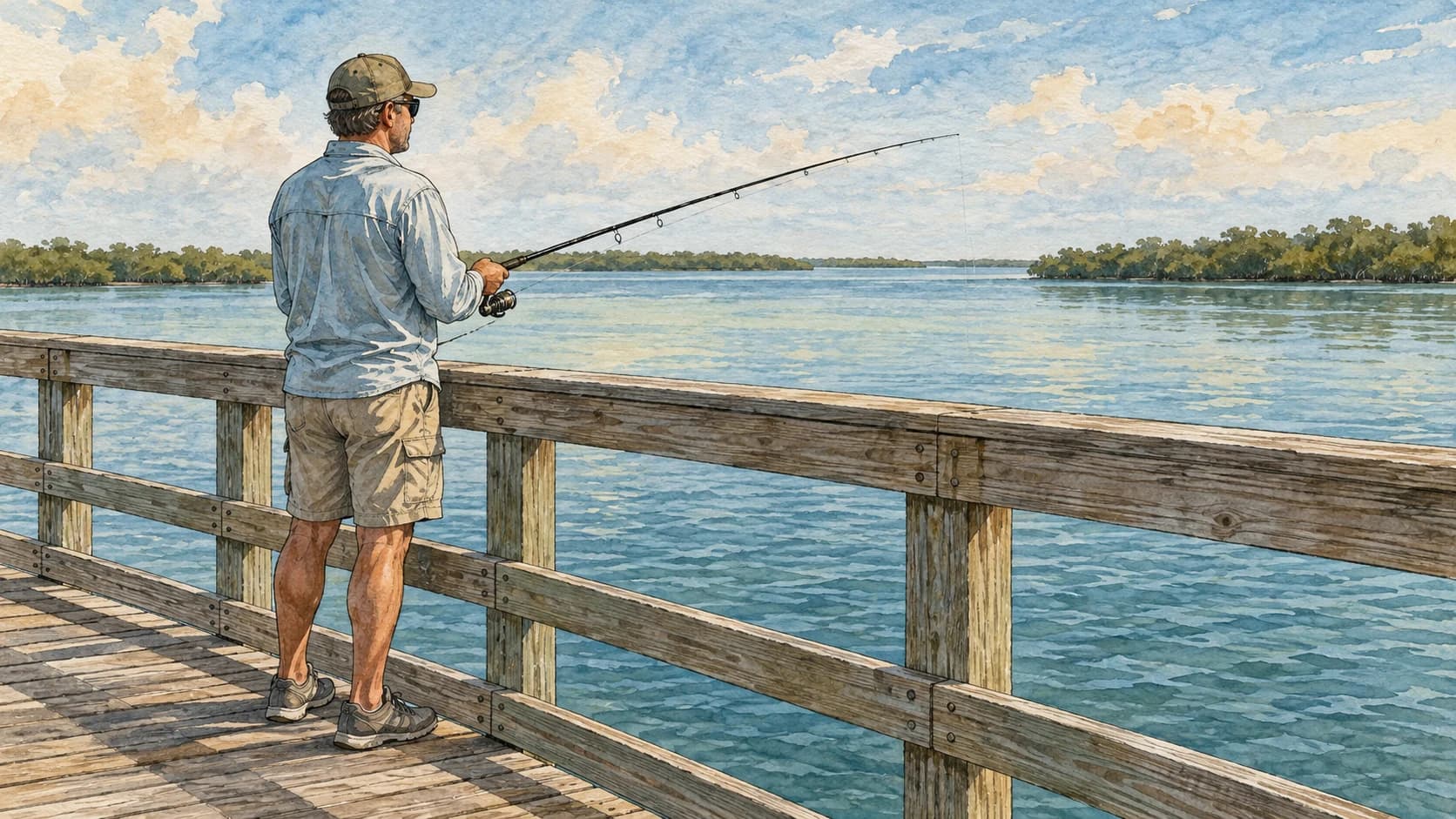
Snook and tarpon are two notable St. Lucie River targets, while the wider estuary and connected Indian River Lagoon also support red drum, black drum and spotted seatrout. The species available from a particular bank, dock or boat route depend on the section of river and its conditions. A list for the entire region is not a promise that every fish will occur at one Port St. Lucie launch.
Start by deciding whether you want a short shore outing on the North Fork, an inshore boat trip around Stuart, or freshwater fishing in a separate inland lake. Those choices affect access, equipment and licensing. This guide draws on official fishing and public-access information checked September 30, 2026. Check live regulations before the trip, especially if you intend to keep fish.
Related reads
Keep going without starting from scratch.
Quick list
The question this guide answers
- Snook and tarpon are notable river targets. The wider connected estuary includes red drum, black drum and spotted seatrout. Species vary with the river section and conditions, so choose a specific access point and target before planning tackle.
Match the species to the water you are fishing
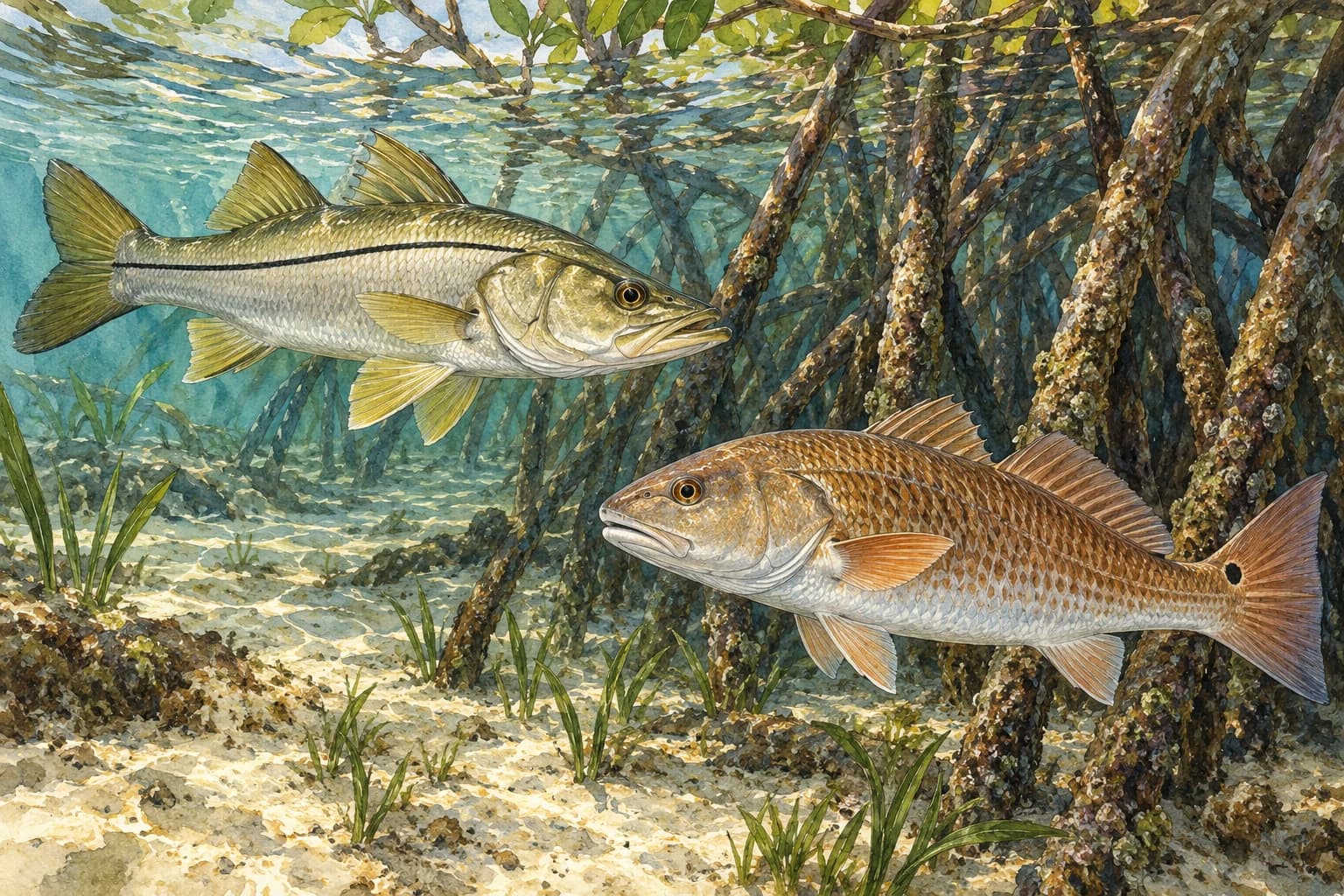
VISIT FLORIDA’s tarpon guide describes Stuart’s St. Lucie River and Indian River Lagoon system as a tarpon and snook fishery. Its regional account identifies late spring and summer as an important tarpon period. FWC’s central-east fishing directory lists snook, red drum, black drum and spotted seatrout among commonly caught inshore species in St. Lucie and Indian River counties. Treat those as a regional starting list rather than a dock-specific catch forecast.
The lower estuary, the two river forks and an inland freshwater lake are different settings. Freshwater inflow and tidal influence can change the water encountered along a river route, so ask a local guide or tackle shop about the section you intend to fish. A freshwater bass plan should identify an appropriate freshwater site rather than assume that every river pier suits it. FWC says license requirements follow the species targeted, not simply whether the water looks fresh or salty. An angler switching between freshwater and saltwater species may need both types of license unless exempt.
Two public access options near Port St. Lucie
River Park Marina is at 500 E. Prima Vista Boulevard, Port St. Lucie. St. Lucie County lists fishing docks, a boat ramp, canoe and kayak access, restrooms and picnic facilities. That combination makes it a practical place to check for a shore outing or boat launch. Read the signs on arrival, use only areas open for fishing and leave launching and docking spaces clear for other users.
Richard E. Becker Preserve offers a different setting along Ten Mile Creek and the North Fork system. The county identifies fishing access, a wildlife observation platform and an accessible canoe/kayak launch. Its trails have ascents and descents, so do not treat every part of the preserve as a level walk to a fishing position. Contact the county about current access if the exact platform or route matters. A preserve’s fishing listing does not authorize walking onto neighboring private docks or crossing a closed trail.
Local tip
Use the article for evergreen ideas and the newsletter for what is happening right now.
That combination gives you the best shot at finding something that fits the season, your schedule, and what is actually open or active this week.
Choose a modest shore plan or a supported boat trip
For a first shore visit, take equipment you can carry safely and choose a position with enough room to cast without passing hooks over people. A compact tackle kit, a suitable landing tool, pliers and a measuring device are more useful than bringing every rod you own. Check that you can reach the water and handle a fish from the permitted surface. A high bank or restricted edge may make landing and releasing a fish difficult even where casting is possible.
A guided inshore trip is another option if you want help choosing a river section and tackle. Martin County’s operator directory distinguishes inshore trips from offshore charters. Ask an operator where the trip will fish, what species are realistic for the season, whether its charter license covers passengers, and what weather terms apply. A departure near the St. Lucie Inlet does not mean every charter stays in the river. Choose the trip type explicitly, particularly if anyone in the group is uncomfortable with open-ocean conditions.
Seasons are useful; harvest rules control what you keep
FWC’s regional fishing directory gives broad seasonal tendencies, including winter and spring for black drum and summer and fall for snook. These are planning clues, not opening dates for harvest. Before setting out, look up the species and the management region on FWC’s current saltwater regulations. Check size limits, bag limits, gear rules and any closed season together. A fish being active or readily caught does not mean it can legally go into the cooler.
Snook regulations include region-specific management. Use the current map and rules for the place you are fishing rather than carrying an old Atlantic-wide summary. Tarpon rules describe a catch-and-release fishery with a narrow record-fish exception involving a tag. Decide before casting whether you are prepared for a release-only target and have equipment suited to handling it. Do not make keeping a large fish the assumed reward for a family river outing.
Licenses and releases deserve their own check
The Florida beach-fishing license guide explains the shoreline, boat and kayak distinctions. Florida residents who qualify can obtain a no-cost shoreline-only saltwater license, but it does not cover fishing from a vessel or a shore reached by vessel. Visitors have different paid-license requirements. Use FWC’s licensing FAQ to check species and residency questions, and add any required species permit before fishing.
Plan for unwanted or undersized catches as well as the fish you hope to catch. FWC’s catch-and-release guidance is useful for reviewing handling before arrival. Have the release tools reachable, keep an unnecessary fight or photo session from prolonging the encounter, and avoid using a dry walkway as a display surface. If you cannot identify a fish or determine its current retention rule, release it appropriately instead of guessing. Bring home only fish whose identification and legal status you have established.
Check weather, access and the river before leaving
For a boat or kayak outing, route length and the return conditions matter as much as the place you launch. Use the St. Lucie River paddling guide if you intend to fish from a kayak, and review the National Weather Service’s boating advice. Wind, lightning and changing conditions can make a short trip unsuitable. A familiar launch does not remove the need to decide how and when you will return.
For shore fishing, check closures and posted water notices when you arrive. Move to an appropriate open site if a platform is closed rather than improvising access from rocks, a private dock or a boat ramp. Keep children away from the edge and pets away from water where wildlife may be present. A first visit can be a useful reconnaissance outing even if you catch nothing: note the legal access, space available, facilities and conditions, then plan the next trip around what you actually observed.
FAQ
Common questions
What kind of fish can you catch in the St. Lucie River?
Snook and tarpon are notable river targets. The wider connected estuary includes red drum, black drum and spotted seatrout. Species vary with the river section and conditions, so choose a specific access point and target before planning tackle.
Can you fish from shore near Port St. Lucie?
The county lists fishing docks at River Park Marina and fishing access at Richard E. Becker Preserve. Check current openings and site signs, and keep launch areas and neighboring private property clear.
Does a shoreline license cover kayak fishing?
No. Florida’s no-cost resident shoreline-only saltwater license does not cover fishing from a kayak or another vessel, or from a shoreline reached by vessel. Check the applicable paid license or an actual exemption with FWC.
Sources
Reference links
- VISIT FLORIDA: tarpon fishing around Stuart
- FWC: central-east fishing locations and species
- St. Lucie County: River Park Marina
- St. Lucie County: Richard E. Becker Preserve
- Martin County tourism: fishing operator directory
- FWC: current saltwater regulations
- FWC: snook management and rules
- FWC: tarpon rules
- FWC: recreational license questions
- FWC: catch-and-release fish handling
- National Weather Service: boating and thunderstorms
Written by
Derek Brumby
We publish Treasure Coast guides for residents, newcomers, and weekend planners. Our goal is to combine local context, linked source material, and ongoing page updates so a reader can act on the guide instead of just skim it.
Derek Brumby is the sole author and editor. On The Treasure Coast is owned and published by Brumby LLC.
Research and updates
Last verified September 30, 2026
This guide was written and edited by Derek Brumby using linked local and official sources, then reviewed for Treasure Coast planning context.