
Port St. Lucie can be expensive for a household entering the housing market at current prices. The useful comparison is the actual rent or ownership cost alongside take-home income, utilities, transport and other recurring needs. Long-time ownership costs and a new buyer’s budget can be substantially different.
The dated housing measures below describe different things: Census household statistics, a typical home-value estimate and recent sales are not interchangeable figures. Use them as context, then obtain current quotes for the property you are considering.
Related reads
Keep going without starting from scratch.
Quick list
Cost snapshot
- Port St. Lucie is more moderate than Miami or Palm Beach, but no longer cheap.
- Housing and rent are the biggest reasons affordability feels tighter.
- The city can feel manageable for established owners and dual-income households.
- For new renters and first-time buyers, affordability is much less automatic.
- Taxes help somewhat, but insurance, utilities, and commuting costs add real pressure.
Housing Does Most of the Heavy Lifting
The headline number is housing. Census estimates for 2020 to 2024 put Port St. Lucie's median owner-occupied home value at $369,200, median monthly owner costs with a mortgage at $1,954, and median gross rent at $1,937.
For a more recent housing snapshot, Redfin reported a roughly $405,000 median sale price over the three months ending August 2026. Zillow's typical home value was $384,593 on August 31. These measure different things: one tracks homes that sold and the other estimates the value of the local housing stock. Check an address-level tax and insurance estimate before deciding what is affordable for your household.
Those figures are not contradictory so much as they are different lenses. Census data reflects recent years of occupied housing, while market trackers capture the live market more directly.
- Housing is the main reason PSL feels more expensive than its old reputation
- Occupied-housing data and live-market data tell slightly different stories
- Rent pressure looks especially sharp for people entering the market now
Who Actually Feels Port St. Lucie as Expensive?
Using the city's median household income of $80,648, the Census-era median mortgage cost works out to about 29.1 percent of gross monthly household income, and the Census-era median gross rent is about 28.8 percent. Those are close to the classic affordability line.
But the more current market rent figure of $2,600 rises to roughly 38.7 percent of that same median monthly income, which is much less comfortable.
In plain English, Port St. Lucie may feel manageable for long-time owners, higher-income households, retirees with paid-down housing, and some dual-income couples. It feels tighter for new renters, single earners, and first-time buyers trying to enter the market now.
- Long-time owners usually experience PSL differently than new entrants
- Current-market renters feel the squeeze most directly
- Affordability depends heavily on timing and household structure

Local tip
Use the article for evergreen ideas and the newsletter for what is happening right now.
That combination gives you the best shot at finding something that fits the season, your schedule, and what is actually open or active this week.
Living-Wage Math Helps Explain the Tension
MIT's Living Wage Calculator estimates that in St. Lucie County, a single adult with no children needs about $23.88 an hour to meet basic needs, or roughly $49,670 a year. For two working adults with two children, MIT estimates about $26.58 an hour per working adult, or about $110,573 combined annually.
That helps explain why Port St. Lucie can still work fairly well for retirees, remote workers, and dual-income households, while feeling much tighter for single earners or families trying to enter the market today.
The city is not universally unaffordable, but it is also not forgiving enough anymore to assume moderate income alone automatically solves the housing question.
- Single earners feel the pressure more easily
- Dual-income households generally have a more workable path
- The old cheap-Florida expectation no longer matches the local math
Taxes Help, but They Do Not Cancel Out Housing Pressure
Florida does not impose a personal income tax, which helps soften the picture somewhat. The state's general sales tax is 6 percent, and St. Lucie County's combined state-and-local rate is 7 percent.
Florida also exempts many general grocery items from sales tax, which helps keep a core category of household spending more reasonable, and owner-occupants may qualify for a homestead exemption that reduces property-tax liability and limits assessed-value growth for tax purposes.
Those are real savings levers, but they do not fully offset a market where purchase prices and rents have climbed sharply.
- No state income tax is a meaningful advantage
- Sales-tax treatment on groceries helps at the margin
- Homestead relief matters for owners, not so much for renters
- Tax advantages do not erase housing pressure
Everyday Costs Outside Housing Are More Mixed
Port St. Lucie's mean commute time is 30.5 minutes, which makes transportation a meaningful line item for many households. Gas prices are not uniquely punishing relative to nearby markets, but they are also not low enough to ignore if you drive every day.
On the inflation side, the broader Miami-Fort Lauderdale-West Palm Beach region saw overall CPI rise 2.1 percent over the 12 months ending February 2026, while the shelter index rose 3.1 percent. That is a useful clue: everyday inflation is not exploding, but housing-related costs are still running hotter than the overall basket.
In practical terms, Port St. Lucie is the kind of place where commuting, gas, errands, and routine car use quietly add cost even if the city does not look extreme on headline inflation alone.
- Transportation costs matter because the city is car-oriented
- Shelter costs are still rising faster than broad inflation
- Everyday expenses feel manageable until housing and driving are combined
Ownership Costs Run Above the Sticker Mortgage
There are also the quieter ownership costs people tend to underestimate. The City of Port St. Lucie says utility customers faced adopted rate increases that took effect on October 1, 2025.
Add in Florida's broader insurance reality, routine maintenance, and storm-readiness planning, and the true cost of owning a home can run meaningfully above the sticker mortgage payment.
That does not make Port St. Lucie uniquely unaffordable, but it does make it more expensive in practice than a simple home-price comparison might suggest.
- Utilities can rise even after the purchase decision is made
- Insurance and maintenance are major hidden-cost categories
- Real ownership cost is usually higher than the advertised mortgage math
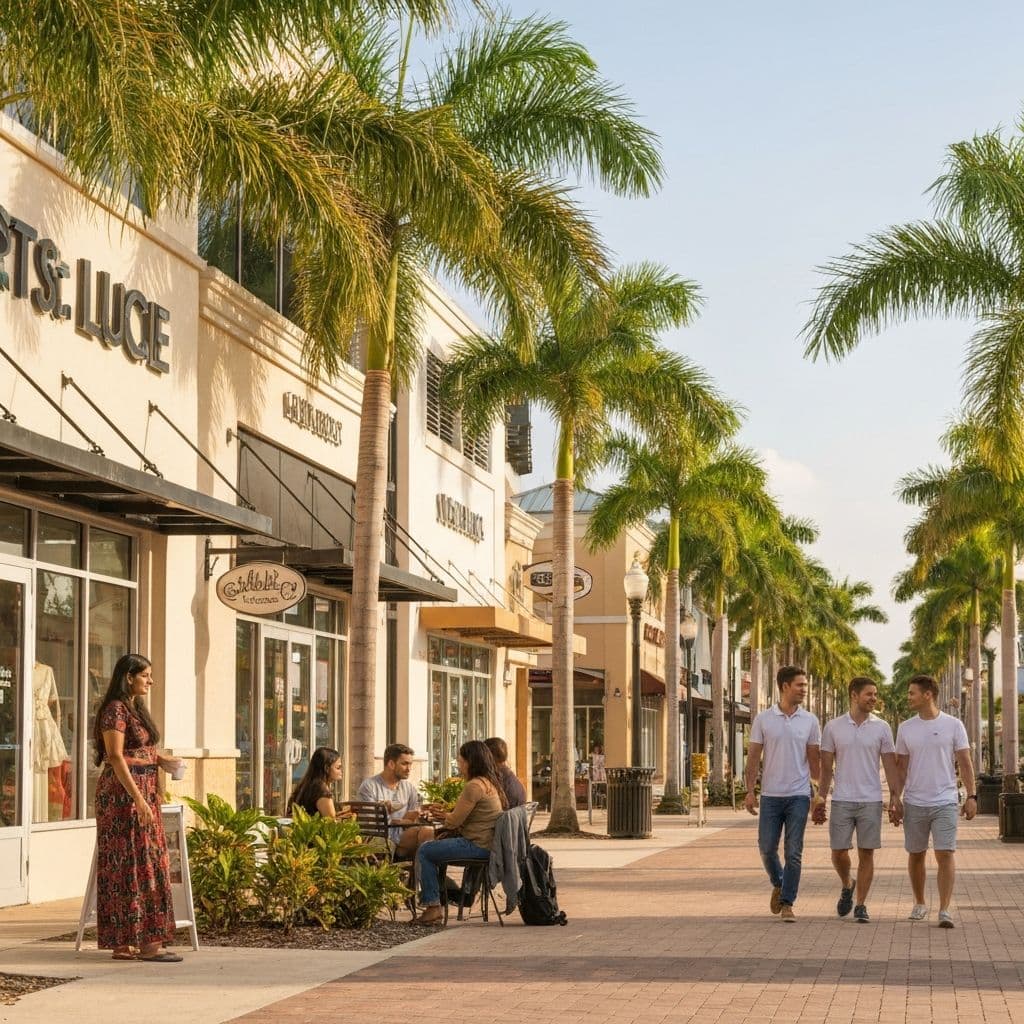
So, Is Port St. Lucie Expensive?
Relative to Miami, Palm Beach, Naples, or many Northeast metros, not especially. Relative to what Port St. Lucie used to be, and relative to what many middle-income households expect from a more affordable Florida city, yes, increasingly so.
The city still offers value if you prioritize space, homeownership, and Florida's no-income-tax structure. But if you are entering the market now, especially as a renter or first-time buyer, affordability is no longer automatic.
Housing is now expensive enough that the old cheap-Florida label no longer fits.
- Not elite-market expensive, but no longer bargain-city affordable
- Still offers relative value versus pricier coastal metros
- Current entrants feel a much different market than earlier buyers
A worksheet for the full monthly cost
Start with the mortgage principal and interest or the rental charge. For ownership, add a property-specific insurance quote, expected property taxes, HOA dues and any CDD assessments. Use the tax guide to understand why the current owner’s tax bill can differ from a new buyer’s bill. Ask whether a quoted escrow payment includes all the charges you are comparing.
Add electricity, water and sewer, internet, vehicle costs and the actual commute. Keep repairs and storm deductibles in a separate reserve rather than treating them as predictable monthly utility charges. For a rental, identify which services the lease includes and any recurring parking, pet or amenity fees. Compare alternatives using the same household and coverage assumptions.
FAQ
Common questions
Is Port St. Lucie expensive compared with other Florida cities?
Port St. Lucie is not as expensive as many top-tier South Florida markets, but it is no longer the cheap Florida option many people still expect. It now sits closer to moderately expensive, especially because of housing and rent.
Why does Port St. Lucie feel more expensive now?
Fast population growth, rising home prices, higher rents, and the added costs of insurance, utilities, and car-dependent living have all made Port St. Lucie feel more expensive than it did a few years ago.
Is Port St. Lucie still affordable for families?
It can be, especially for dual-income households or established owners, but affordability is much tighter for single earners, new renters, and first-time buyers entering the market at today's prices.
Is it expensive to live in Port St. Lucie, FL?
It can be, especially when a new housing payment combines with insurance, taxes, utilities and driving costs. Judge affordability using a current property or lease and your take-home income, rather than assuming the city’s old bargain reputation applies to every household.
What costs should I add to a Port St. Lucie mortgage estimate?
Include property taxes, insurance, HOA dues and CDD assessments where applicable, plus utilities, transport and maintenance reserves. Confirm what the lender’s escrow figure includes so charges are neither omitted nor counted twice.
Sources
Reference links
Written by
Derek Brumby
We publish Treasure Coast guides for residents, newcomers, and weekend planners. Our goal is to combine local context, linked source material, and ongoing page updates so a reader can act on the guide instead of just skim it.
Derek Brumby is the sole author and editor. On The Treasure Coast is owned and published by Brumby LLC.
Research and updates
Last verified September 30, 2026
This guide was written and edited by Derek Brumby using linked local and official sources, then reviewed for Treasure Coast planning context.