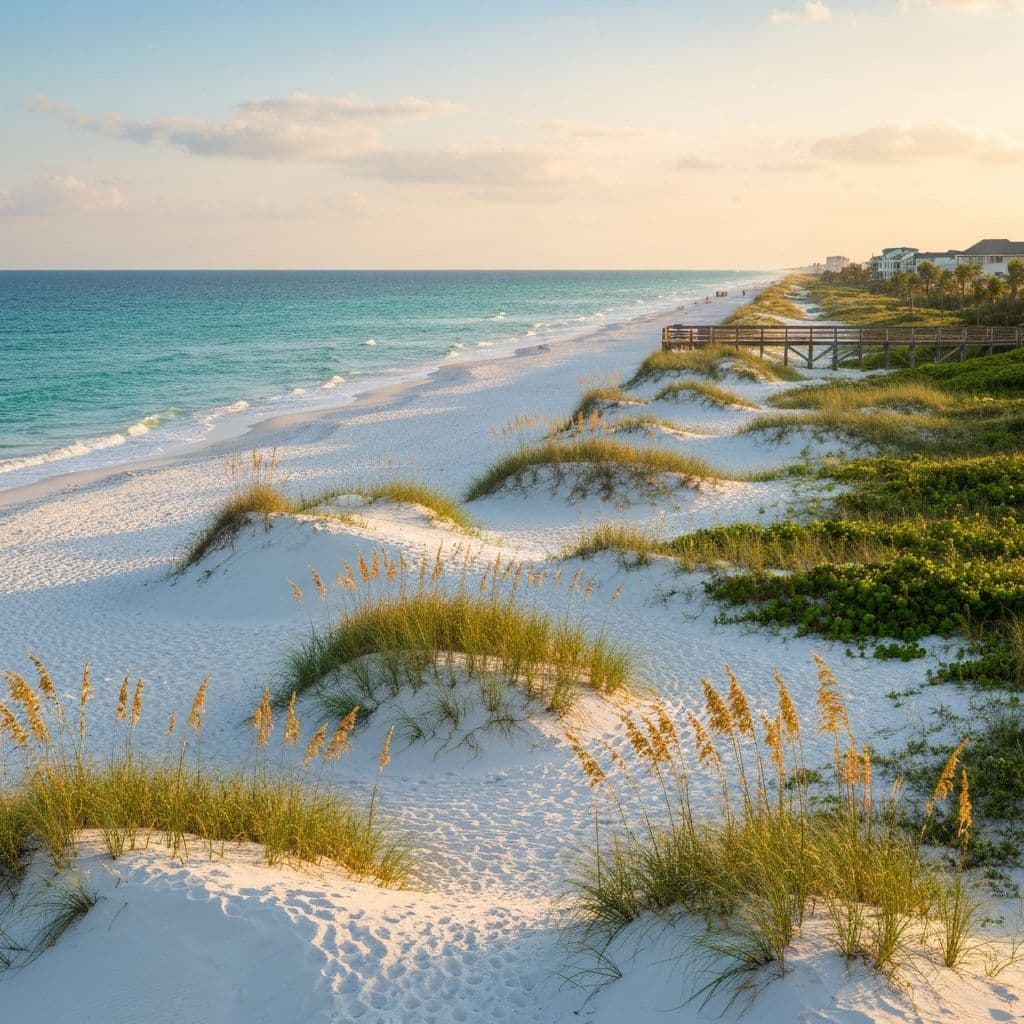
If you are researching the cost of living in Sebastian, Florida, the short takeaway is this: Sebastian is roughly in line with the U.S. average overall and a touch below the Florida average, but the real story is more nuanced. Housing is still more approachable than many headline-grabbing Florida coastal markets, yet today’s buyers and renters face meaningfully higher entry costs than longtime residents reflected in Census medians.
Sebastian is a small Treasure Coast city with an estimated 27,087 residents in 2024. It is also notably older and more owner-heavy than many Florida markets: 36.8% of residents are 65 or older, and 85.2% of housing units are owner-occupied. That profile helps explain why Sebastian often feels more stable and residential than boom-and-bust rental-heavy markets.
Related reads
Keep going without starting from scratch.
Quick list
Start with these angles
- Sebastian cost of living at a glance
- Housing is the biggest cost driver in Sebastian
- Utilities, groceries, healthcare, and transportation
- Taxes in Sebastian can help offset some costs
Sebastian cost of living at a glance
Third-party cost-of-living trackers are fairly consistent on the big picture. RentCafe says Sebastian is about the same as the national average and 1% lower than the Florida average overall, while PayScale also places Sebastian at about 0% difference from the national average. In other words, Sebastian is not a bargain-basement market, but it is not an outlier-expensive one either.
What makes Sebastian attractive is not that every category is cheap. It is that the city combines a near-national-average cost profile with Florida’s tax advantages, a coastal lifestyle, and a market that is still more moderate than many better-known beach towns. The catch is that newcomers need to budget off current asking prices, not only backward-looking local medians.

Housing is the biggest cost driver in Sebastian
Housing is where the Sebastian story splits in two.
The Census reports a median owner-occupied home value of $317,000, median monthly owner costs of $1,613 with a mortgage, $494 without a mortgage, and median gross rent of $1,451. Those numbers are useful, but they mostly describe what existing residents are paying, including people who bought years ago at lower prices.
Zillow's August 31, 2026 housing snapshot puts Sebastian's typical home value at $347,165. That index is not the same as a median sale price or the price of a particular listing. Zillow also shows an average asking rent around $2,204, which will vary sharply by size, location, and lease terms. Build a budget from homes actually available in the neighborhoods you would consider.
For apartment shoppers, recent RentCafe listings show a 2-bedroom range of about $1,800 to $1,879 and a 3-bedroom range of about $2,300 to $2,700 in Sebastian. That makes Sebastian manageable for some renters, but not especially cheap if you are arriving fresh in today’s market.
Local tip
Use the article for evergreen ideas and the newsletter for what is happening right now.
That combination gives you the best shot at finding something that fits the season, your schedule, and what is actually open or active this week.
Utilities, groceries, healthcare, and transportation
Outside housing, Sebastian looks mostly moderate with a few categories that run a bit high. RentCafe says utilities are about 8% above the U.S. average and groceries about 5% above, while PayScale shows utilities about 1% above, groceries 4% above, and healthcare 3% above the national average. The exact percentages vary by methodology, but the direction is consistent: everyday essentials in Sebastian are not wildly expensive, yet they are not notably discounted either.
PayScale’s localized examples reinforce that point, with an estimated energy bill of $221.67 per month, gas at $3.27 per gallon, and common grocery staples such as milk at $4.92 and eggs at $4.86. Those figures should be treated as directional rather than universal, but they are useful for planning.
Transportation deserves special attention. Sebastian has a mean commute time of 31.1 minutes, and RentCafe rates the city 4/100 for walkability, calling it car-dependent. Indian River County’s GoLine system helps because it is fare-free, but for most households, owning and operating a car will still be part of the real monthly cost of living in Sebastian.
Taxes in Sebastian can help offset some costs
One of Sebastian’s biggest financial advantages is Florida’s tax structure. The Florida Department of Revenue states that Florida does not impose a personal income tax. That can materially improve after-tax cash flow for retirees, remote workers, and households relocating from high-income-tax states.
That said, daily purchases are not tax-free. Florida’s general state sales tax is 6%, and Indian River County adds a 1% discretionary sales surtax, bringing the combined rate on most taxable purchases to 7%. So while income taxes are favorable, shoppers still need to account for sales tax in their day-to-day budget.
For homebuyers planning to make Sebastian their permanent residence, the local property appraiser offers homestead exemption filing, and the office notes a March 1 deadline for the tax year in which you want the exemption. That does not make housing cheap, but it can improve long-term ownership economics for full-time Florida residents.
Is Sebastian affordable for retirees, families, and remote workers?
For retirees, Sebastian can make a lot of sense because of Florida’s no-income-tax structure, its older population profile, and its ownership-heavy housing base. The math tends to work best for retirees who are buying with substantial equity, downsizing, or already have predictable retirement income.
For remote workers and mid-income households, affordability depends heavily on housing timing. Sebastian’s median household income is $69,409, which is respectable, but current rents above $2,100 and home values in the mid-$300,000s and up mean housing can still consume a large share of take-home pay.
For families and commuters, the core tradeoff is straightforward: Sebastian offers space and a coastal small-city setting, but you should assume car ownership and budget accordingly. The fare-free bus system is a helpful supplement, not a full substitute for most households.
Bottom line
The cost of living in Sebastian is best described as moderate by Florida coastal standards and roughly average nationally. Housing is the make-or-break variable. If you compare Sebastian to high-cost coastal Florida markets, it can look relatively reasonable. But if you build your budget from older local medians instead of current rents, insurance, and purchase prices, you can still underestimate what it takes to live there comfortably.
FAQ
Common questions
Is Sebastian, Florida expensive?
Sebastian is not unusually expensive overall. Multiple cost-of-living sources place it around the national average, and one source puts it slightly below the Florida average. The main pressure point is housing, especially for newcomers paying current market rates.
What is the average rent in Sebastian?
Recent market trackers put average or median asking rent in Sebastian at roughly $2,166 to $2,300 per month, depending on source and methodology. For apartment hunters specifically, recent listings show 2-bedroom units around $1,800 to $1,879 and 3-bedroom units around $2,300 to $2,700.
How much does it cost to buy a home in Sebastian?
Current housing data suggests Sebastian buyers should think in the mid-$300,000s to just under $400,000 range, depending on whether you are looking at typical home value or median sale price. Zillow reports a typical value of $343,439, while Realtor.com reports a median home sale price of $392,975.
Are taxes lower in Sebastian than in many other states?
Yes, in one important way: Florida does not have a personal income tax, which can make a real difference in take-home income. However, Sebastian residents still pay Florida’s 6% state sales tax, plus 1% Indian River County surtax on most taxable purchases.
Is Sebastian good for retirees on a fixed income?
It can be, especially for retirees who are arriving with home equity, paying cash, or qualifying for long-term ownership benefits like homestead exemption. Sebastian also has an older population profile, with 36.8% of residents age 65+, which suggests the city already appeals to retirees.
Do you need a car in Sebastian?
Usually, yes. Sebastian is rated car-dependent with a 4/100 walk score, and average commute times are just over 31 minutes. There is a fare-free GoLine transit system in Indian River County, but most households will still want a car for day-to-day convenience.
Is buying or renting cheaper in Sebastian right now?
For a new arrival, renting may offer lower short-term commitment and a clearer monthly entry point, while buying can make more sense over time if you plan to stay and can manage taxes and insurance. That is because current asking rents are around $2,166+, while buyers entering at today’s mid-$300,000s to near-$400,000 pricing may face materially higher all-in monthly costs once financing and insurance are included. Longtime owners reflected in Census data often pay less than new entrants. This is an inference based on current market prices versus historical owner-cost data.
Are flood and insurance costs a real factor in Sebastian?
Yes. Florida regulators note that flood insurance is not typically included in standard homeowners insurance and may be required by a lender depending on the home’s location. In Sebastian, that makes insurance one of the most important “hidden” budget items for buyers.
Sources
Reference links
- Sebastian housing and rental market | Zillow
- Cost of Living in Sebastian, FL 2026 | RentCafe
- U.S. Census Bureau QuickFacts: Sebastian city, Florida
- Apartments for Rent in Sebastian, FL - New Listings Daily
- Cost of Living in Sebastian, FL | PayScale
- Florida Dept. of Revenue - Tax and Interest Rates
- Indian River County Auditor - Exemptions Page
- Flood Insurance
Written by
Derek Brumby
We publish Treasure Coast guides for residents, newcomers, and weekend planners. Our goal is to combine local context, linked source material, and ongoing page updates so a reader can act on the guide instead of just skim it.
Derek Brumby is the sole author and editor. On The Treasure Coast is owned and published by Brumby LLC.
Research and updates
Last verified September 29, 2026
This guide was written and edited by Derek Brumby using linked local and official sources, then reviewed for Treasure Coast planning context.