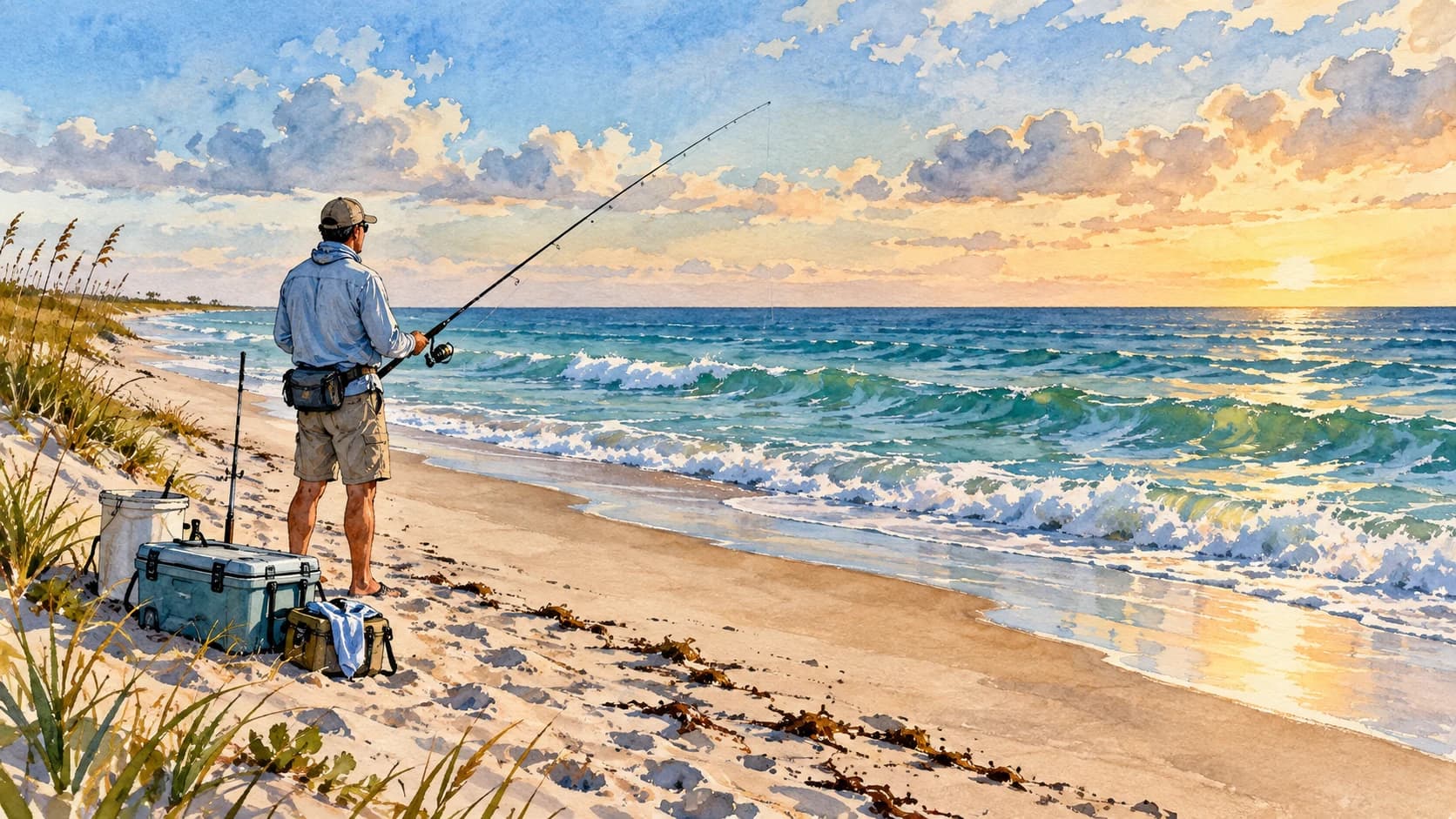
Generally, yes: you need a Florida saltwater fishing license to fish from an ocean beach unless a specific exemption applies. Eligible Florida residents can obtain a no-cost shoreline-only license. That is a license you must obtain, not a rule that lets every resident fish without one. Nonresident adults generally need a paid saltwater license, even when standing on a public beach and releasing every fish.
The same statewide framework applies on Treasure Coast beaches. Your age, Florida residency, target species and method of reaching the fishing spot determine the appropriate license or exemption. Shore fishing, kayak fishing and a properly licensed charter are different situations. The information below was checked against FWC’s current licensing pages September 30, 2026; use those official pages to confirm your own eligibility and any additional permit.
Related reads
Keep going without starting from scratch.
Quick list
The question this guide answers
- Generally yes, unless you qualify for a specific exemption. Eligible residents can obtain a no-cost shoreline-only saltwater license; nonresident adults generally need a paid license.
A beach outing still counts as fishing
FWC’s visitor-license guidance says a license is required to attempt to take fish. Casting a line and practicing catch and release still count. A visitor’s fishing license from another state is not valid in Florida. Buying a rod at a local shop, paying to park or staying at a beachfront hotel does not establish a fishing-license exemption. Check each adult angler’s eligibility before the group begins casting.
Distinguish the state license from access to a particular beach. A fishing license does not authorize entering a closed area, crossing private property or casting into a designated swimming area contrary to site rules. Start with a public access suitable for fishing and read its signs. For someone new to beach fishing, choose an uncrowded position that leaves room for other beach users, then make the licensing decision for the actual fishing method. Moving to a pier or getting aboard a boat can change that decision.
Florida residents: what the no-cost shoreline license covers
The official shoreline FAQ explains the resident shoreline option. It covers saltwater fishing from shore or a structure attached to shore. It does not cover fishing from a vessel, fishing from a shoreline reached by vessel, or taking marine organisms by swimming or diving. Obtain the license using FWC’s approved channels and keep its details available. If you are unsure whether you qualify as a Florida resident, check FWC’s residency rules rather than relying on owning property here.
For example, an eligible resident driving to a public Hutchinson Island beach to cast from shore may use the shoreline-only license. The same person paddling to a fishing spot cannot use it to cover fishing from the kayak. Nor does beaching the kayak on another shoreline convert that trip into a covered shore outing. A paid resident saltwater license is the broader option to check when a trip includes a vessel. The method of access is relevant even if the tackle and target fish remain unchanged.
Local tip
Use the article for evergreen ideas and the newsletter for what is happening right now.
That combination gives you the best shot at finding something that fits the season, your schedule, and what is actually open or active this week.
Visitors: choose a license for the trip dates
FWC’s current saltwater fee page lists $17 for a nonresident three-day license, $30 for seven days, and $47 for an annual license. A resident annual saltwater license is listed at $17. Check the selected start date when purchasing a short-term license, particularly if fishing is only one part of a longer vacation. The dates on the issued license should cover every day you intend to fish.
Choose duration around actual plans rather than assuming a three-day license automatically spans a week of occasional fishing. Additional species permits or vendor issuance fees can affect the total. Two nonresident adults buying three-day saltwater licenses would have a $34 base license cost before any added permit or applicable fee. A child’s exemption may mean the family needs fewer licenses than people, but it does not exempt an adult who also casts or fishes. Confirm the individual licenses, rather than treating one purchase as a family pass.
Age and other exemptions are specific
FWC’s exemption page lists youth younger than 16 as exempt from recreational fishing-license requirements. It also lists Florida resident seniors age 65 and older with appropriate proof of age and residency. The senior exemption is tied to Florida residency: a 70-year-old visitor from another state should not assume age alone removes the need for a paid Florida license. Keep the required proof available when relying on an exemption.
Other exemptions have defined conditions. Read the official list if a disability, military status, assistance program or particular fishing method may apply. Do not substitute a broad label such as “veteran” or “retired” for the actual eligibility criteria. Some special designations and tags have requirements even for anglers exempt from the ordinary license. When your situation does not clearly match the published rule, ask FWC or a tax collector’s licensing office before the trip. That is more reliable than a remembered rule from a different state or an older visit.
Piers, charters, species permits and freshwater
FWC’s visitor page describes license coverage when fishing from a pier holding a valid saltwater pier license or a for-hire vessel holding a valid charter license. Verify that coverage with the pier or operator; a public dock is not automatically a licensed fishing pier. Similarly, a privately owned boat is not automatically a charter that covers passengers. Ask what the trip’s license covers and whether anything additional is needed for the planned activity.
Species requirements are a separate check. FWC’s shoreline FAQ says a nonexempt angler needs a snook permit to keep a snook in season, and its permit page explains the no-cost shore-based shark-fishing permit and required course for anglers 16 and older. Check these rules before targeting those activities. For an inland bass outing, use the freshwater requirements; there is no equivalent general no-cost freshwater shoreline license. FWC’s recreational FAQ says license requirements follow the species being targeted, including where fresh and saltwater fisheries overlap.
Buy through the official service and check fishing rules too
FWC identifies GoOutdoorsFlorida as its online purchasing service. You can also use the channels described in its getting-started fishing guidance, including license agents and county tax collectors. Check the angler’s name, residency selection, license type, start date and any added permit before completing the purchase. Save the issued license details so you can retrieve them at the beach without depending on searching through unrelated reservation emails.
Finally, a license does not establish that a fish can be kept. Open FWC’s current saltwater rules for size limits, bag limits, seasons and permitted gear for your target species and region. Check free-fishing dates only on the official calendar for the relevant year; an exemption on one designated day does not extend into the rest of a vacation. For river access, the St. Lucie River fishing guide can help you choose the outing after the license question is settled.
FAQ
Common questions
Do you need a license to fish on the beach in Florida?
Generally yes, unless you qualify for a specific exemption. Eligible residents can obtain a no-cost shoreline-only saltwater license; nonresident adults generally need a paid license.
Do you need a license if you only catch and release?
Yes, unless exempt. FWC says attempting to take fish, including casting a line and catch-and-release fishing, requires the applicable license.
Can you use the free shoreline license from a kayak?
No. It does not cover fishing from a vessel or from a shoreline reached by vessel. Check a regular saltwater license or an applicable exemption for that trip.
Sources
Reference links
- FWC: visitor-license requirements
- FWC: shoreline-only license questions
- FWC: saltwater licenses, prices and additional permits
- FWC: defined license exemptions
- FWC: recreational licensing FAQ
- GoOutdoorsFlorida: official license service
- FWC: fishing-license purchasing channels
- FWC: current saltwater fishing regulations
Written by
Derek Brumby
We publish Treasure Coast guides for residents, newcomers, and weekend planners. Our goal is to combine local context, linked source material, and ongoing page updates so a reader can act on the guide instead of just skim it.
Derek Brumby is the sole author and editor. On The Treasure Coast is owned and published by Brumby LLC.
Research and updates
Last verified September 30, 2026
This guide was written and edited by Derek Brumby using linked local and official sources, then reviewed for Treasure Coast planning context.