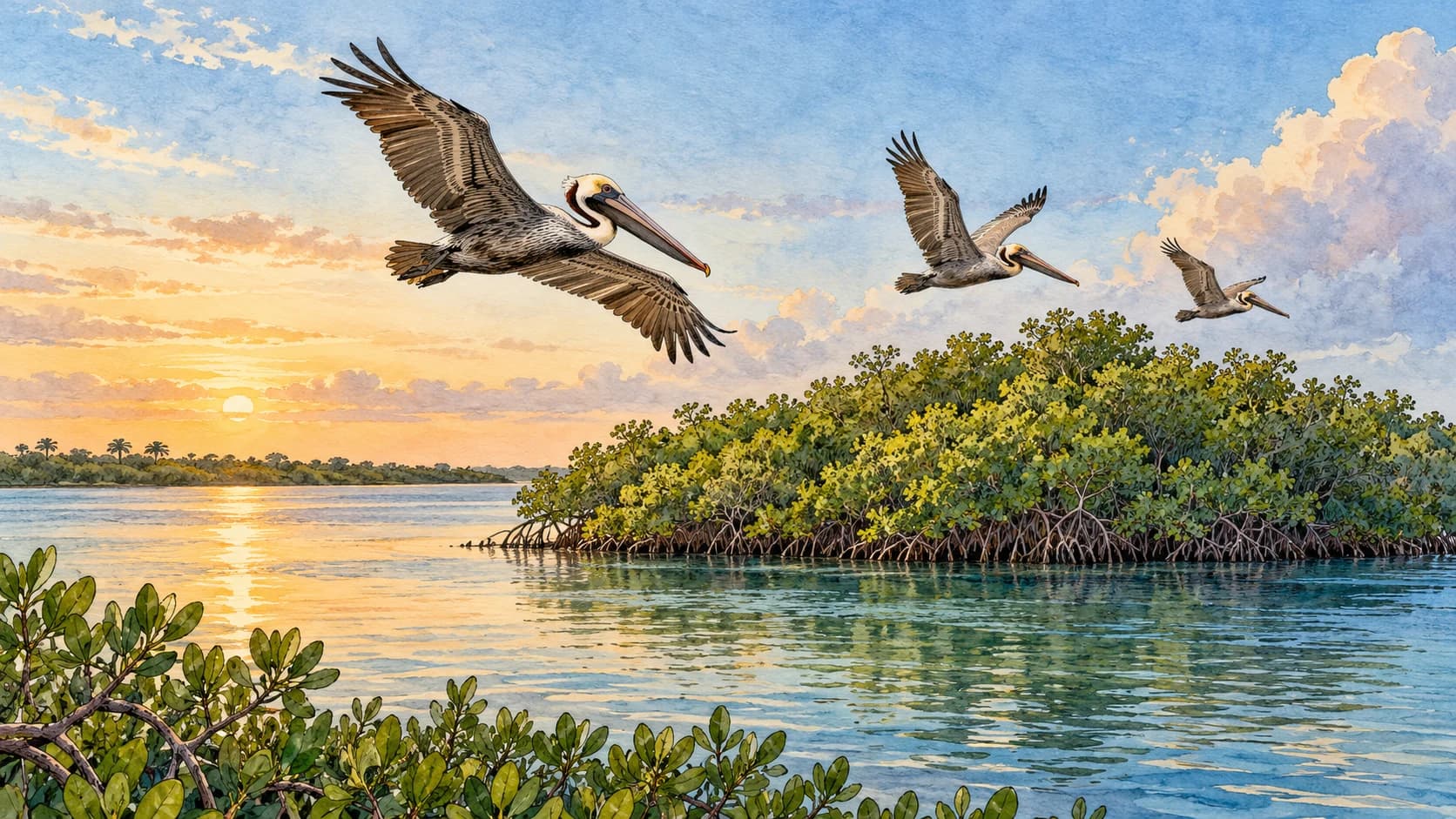
The simplest first visit to Pelican Island National Wildlife Refuge is by road to its public trails on Historic Jungle Trail, off A1A between Wabasso Beach Road and Sebastian Inlet. You walk to a viewing area overlooking the protected island; you do not need a boat to enjoy the refuge. For the Centennial Trail, the U.S. Fish and Wildlife Service gives the specific address 11455 Jungle Trail, Vero Beach. Use that destination instead of assuming every refuge address leads to the same trailhead.
The refuge is near Sebastian on the Indian River Lagoon, with public land access on the barrier island. Its name can cause confusion: Pelican Island itself is a bird rookery, while the larger refuge includes public trails and surrounding protected habitat. A first visit is a wildlife walk and a look at the history of federal wildlife protection. It is not a landing trip to the nesting island.
Related reads
Keep going without starting from scratch.
Quick list
The question this guide answers
- Drive to the public trails on Historic Jungle Trail off A1A between Wabasso Beach Road and Sebastian Inlet. The Centennial Trail address listed by the refuge is 11455 Jungle Trail, Vero Beach.
Getting to the right trailhead
The official visiting page places public-use areas about 3.7 miles north of Wabasso Beach Road on A1A or 3.3 miles south of Sebastian Inlet. From the mainland, use the Wabasso causeway approach to A1A, then follow the refuge's directions to Jungle Trail. Confirm your selected trailhead on the refuge map before starting the drive.
This is especially useful if you are meeting another car. Send the name of the trail and its parking location, not simply "Pelican Island." Decide how long the group plans to walk before setting the meeting point. Centennial is a manageable first stop; a longer impoundment loop asks for different footwear, water, and time. If a navigation app suggests an unfamiliar access, compare it with the official visitor map and signs.
Start with the Centennial Trail
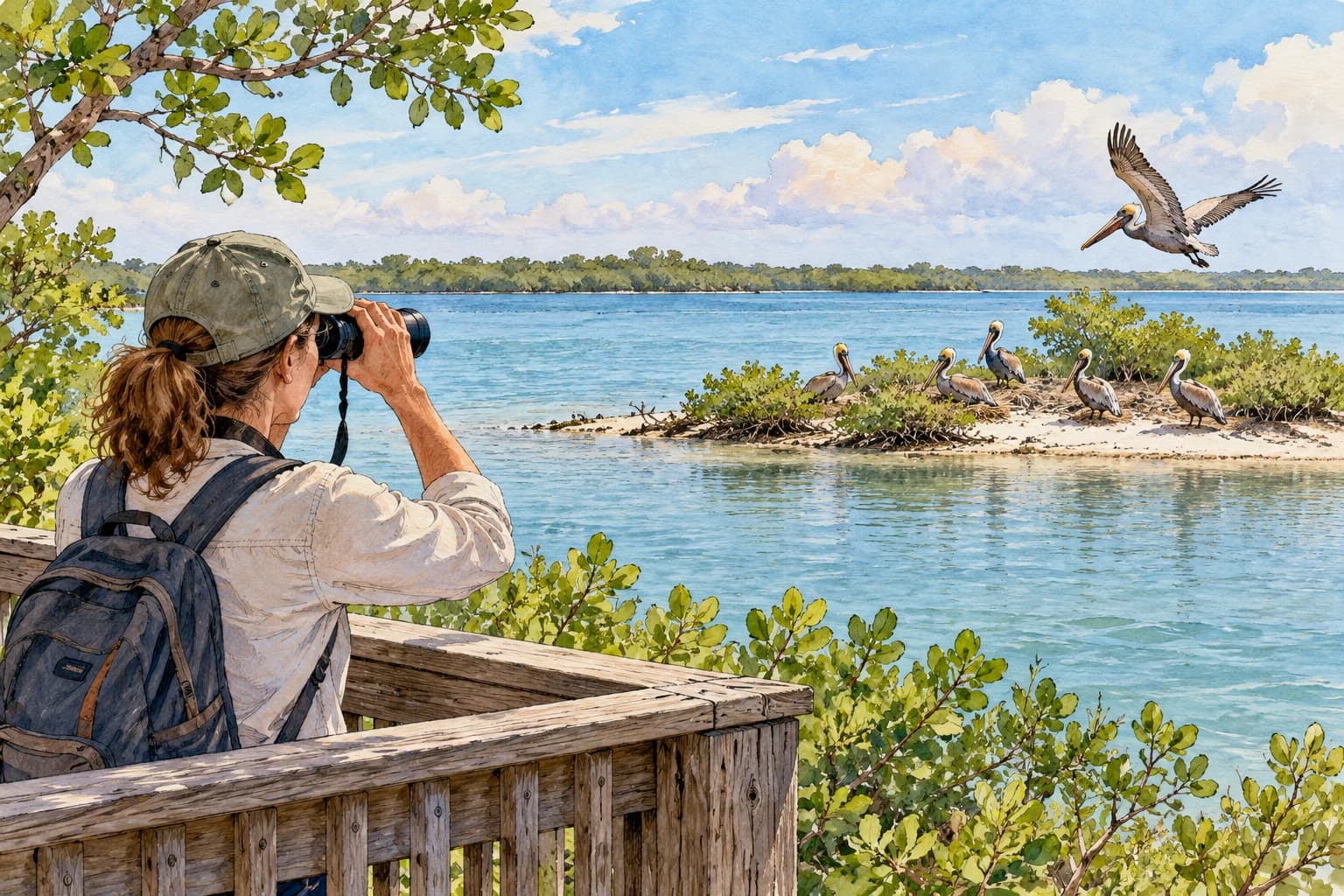
The refuge brochure describes Centennial as a three-quarter-mile round trip ending at an observation platform and boardwalk overlooking the island from a distance. It is identified as ADA accessible. History interpretation along the route gives visitors something to read even when birds are distant or difficult to see.
For a first outing, let that short route be the whole plan. Bring binoculars if you have them and allow time at the overlook. The best view of a bird may still be small in the frame of a phone camera. If someone needs a particular mobility arrangement, ask the refuge about the current surface and access. A listed accessible route can still be affected by maintenance or weather, so use the day's instructions.
Local tip
Use the article for evergreen ideas and the newsletter for what is happening right now.
That combination gives you the best shot at finding something that fits the season, your schedule, and what is actually open or active this week.
Longer loops and quieter observation
The brochure also identifies the three-mile Joe Michael Memorial Trail, the three-mile Bird's Impoundment Trail, and a shorter Wildlife Trail. These routes let you spend more time with different habitat. Choose one according to the heat and the walkers in the group. The existence of several miles of trails is not a reason to combine all of them into a first visit.
An impoundment walk can reward patience. Stop where you can see changes between water, low vegetation, and mangrove edges. Let another visitor pass if you are spending time with binoculars. You may find birds quickly or walk a stretch without an obvious sighting. The refuge is habitat, not a controlled animal display. A quiet route through it remains useful even when the animal you hoped to photograph does not appear.
The first national wildlife refuge
The refuge's history explains that President Theodore Roosevelt designated Pelican Island in 1903 to protect nesting birds. It became the country's first national wildlife refuge. That history is a major reason for the Centennial Trail's interpretation and the importance of the small island visible from its overlook.
Keep that origin in mind while looking across the lagoon. Protecting a rookery meant reserving space for wildlife at a time when birds were under pressure. The modern visitor experience continues that purpose by offering observation from places that keep people out of sensitive areas. The distance is part of the visit. An observation platform does not promise the close encounter you might expect at a zoo.
When to go and what to bring
The refuge homepage identifies fall through spring as a useful period for watching its bird residents, including migratory white pelicans and nesting brown pelicans. Season improves the possibilities; it does not guarantee a species on the day you visit. Check the bird list if you want to understand the seasonal differences rather than arriving with a single expected sighting.
The visiting page warns that drinking water is unavailable and that insects can be troublesome in warmer months. Bring your own water and appropriate sun and insect protection. Its detailed public-use instructions list daily access from 7:30 a.m. until sunset, although the page footer uses sunrise-to-sunset wording. Follow current gate signs and contact the refuge if you plan an especially early arrival. Keep the return walk inside the closing window.
Rules, tours, and a responsible visit
The refuge's visitor instructions exclude bicycles and pets from the trails, with service animals addressed separately. Stay on designated routes and do not use calls or devices to draw birds closer. The brochure describes viewing the rookery by boat from outside its posted closed area, not entering it. A kayak trip needs its own launch, navigation, and condition checks; it is not an automatic extension of a short trail visit.
The program page describes volunteer-guided activities, but dated events need a fresh reservation check. A January-to-April 2026 tram listing is a past season, not a future booking. Use the current refuge announcement for your date. If you want to combine the refuge with a wider outing, keep the trail walk as the morning's anchor and leave the rest flexible around weather and the group's energy.
FAQ
Common questions
How do I get to Pelican Island National Wildlife Refuge?
Drive to the public trails on Historic Jungle Trail off A1A between Wabasso Beach Road and Sebastian Inlet. The Centennial Trail address listed by the refuge is 11455 Jungle Trail, Vero Beach.
Can I walk onto Pelican Island itself?
The normal land visit follows public trails to an overlook. The island rookery has a posted closed area, and boaters must remain outside that area. Do not treat the refuge name as permission to land on the island.
Are dogs or bicycles allowed on the trails?
The refuge's published visiting instructions prohibit pets and bicycles on trails, while allowing service animals. Check current signs for any additional temporary restrictions.
Sources
Reference links
- U.S. Fish and Wildlife Service: directions and visitor instructions
- U.S. Fish and Wildlife Service: refuge history
- U.S. Fish and Wildlife Service: current refuge notices and seasonal birding
- U.S. Fish and Wildlife Service: trail brochure and rookery restrictions
- U.S. Fish and Wildlife Service: ranger and volunteer programs
Written by
Derek Brumby
We publish Treasure Coast guides for residents, newcomers, and weekend planners. Our goal is to combine local context, linked source material, and ongoing page updates so a reader can act on the guide instead of just skim it.
Derek Brumby is the sole author and editor. On The Treasure Coast is owned and published by Brumby LLC.
Research and updates
Last verified September 30, 2026
This guide was written and edited by Derek Brumby using linked local and official sources, then reviewed for Treasure Coast planning context.