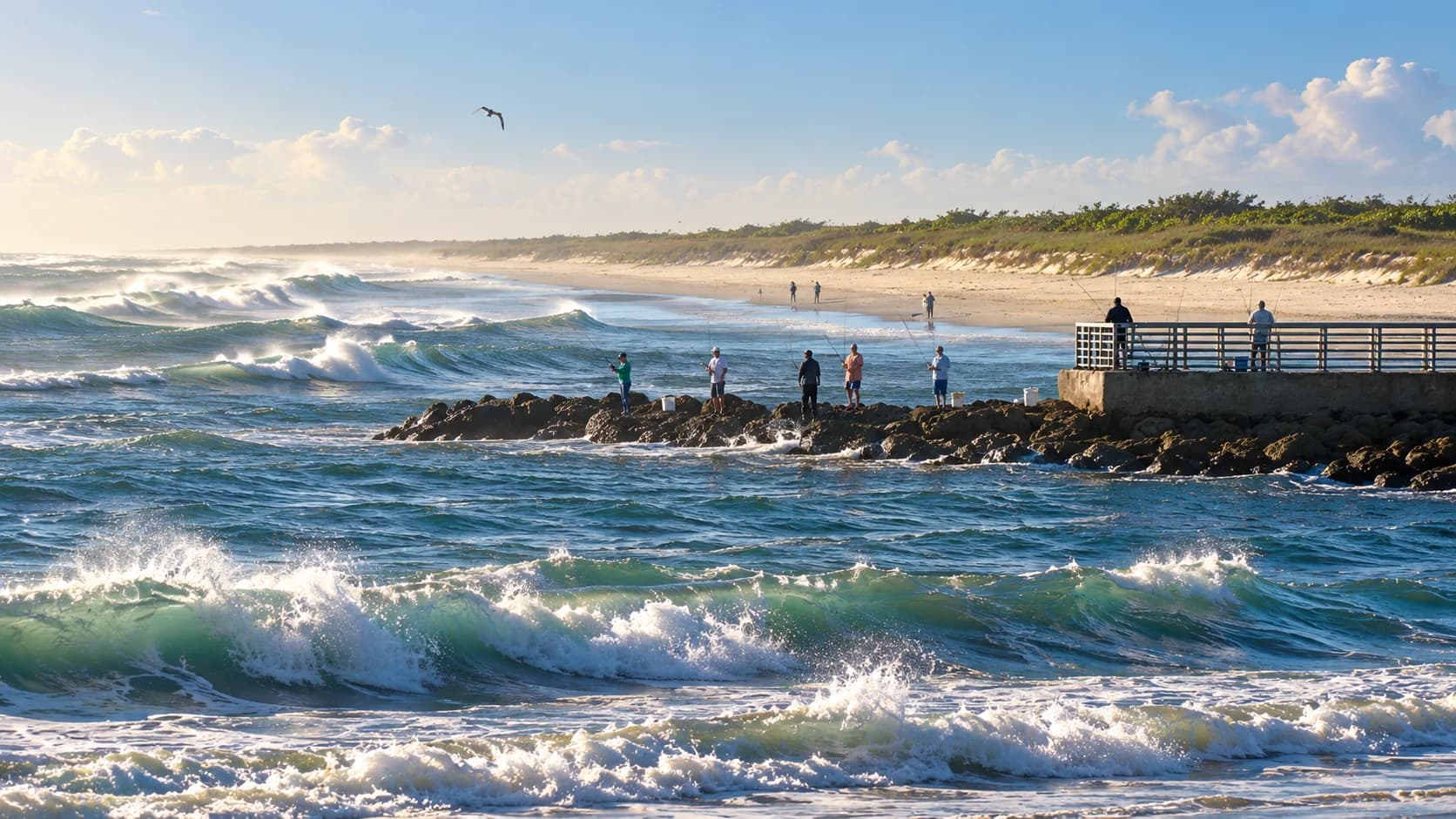
Sebastian Inlet asks you to make a choice before you leave the car. The Atlantic beach, the calmer cove, the fishing jetties, and the lagoon side reward different kinds of visits. Trying to cover all of them in one rushed hour can turn a good park into a parking exercise.
For a first visit, pick one water activity and one land stop. The park's north side is the natural starting point for surf watching and the protected cove. The south side adds the Hammock Trail, campground area, and the McLarty Treasure Museum farther down A1A. Your route may need to change while bridge construction affects access, so read the park's current notice before driving.
Related reads
Keep going without starting from scratch.
Quick list
Choose your first stop
- Surf and shore: start on the north side and check beach flags before entering the water.
- Calmer water: consider the north-side cove, with the same close supervision you would use at any beach.
- A short walk: use the one-mile Hammock Trail for shade and lagoon-edge habitat.
- History: pair the Sebastian Fishing Museum with the McLarty Treasure Museum when their posted hours fit.
The inlet divides the day in two
The north and south entrances serve different parts of the park. On the north, you are close to the Atlantic surf, the jetty, and a protected swimming cove. The south side connects more directly to the campground, lagoon, short nature walk, and historic stops. A drive across the bridge can be part of the plan, but it should not be an afterthought when traffic is heavy.
Florida State Parks currently warns that the north side can reach capacity on busy weekends. Its Sebastian Inlet page also flags bridge construction that began in May 2026, with possible congestion, campground impacts, and changes to south-side beach access. Check that notice on the day you travel. A map screenshot saved months ago is less useful than the operator's live page.
Choose the surf or the cove on purpose
The Atlantic beach is the park's big visual draw. The surf can be powerful, and the park posts warning flags. Go for a shore walk or to watch surfers even when swimming is a poor idea. Bring shoes that can handle hot sand and enough water for the walk back from your spot; the shade you find near a picnic area will not follow you onto the open beach.
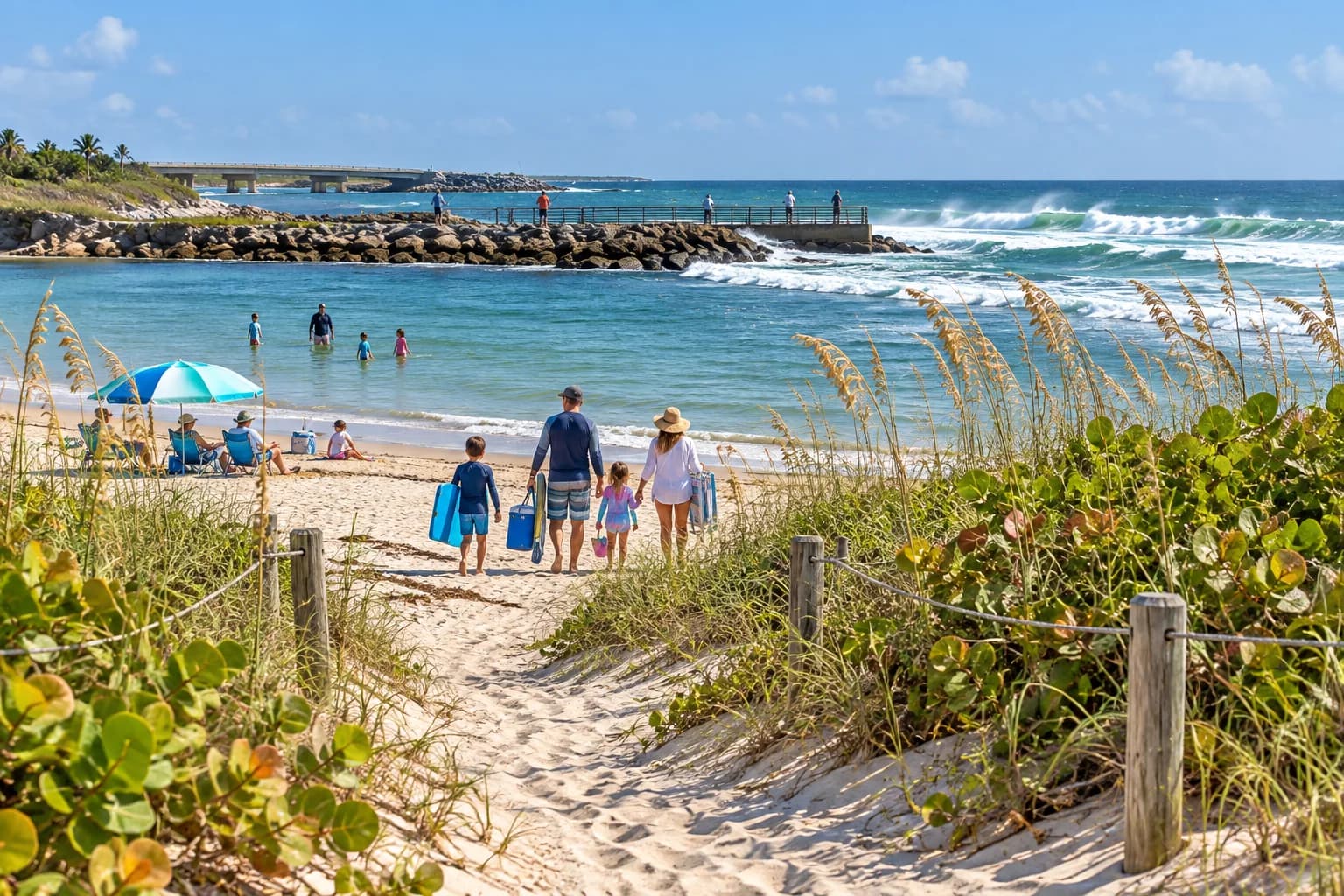
The north-side cove is more sheltered and has a gentler entry than the open surf. That makes it appealing to families and less confident swimmers, but the park notes that depth varies and conditions still matter. Keep children close, swim with a buddy, and read the flags and on-site notices. The cove is a choice about water exposure, not a promise of risk-free swimming.
Local tip
Use the article for evergreen ideas and the newsletter for what is happening right now.
That combination gives you the best shot at finding something that fits the season, your schedule, and what is actually open or active this week.
The jetty is a visit even if you never cast
Anglers use the jetties to reach moving inlet water without a boat. If you fish, bring the right saltwater license and check the current rules for your intended catch before setting up. The rock edge, current, and changing weather deserve more attention than a scenic photo suggests. For everyone else, a walk near the jetty is a good way to understand why this narrow passage shapes the entire park.
Plan for other people using the same space. Give anglers room to cast and keep young children away from hooks, bait, and the water edge. If the north lot is full, the park says there is additional parking across the bridge on the south side, but construction or an entrance change may alter the best route. You can also make this a shore-watching visit and save the fishing plan for a quieter morning.
Make room for the Hammock Trail
The park describes the Hammock Trail as a one-mile walk through a subtropical palm and oak hammock near mangrove habitat. It is a useful counterweight to the exposed beach: a different temperature, different sounds, and a closer look at the vegetation that protects the lagoon side. It is short enough to add after a beach stop without turning the day into a long hike.
Wear closed shoes if you intend to walk the whole loop. Wet ground, roots, insects, and heat can change the feel of an easy mile. Wildlife sightings are possible, never scheduled. If you only have an hour, choose between the trail and the jetty rather than rushing both. A slower trail walk will tell you more about the place than a hurried lap across every parking area.
Two small museums give the inlet its history
The Sebastian Fishing Museum covers the families and working boats tied to the lagoon's fishing industry. Farther south, the McLarty Treasure Museum tells the story of the 1715 Spanish fleet wrecks and the salvage history that gave this coast its name. Neither needs to consume a full day, which makes either a good heat or rain break if its doors are open.
Museum schedules and fees are separate from a simple beach plan. The park's amenities page currently lists different hours for the two museums, so check both before making the history stop the center of your outing. The McLarty site is farther down the road than a casual jetty visit; give the drive and the exhibits their own block of time.
A workable half-day with children
Start early on the north side while parking is easier. Look at the flags and water first, then decide whether your family will spend time in the cove or stay on the sand and watch the surf. A snack and water break under shade keeps the day flexible. If the beach is rough, the outing still has a purpose: walk where it is safe, watch the inlet, and move to a museum or short trail afterward.
Keep the second stop modest. A one-mile hammock walk is enough for children who have already played in the water. A museum works better for a child who is curious about boats or treasure than for one who needs more room to move. The park provides beach wheelchair access on request and lists accessible facilities, but call ahead if a particular route or support is essential for your group.
Check the details that can undo the plan
Read the state park's live page for the bridge notice, entrance access, capacity alerts, hours, and fees. Then check the beach warning flags or local weather. The north entrance may be open around the clock while south-side access follows different rules, so do not assume one posted park hours line applies to every activity. Campers and boaters have their own access rules.
Pets are allowed in designated day-use areas on a short leash, but not on the beach, playground, or in bathing areas. That distinction matters if you are driving down with a dog. Pack water, sun protection, footwear, and a change of plan. A good Sebastian Inlet visit follows the conditions you find, not the itinerary you wrote the night before.
FAQ
Common questions
Is Sebastian Inlet good for a first beach trip with children?
It can be if you choose the north-side cove or a shore walk based on the day's flags and conditions. Supervise closely; sheltered water is still water.
Can I visit both sides of the inlet in one day?
Yes, but bridge traffic and current construction can change the timing. Pick a primary side and check the park's live access notice before leaving.
Do I need a fishing license on the jetty?
Licensing depends on how and where you fish. Check the current Florida Fish and Wildlife Conservation Commission rules before casting.
Sources
Reference links
Written by
Derek Brumby
We publish Treasure Coast guides for residents, newcomers, and weekend planners. Our goal is to combine local context, linked source material, and ongoing page updates so a reader can act on the guide instead of just skim it.
Derek Brumby is the sole author and editor. On The Treasure Coast is owned and published by Brumby LLC.
Research and updates
Last verified September 30, 2026
This guide was written and edited by Derek Brumby using linked local and official sources, then reviewed for Treasure Coast planning context.