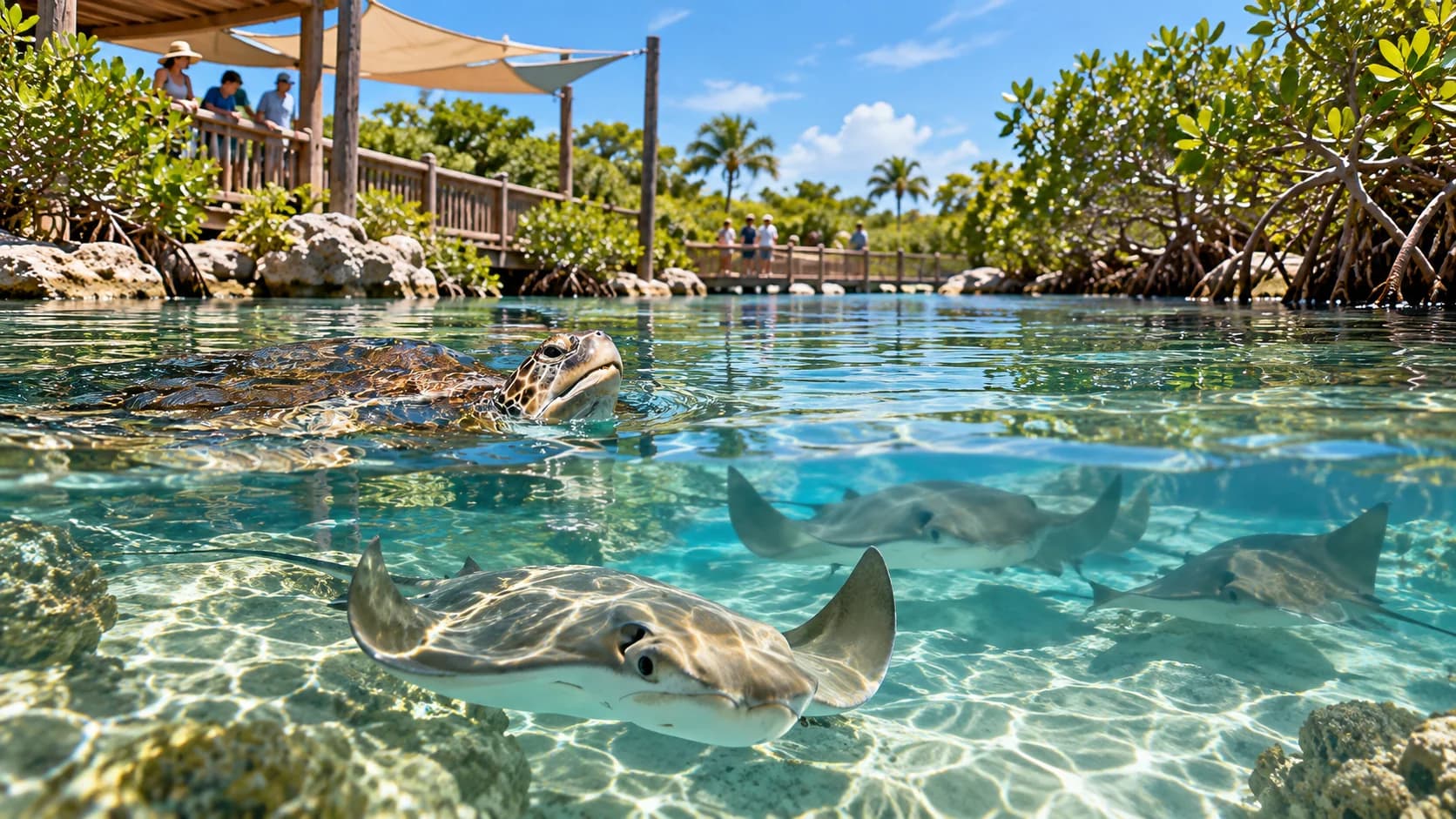
The Florida Oceanographic Coastal Center is easiest to enjoy when you plan around its animal programs. Drop in halfway through the day without checking the schedule, and you might miss the sea turtle talk or arrive just after a stingray interaction window. Build the visit around one program your group cares about, then let the exhibits and trail fill the spaces between.
The center sits on Hutchinson Island near Stuart. It combines outdoor animal habitats, an indoor EcoCenter, a water-play learning area, and a trail toward the Indian River Lagoon. It is an education center with living animals, not a large indoor aquarium, so weather and heat are part of the decision.
Related reads
Keep going without starting from scratch.
Quick list
Pick the part your group will remember
- Sea turtles: use the daily program to learn about the resident animals and nesting coast.
- Gamefish Lagoon: see local fish and sharks in a large saltwater habitat.
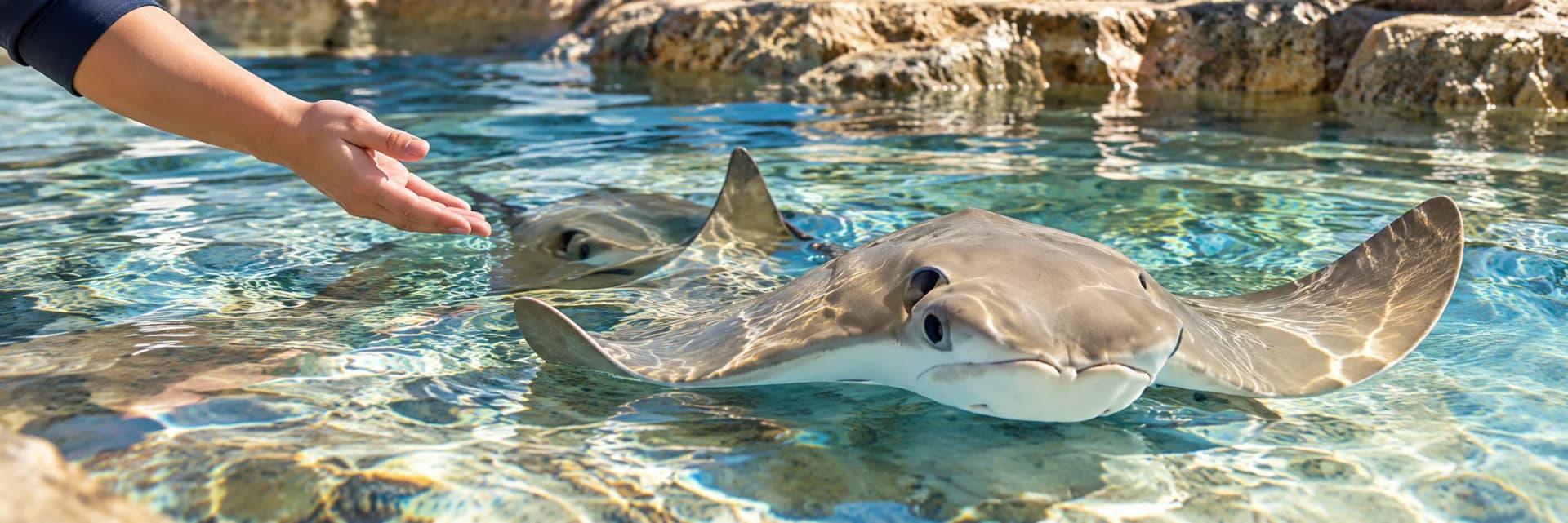
- Stingrays: check interaction windows separately from the presentation schedule.
- Nature trail: allow time for the one-mile mangrove walk if the weather suits your group.
Start with the daily program board
The center publishes a daily program schedule for stingrays, sea turtles, and Gamefish Lagoon. That schedule is the skeleton of a first visit. At the entrance, check which talks are running and whether weather has changed the plan. Choose one as an anchor, then work backward to the exhibits you can comfortably see before it starts. This avoids dragging children across the grounds at the exact moment they are ready to stop and listen.
One useful distinction: the stingray presentation and the hands-on interaction windows are not the same activity. The operator's daily-program page says touching is paused during the talk and available in separate periods, subject to change. Read the current instructions from staff. A live animal program depends on the animal's welfare as much as the visitor timetable, so a little flexibility is part of the visit.
The sea turtle stop deserves time
Florida Oceanographic's sea turtle program connects its resident turtles to the species that use Martin County beaches. It is a stronger experience when children have a question ready: how does a turtle find the beach, what threatens a nest, or why do some turtles live under human care? Those questions turn a quick viewing stop into something the family can carry to the next beach visit.
The animals are not performers, and no guide can promise how close they will be at a particular moment. Give the viewing area a little patience, follow staff directions, and let the talk do the explanatory work. The center's conservation mission also includes rehabilitation, research, and education; ticket revenue helps support that work according to the operator. That context is useful, but the best reason to attend the talk is the information you can use when you are near nesting habitat later.
Local tip
Use the article for evergreen ideas and the newsletter for what is happening right now.
That combination gives you the best shot at finding something that fits the season, your schedule, and what is actually open or active this week.
Gamefish Lagoon makes local waters legible
The saltwater Gamefish Lagoon holds native species including gamefish and sharks. Seen together, they are easier to understand than a list of names in a field guide. The feeding or interpretation program is a good time to ask what lives in the nearby Indian River Lagoon and what belongs in open ocean water. The center also has smaller aquariums and exhibits in its EcoCenter for a closer look at invertebrates and other coastal life.
At the stingray habitat, follow the posted handwashing and touch rules exactly. A child's excitement can outrun the instructions, so read them together before approaching the water. The aim is a careful encounter with a live animal, not a race to get a photo. If the interaction is paused, the viewing and staff explanation still make the stop worthwhile.
Choose one active stop after the talks
Waterworks is the center's hands-on exploration area for moving water through model rivers, wetlands, and estuaries. It is a useful reset for children who have listened to two talks and need to do something with their hands. The topic is local: where water flows, what slows it, and why the coast depends on what happens inland. Clothes that can tolerate a little water make this stop easier.
The nature trail is a different kind of reset. The operator describes a one-mile loop through coastal habitat toward the lagoon, with last-entry times that may be earlier than closing. Choose it when your group still has walking energy and the heat or rain is manageable. Bring water, use insect protection appropriate for your family, and leave enough time to get back without hurrying. A trail at an outdoor coastal center is still a real Florida trail.
Treat this as an outdoor visit
Some of the most memorable parts of the center are outdoors. Florida Oceanographic warns that weather can affect hours and program availability. A forecast with thunderstorms is more than a minor inconvenience if your plan depends on the lagoon talk, trail, and open-air habitats. Check the official site before departure and have another nearby stop in mind if the day closes in.
The center lists its location as 890 NE Ocean Boulevard on Hutchinson Island. Driving there from mainland Stuart adds bridge travel to the outing. Build in a little buffer before the animal program you most want to see, especially on a weekend. For accessibility or group arrangements, use the center's current visitor information and contact staff about the exact route or accommodation you need.
A half-day route that does not depend on perfect timing
Arrive near opening, read the program board, and see one animal habitat before the first talk you choose. After the talk, move through the EcoCenter or Waterworks. Save a second program for later only if everyone is still engaged. The trail fits best before the hottest part of the afternoon; if it is too hot, make the indoor exhibits and shaded breaks the second half of the visit instead.
Current hours, prices, and individual program times are posted on the operator's Coastal Center pages and may change. Check them rather than carrying a screenshot from an old article. The center's value is in connecting the animals to the lagoon and beaches outside its gates. One thoughtful program and a walk through the habitat will usually do more for a first visit than trying to see every scheduled feeding.
FAQ
Common questions
Is the Coastal Center mostly indoors?
No. It has indoor exhibits, but animal habitats and the nature trail are outdoors. Weather can affect programs and hours.
Can children touch stingrays during the stingray talk?
The operator separates the talk from the interaction windows and says touching is not allowed during the presentation. Follow the day's staff instructions.
How long is the nature trail?
The operator describes a one-mile loop toward the Indian River Lagoon. Check the posted last-entry time before setting out.
Sources
Reference links
Written by
Derek Brumby
We publish Treasure Coast guides for residents, newcomers, and weekend planners. Our goal is to combine local context, linked source material, and ongoing page updates so a reader can act on the guide instead of just skim it.
Derek Brumby is the sole author and editor. On The Treasure Coast is owned and published by Brumby LLC.
Research and updates
Last verified September 30, 2026
This guide was written and edited by Derek Brumby using linked local and official sources, then reviewed for Treasure Coast planning context.