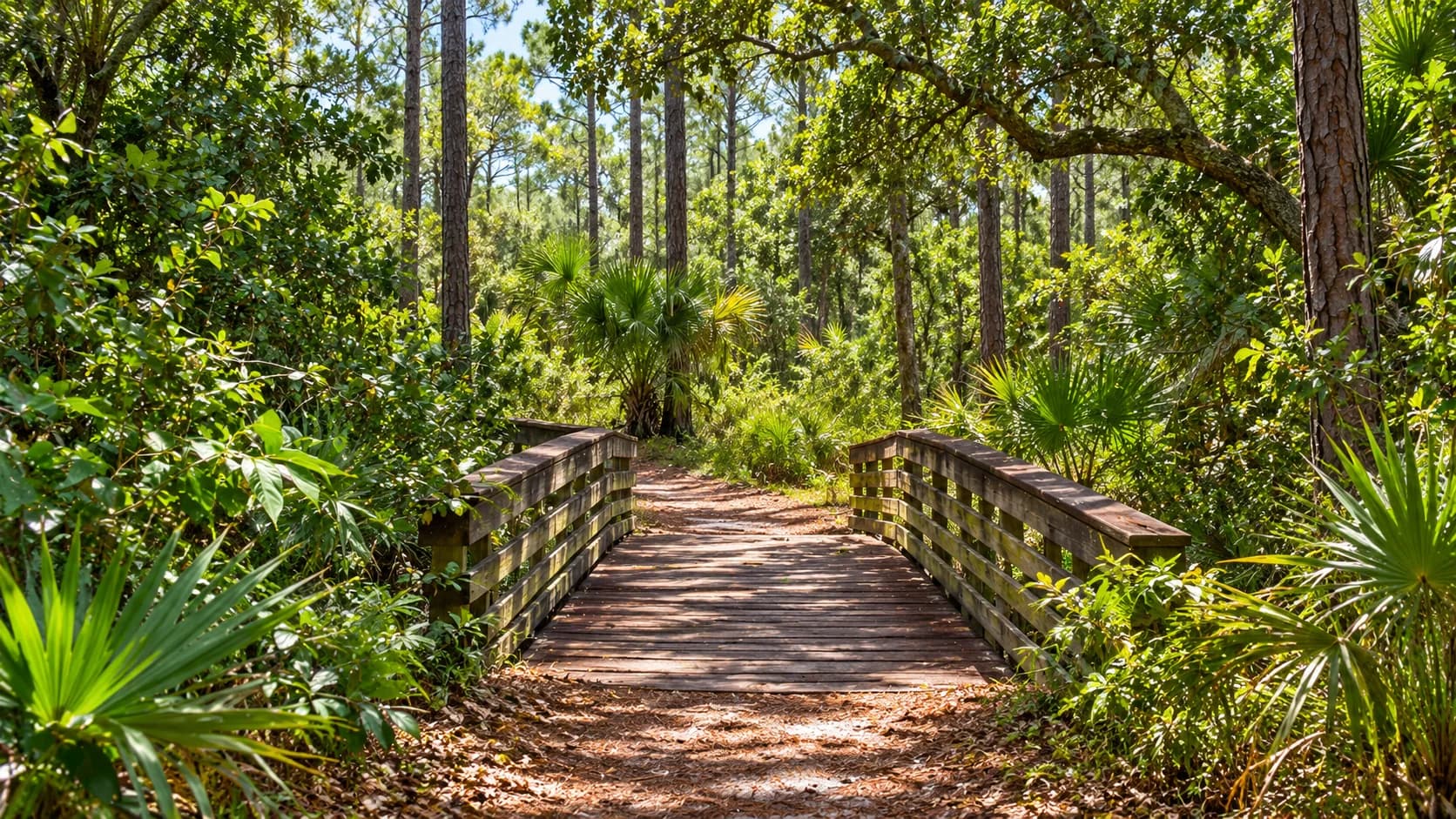
Halpatiokee can be a very different outing depending on where you go. Near the developed fields, it is a busy Martin County recreation park. Beyond them, a much larger wetland preserve follows the South Fork of the St. Lucie River. Arriving with a vague plan to 'walk the park' can leave you on the wrong side of that divide.
Start by deciding whether you want a family sports stop, a shaded nature walk, a mountain-bike ride, or time near the river. Martin County describes about 65 acres of active recreation and roughly 500 acres of preserve, with approximately four miles of river frontage. Those numbers explain the scale; they do not mean every stretch of river is an easy waterfront promenade.
Related reads
Keep going without starting from scratch.
Quick list
Pick the visit that fits
- Short family stop: use the developed recreation area and its current amenities map.
- Nature walk: choose a signed hiking route and leave time to turn around.
- Bike ride: follow the designated mountain-bike network and yield rules.
- River outing: verify the launch and water conditions before carrying a boat.
The developed park and preserve ask for different plans
The developed side has ball fields, courts, open play space, and the sort of activity that can make a weekend parking lot feel full. It works well when the goal is an easy meet-up or a place for children to move. The preserve side is less managed in feel, with trails through woods and wetlands. Both belong to Halpatiokee; neither tells the whole story.
Martin County's official park listing is the best starting point for current facilities and hours. Check it before promising a specific court, rental, or event space to a group. If you are coming for quiet, avoid assuming that a pin dropped at the main entrance will put you straight onto a secluded trail. Read the trail map and find the designated start for the route you want.
For a first walk, choose a modest loop
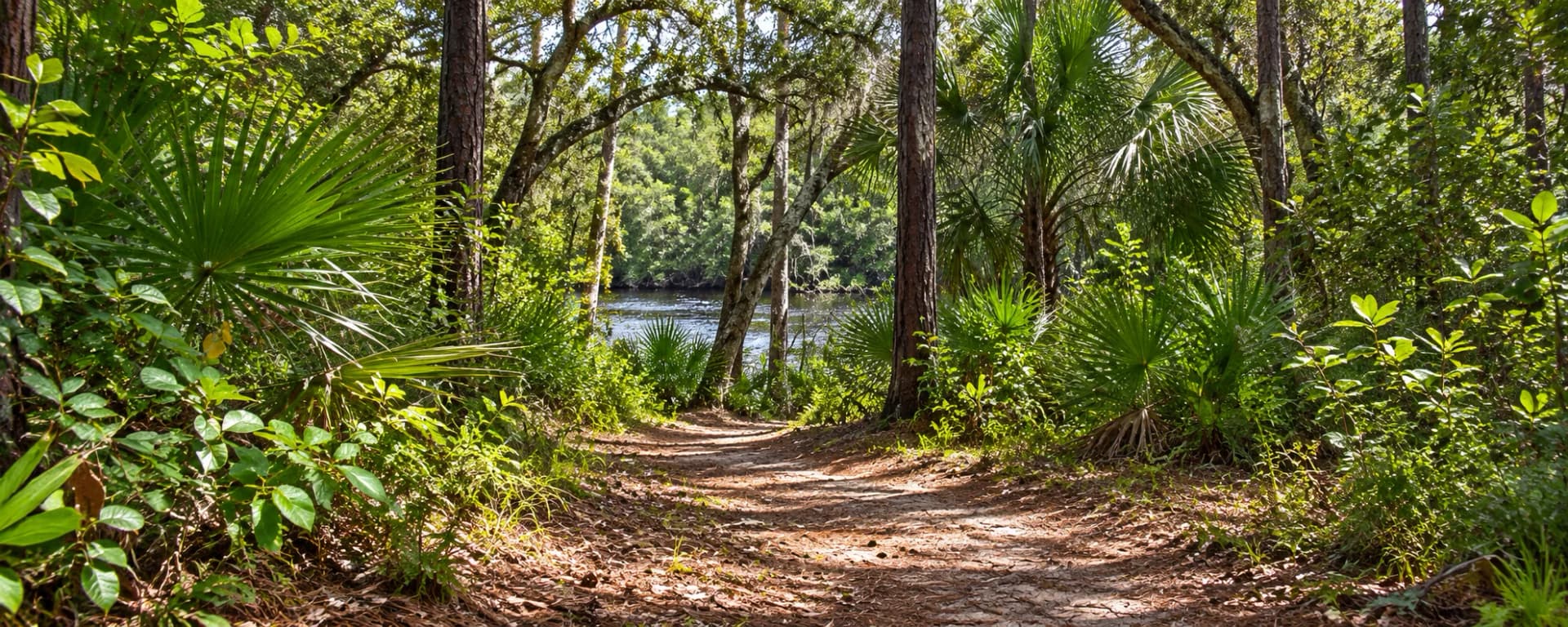
The preserve's appeal is its transition from upland shade toward the South Fork. Trees soften the light, and low ground can feel damp after rain. A trail that seems straightforward on a dry morning can become slow in wet conditions. Bring closed shoes, drinking water, and a map you can use without a cell signal. Let the posted signs, not an old online track, settle any question about an open route.
A first visit does not need to cover the park's full trail mileage. Pick a signed out-and-back or manageable loop, note the time you begin, and turn back before heat or weather becomes the main event. Watch for cyclists at shared crossings and give wildlife room. The park is a better place to notice river-edge habitat than to chase a distance goal, especially if you are walking with children or someone new to Florida trails.
Local tip
Use the article for evergreen ideas and the newsletter for what is happening right now.
That combination gives you the best shot at finding something that fits the season, your schedule, and what is actually open or active this week.
Mountain biking has its own rhythm
Halpatiokee is a local mountain-biking destination, but its trails are not interchangeable with a paved family path. Martin County's visitor information describes designated bike routes and asks riders to use the proper trails. Confirm the latest map and any closures before bringing a bike. Sand, roots, wet patches, and turns can change the difficulty quickly; choose a route for the least experienced rider in the group.
If you are walking, stay alert where routes cross. If you are riding, slow near trailheads and yield as posted. A helmet, water, and a repair plan matter more than a promise of a scenic photo stop. Avoid riding muddy trails when conditions would damage them. Local volunteers and park staff maintain these routes, and a closed segment may be protecting the trail after heavy rain rather than denying access permanently.
The South Fork is worth slowing down for
The park's long South Fork boundary makes the river central to its identity. It does not give every visitor an uninterrupted view from a flat walkway. Look for the signed river access appropriate to your activity, and do not cut through vegetation to create a view. Birdlife and changing light can make a short pause more satisfying than an attempt to reach every bend of shoreline.
Paddlers should check Martin County's current launch information, weather, tide, and recent rainfall. A calm inland-looking river can still have wind and boat traffic, and a launch that is convenient for one craft may be awkward for another. Do not use a picnic outing as a reason to improvise a water trip. If the goal is simply to see the South Fork, a land-based visit gives you that introduction without boat logistics.
Plan the practical details before you go
For a mixed-age group, the active side offers a simple base. Have a specific meeting spot and check whether a tournament or park event is scheduled. The preserve may offer welcome shade, but it is not an air-conditioned break from a hot afternoon. Bring water even for a short walk, and check restroom locations near your chosen start rather than assuming they follow you into the trails.
Martin County also lists a primitive camping option at Halpatiokee. Treat that as a reservation question, not an invitation to pitch a tent after a day hike. Verify rules and availability directly. Dogs, bikes, and organized sports may have different rules in different parts of the park; the posted signs and current county page should guide the day. Keep pets leashed where required and do not leave them in a parked car.
A good first visit
Begin on the developed side to orient yourself, then walk one signed nature route in the cooler part of the day. Pause where the vegetation opens toward the river, and return with time to spare. If you brought children, finish with the active recreation area rather than trying to stretch the hike to fill an afternoon. Bikers can make the trail ride the main event and use the developed area for a break afterward.
Before leaving home, check the county listing for hours, closures, facility changes, and an updated map. Halpatiokee is big enough to reward several separate visits. The best first one gives you a clear sense of which part of the park you want to come back for, without mistaking its acreage for a requirement to see it all in one trip.
FAQ
Common questions
Is Halpatiokee only a sports park?
No. Martin County describes both a developed recreation area and a much larger wetland preserve along the South Fork of the St. Lucie River.
Can I bike every trail?
Use the current park map and signs. Bike routes and shared crossings have specific rules; a walking route should not be assumed to permit bikes.
Can I camp there?
Martin County lists primitive camping. Confirm reservations, rules, and availability with the county before planning an overnight stay.
Sources
Reference links
Written by
Derek Brumby
We publish Treasure Coast guides for residents, newcomers, and weekend planners. Our goal is to combine local context, linked source material, and ongoing page updates so a reader can act on the guide instead of just skim it.
Derek Brumby is the sole author and editor. On The Treasure Coast is owned and published by Brumby LLC.
Research and updates
Last verified September 30, 2026
This guide was written and edited by Derek Brumby using linked local and official sources, then reviewed for Treasure Coast planning context.