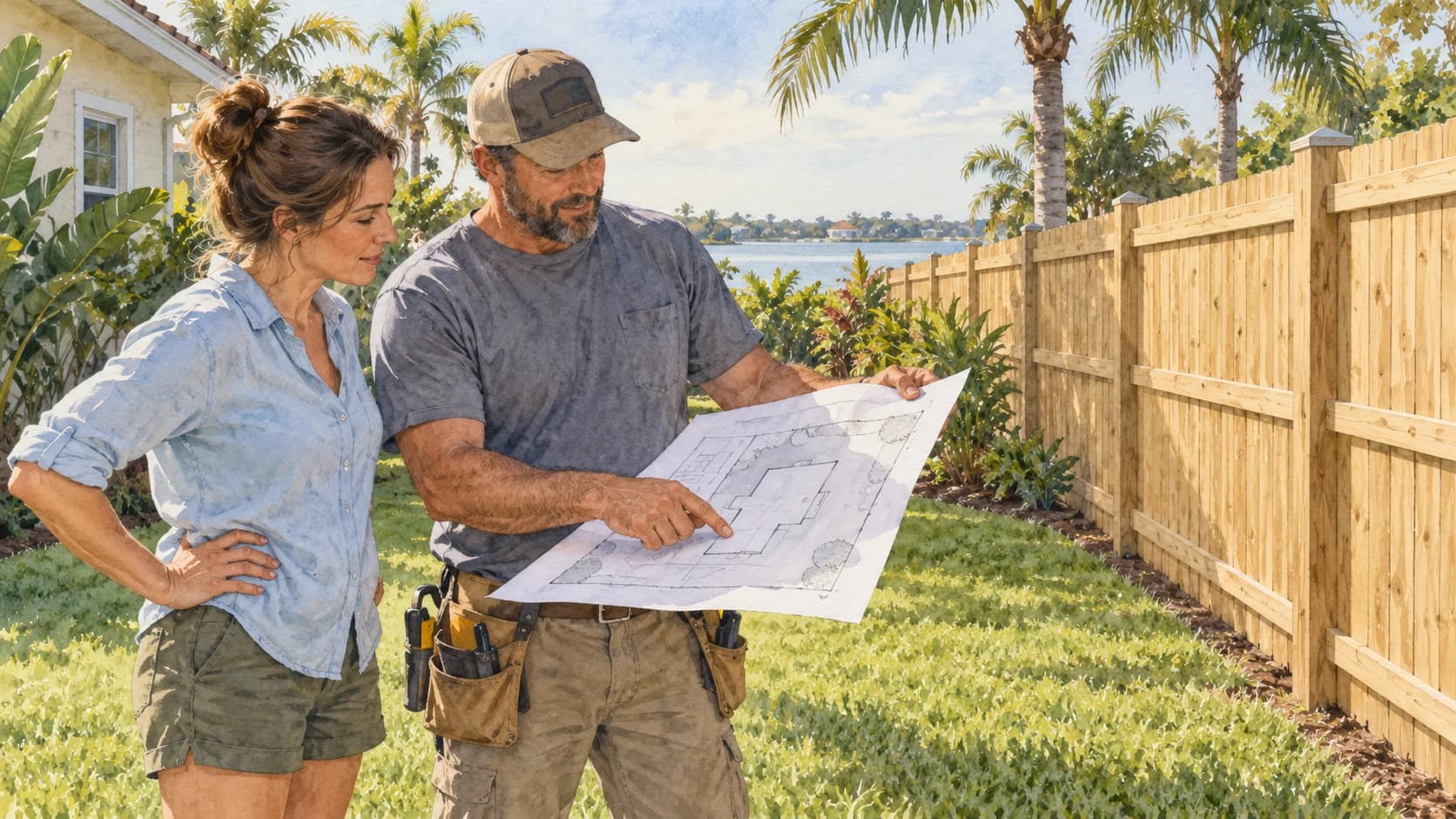
Yes: before installing a new residential fence in Port St. Lucie, use the city’s fence zoning-permit process. The Building Department publishes a dedicated application and checklist for that purpose. Choosing a common material or hiring an installer does not settle the proposed location, height, easements or corner-lot restrictions. Start with the property information and city requirements before ordering a fence for the whole yard.
This guide concerns property within the City of Port St. Lucie. A Port St. Lucie mailing address alone does not establish permitting jurisdiction. Confirm the parcel and responsible department if the boundary is unclear. The workflow below uses the city’s current application, online-service information and inspection instructions checked September 30, 2026. For repairs, replacement in an existing location or an unusual project, ask the department which approvals apply before starting.
Related reads
Keep going without starting from scratch.
Quick list
The question this guide answers
- For a new residential fence within the city, use its fence zoning-permit process. Confirm any repair, replacement or unusual situation with the Building Department before work begins.
Establish the property and scope first
The Building Department’s permit page lists the fence permit under zoning. Contact permitting at 772-871-5132 or Permitting@cityofpsl.com if you need to clarify the project. Give staff the address and parcel information, the proposed material and height, and whether the fence is new, replacing an existing installation or connected with a pool. Those details are more useful than asking whether “a fence” generally needs paperwork.
Decide who will obtain the permit and follow it through completion. Put that responsibility into your agreement with an installer, along with responsibility for corrections and inspections. A quotation that includes materials and labor may or may not include permitting. Ask for the issued permit information when approval is obtained rather than accepting a verbal statement that the application has been submitted. Submission, approval and a completed inspection are separate stages.
Draw the fence on the actual property information
The city’s current fence checklist calls for a property survey or accessory-use map showing the proposed location. The city’s GIS tools page links a fence diagram tool intended to help prepare that layout. Use the correct parcel and include the proposed fence line and gates clearly enough for review. Do not treat an approximate aerial image or a neighbor’s fence as a professional determination of a disputed boundary.
Gather the information before finalizing a material order. Locate the dwelling, street frontage and any easement shown on the property documents, then ask the city about the intended line. A corner lot can have more than one street-facing edge, and a rear yard can contain a drainage or utility easement. These differences are why a universal instruction such as “put it directly on the property line” is not adequate. If a boundary remains uncertain, resolve it with appropriate survey help before posts are placed.
Local tip
Use the article for evergreen ideas and the newsletter for what is happening right now.
That combination gives you the best shot at finding something that fits the season, your schedule, and what is actually open or active this week.
Use the current application and signatures
Download the fence packet from the live city permit page each time you begin a project. It asks for owner and installer information, the material, height, valuation and corner-lot status, with signed and notarized application fields. Complete the applicable fields and provide the requested property documentation. For homeowner-builder applications, the checklist identifies proof of ownership and the homeowner-builder affidavit. Ask permitting about any field that does not fit your project rather than supplying invented information to make a form look complete.
The checklist also calls for a recorded Notice of Commencement for work valued at $5,000 or more, to be submitted before the first inspection is scheduled. Confirm the project value and recording requirements with the department. Keep the application, approved layout, issued permit and recorded documents together so the person scheduling an inspection can find them. The blank fee field in the application is not a published flat price for every fence; obtain the applicable fee from the city for the actual project.
Easements, street edges and a pool barrier need review
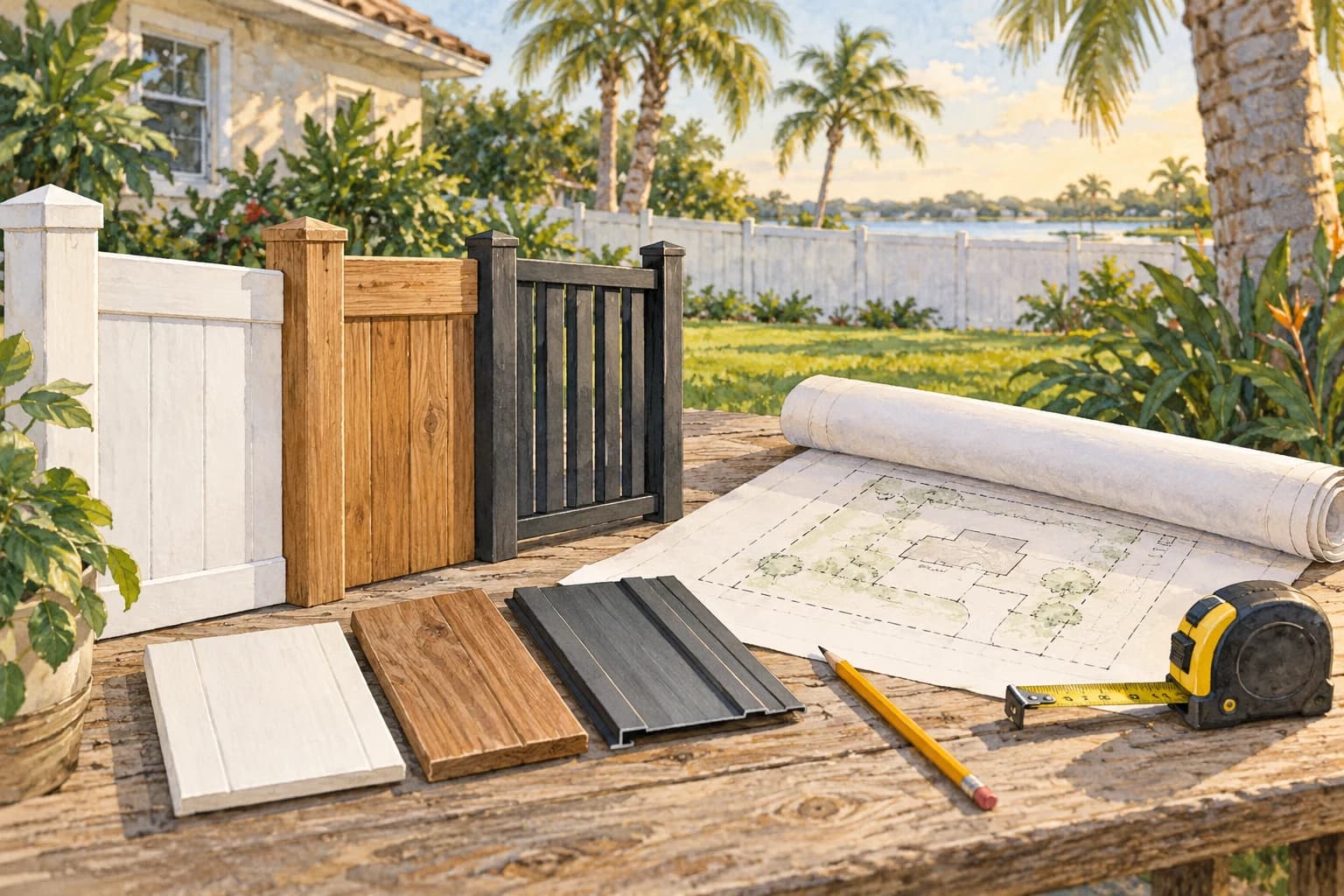
The fence packet references city fence, setback and easement provisions. It explains that unapproved improvements cannot obstruct city-owned easements and that an authorized encroachment can still be subject to removal requirements. The fence ordinance included in the city’s packet resource illustrates the difference between the rear-yard enclosure and street-facing placement. Use the current code and the city’s review for your lot; an illustration does not decide every corner-lot or easement case.
If the fence will serve as a pool safety barrier, say so at the beginning. The checklist directs submission with the pool permit when the barrier is being installed during pool construction. An ordinary yard-fence design should not be assumed to satisfy pool-barrier requirements. Ask about the complete barrier and gate arrangement, not just the panel height. Keep the proposed layout coordinated with the pool permit and obtain the required approval before relying on it as the safety enclosure.
Contractor applications and homeowner applications differ
The city’s Building Online Services page provides contractor permitting, permit-status and inspection links. Its current instructions say homeowner-builder permits must be applied for in person. The general permit page describes online applications for registered state-licensed contractors. Choose the route that applies to the applicant; having an online account or finding a document-upload screen is not evidence that a homeowner application may be submitted through any portal.
Before installation, confirm that the permit has been issued and review the approved documents with the installer. Also check any separate HOA or architectural-review requirement affecting your property. An association approval does not replace city approval, and city approval does not settle the association’s material or appearance rules. Obtain both when applicable before spending money on the final design. Keep copies with the contract so an approved plan, a later amendment and an informal conversation are not confused.
Schedule inspection and verify completion
The city’s inspection page allows scheduling with the permit number and PIN and explains access requirements. It calls for the permit card and applicable approved documents at the site, with an owner or representative age 18 or older available to grant access. Follow the instructions for the inspection types required on the issued permit. If you are uncertain whether an inspection must occur before a particular stage, ask before the installer covers or completes that work.
After the inspection, check the recorded result and resolve any correction request. Do not equate an inspector’s visit or a finished-looking fence with a completed permit. Use the city’s status service to confirm the required approvals and keep that record for the property. A practical completion file contains the issued permit, approved layout, installer agreement, applicable association approval and inspection outcome. That makes future maintenance or a property sale easier to document without relying on someone’s recollection of the original project.
FAQ
Common questions
Do you need a permit to put up a fence in Port St. Lucie?
For a new residential fence within the city, use its fence zoning-permit process. Confirm any repair, replacement or unusual situation with the Building Department before work begins.
Can a homeowner apply for the fence permit online?
The city currently says homeowner-builder permits require an in-person application. Registered contractors have an online permitting route. Confirm the correct applicant and process with permitting.
Does HOA approval replace the city fence permit?
No. Treat association review and city permitting as separate requirements when both apply. Verify the approved material, location and design before installation.
Sources
Reference links
- City of Port St. Lucie: permit applications and applicant routes
- City of Port St. Lucie: current fence application and checklist
- City of Port St. Lucie: GIS and fence diagram tool
- City of Port St. Lucie: fence ordinance packet resource
- City of Port St. Lucie: building online services
- City of Port St. Lucie: inspection scheduling and site requirements
Written by
Derek Brumby
We publish Treasure Coast guides for residents, newcomers, and weekend planners. Our goal is to combine local context, linked source material, and ongoing page updates so a reader can act on the guide instead of just skim it.
Derek Brumby is the sole author and editor. On The Treasure Coast is owned and published by Brumby LLC.
Research and updates
Last verified September 30, 2026
This guide was written and edited by Derek Brumby using linked local and official sources, then reviewed for Treasure Coast planning context.