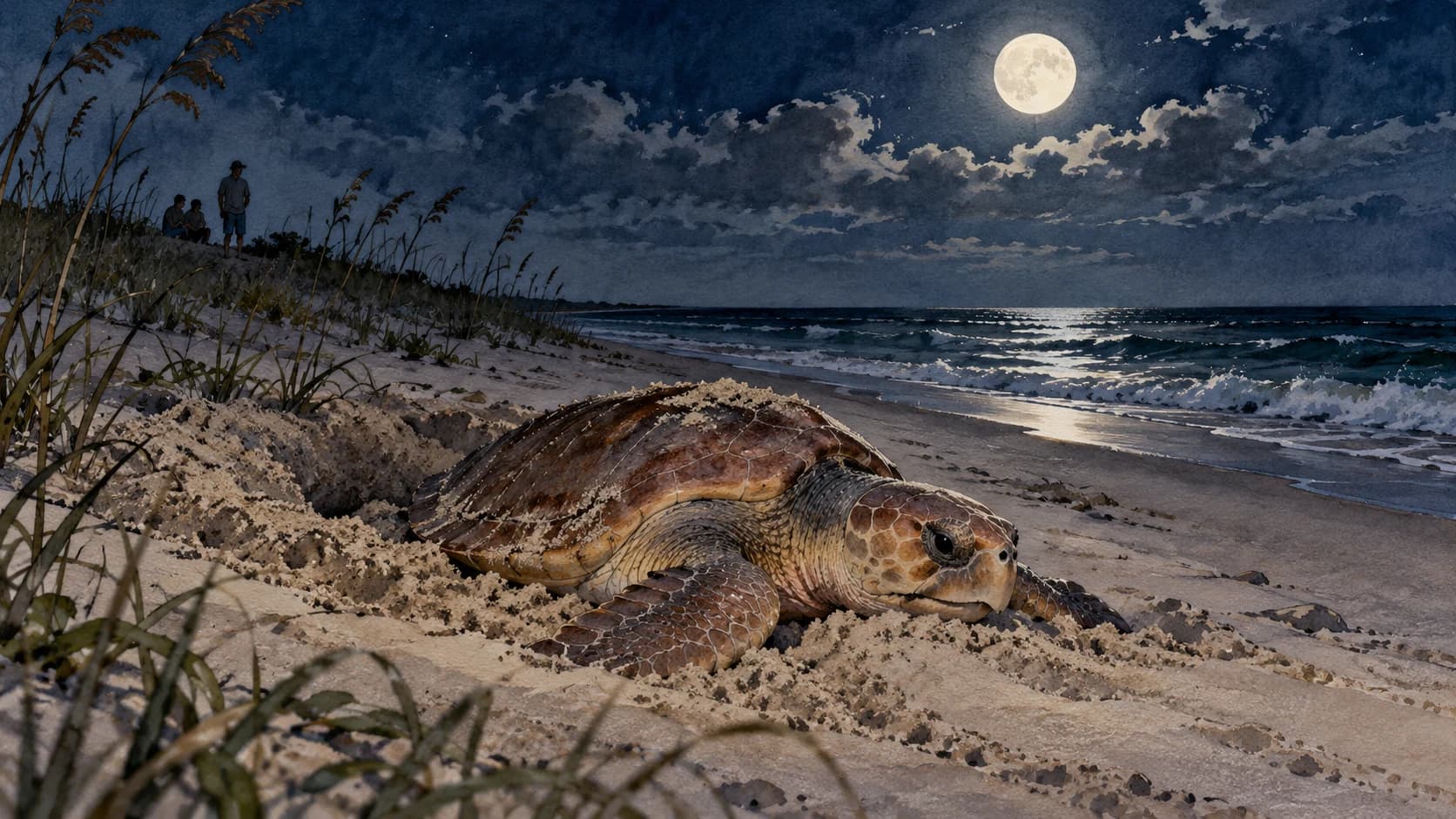
For a guided nesting-turtle walk, June and July are the most practical months to plan around on the Treasure Coast. The local programs below concentrate their public walks in those months. That answers a different question from when turtle nests or hatchlings may be present, or when you can visit a rehabilitation facility. Florida’s wider nesting activity varies by species and coast, and a center with resident turtles can offer daytime viewing outside the night-walk season.
As of September 30, 2026, the listed 2026 June and July walks have passed. Use the operators’ pages to watch for their next season’s announcements; do not book a summer 2027 trip on the assumption that last year’s dates, prices or eligibility will repeat. A permitted walk offers a chance to observe a wild nesting turtle under a guide’s direction, and a sighting is never guaranteed.
Related reads
Keep going without starting from scratch.
Quick list
The question this guide answers
- For a guided nesting walk on the Treasure Coast, June and July are the practical booking months used by these local operators. Daytime facilities and other permitted activities have different schedules; no month guarantees a wild sighting.
Choose the kind of turtle experience you want
FWC’s sea turtle viewing directory distinguishes permitted turtle walks, hatchling releases, nest hatch-success evaluations and facilities that house or rehabilitate turtles. These are different programs with different timing and access. A night walk generally begins with education away from the beach, then proceeds to a nesting loggerhead if the permitted team finds an appropriate opportunity. A public nest evaluation is not an invitation for visitors to dig into a nest themselves.
June and July are useful planning months because the three local operators below publish walks in that window. Florida’s nesting and hatching activity extends beyond those booking dates; FWC describes hatchlings emerging through summer and early fall. If you are visiting in September, seek a current daytime program or authorized event rather than assuming an ordinary beach walk can substitute for a guided nesting experience. Decide whether your goal is to learn about turtles, see a resident animal or attend a possible wild nesting observation before comparing tickets.
Stuart: Florida Oceanographic’s nighttime program
Florida Oceanographic’s published July 2026 walk began at its Coastal Center, 890 NE Ocean Boulevard, Stuart. That event listed a $35 participant fee and an age minimum of ten, with an adult guardian required for anyone under 18. It started at 9 p.m., with arrival requested by 8:45 p.m. These are the terms of a completed 2026 program, useful for understanding the format; a future booking must be checked against its own event listing.
The program required participants to manage up to a mile of soft or wet sand, plus dune boardwalks and stairs, and provide transport to the nearby beach access. It prohibited personal lights, phones and cameras on the beach. The operator distinguished a night without a turtle, which did not earn a refund, from an operator cancellation, which did. When a future date opens, read its physical requirements and cancellation terms before paying. A family with a younger child or someone who cannot manage sand should look at daytime viewing instead of assuming a reserved place changes the walk’s requirements.
Local tip
Use the article for evergreen ideas and the newsletter for what is happening right now.
That combination gives you the best shot at finding something that fits the season, your schedule, and what is actually open or active this week.
Hobe Sound: a guided walk beginning at the nature center
Hobe Sound Nature Center’s turtle-walk page describes an FWC-permitted program. Its completed 2026 season ran Thursday and Friday evenings in June and July, excluding July 2 and 3. Registered visitors began with an 8 p.m. presentation at the nature center and then gathered at Hobe Sound Public Beach. The page listed a nonrefundable $25 registration fee for each participant age five and older.
That earlier start and different age threshold may make this program worth comparing with the Stuart option when the next season is announced. Confirm the new year’s age policy, walking demands, meeting location, transport arrangements and end time together. A late beach program requires more stamina than an afternoon visit to the nature center. Leave the following morning flexible if children are attending, and decide in advance whether your group can remain patient while scouts look for a turtle. The program ends without a sighting if nature does not provide one within the permitted time.
Vero Beach: Coastal Connections
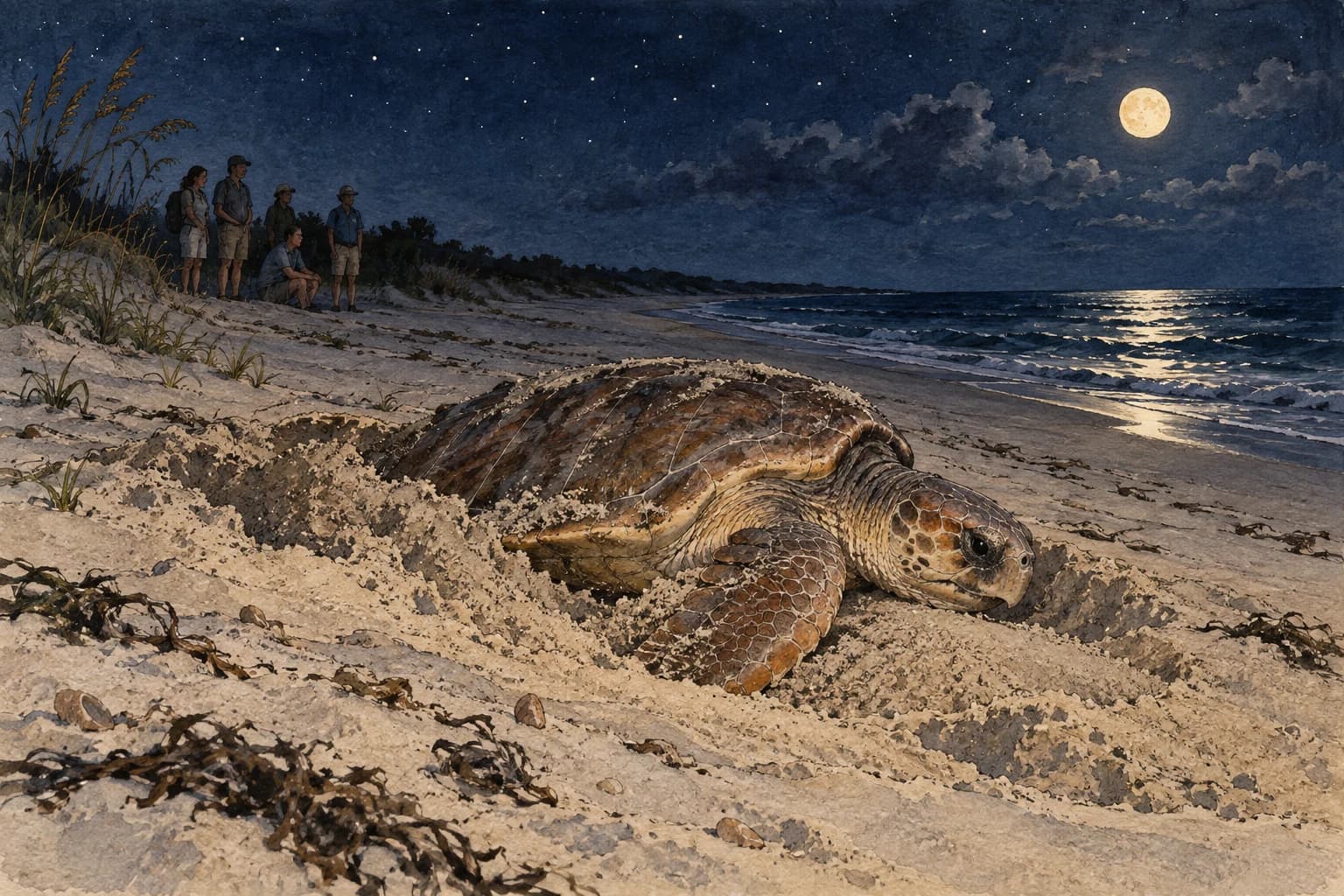
Coastal Connections’ experience page describes turtle walks in June and July on Monday, Wednesday, Friday and Saturday nights, with locations at Ocean Breeze Inn and Grand Harbor Beach Club in Vero Beach. It lists a 9 p.m. to midnight window and a $20 refundable reservation deposit per person. Registration is described as opening May 1 each year. Treat those published arrangements as a reason to check early, not confirmation that every listed night has space or that the next season will use identical terms.
Before booking, ask what makes the deposit refundable and when the refund is processed, and confirm the particular meeting point. The office address is not automatically the meeting location for a beach program. Also check minimum age, walking distance and any accommodations your group needs. FWC’s viewing directory includes Coastal Connections among its permitted viewing organizations, but the exact event instructions still come from the operator. Save the confirmation and use its arrival information on the day so you do not end up at the wrong beach entrance after dark.
Dress for the program and follow the guide
Follow the chosen operator’s instructions about clothing, footwear, insect protection and belongings. For Florida Oceanographic’s 2026 program, dark clothing and closed-toe shoes suitable for wet or sandy conditions were specified, along with a poncho rather than an umbrella. Other programs may have different instructions. Read the confirmation before packing; a camera, light or phone allowed at the classroom may be prohibited on the beach. Darkness is part of the observation setting, so consider whether the experience suits everyone in the group.
FWC’s turtle FAQ explains why quiet, dark beaches matter to nesting turtles and hatchlings. Do not shine lights at animals, cross a marked nest, obstruct a turtle’s path or try to handle eggs or hatchlings. A permitted guide controls the group’s position and timing; remain with that group and follow instructions. If you find an injured turtle or see harassment outside a program, contact FWC at 888-404-3922. Report the situation and location rather than improvising a rescue or moving an animal for a photograph.
Daytime alternatives for younger children or other seasons
FWC’s directory of turtle-housing facilities identifies places with resident or rehabilitating animals. These can serve visitors who cannot attend a late walk or want an educational visit at another time of year. Contact the facility about current animals, visitor access, fees and program times. Rehabilitation work does not guarantee that a particular turtle or treatment area is publicly visible.
Florida Oceanographic’s daily programs currently list a sea turtle program at 11:30 a.m. and 2:30 p.m. Check the day’s schedule and regular admission before leaving. A daytime center visit is also a useful fallback when a walk’s dates, age rules or physical demands do not fit. It gives children time to ask questions and learn about conservation without staying on a dark beach until late at night. Keep snorkeling plans separate: seeing a turtle while swimming is incidental wildlife viewing, with water conditions and wildlife-distance rules of its own.
FAQ
Common questions
What month is best to see sea turtles in Florida?
For a guided nesting walk on the Treasure Coast, June and July are the practical booking months used by these local operators. Daytime facilities and other permitted activities have different schedules; no month guarantees a wild sighting.
Can children attend a Treasure Coast turtle walk?
Age rules differ. Florida Oceanographic’s 2026 walk required ages ten and older, while Hobe Sound’s page listed paid registration from age five. Check the exact future event’s age and walking requirements before reserving.
Are sea turtle walks running in September?
The local walk programs described here publish June and July seasons. Their 2026 dates have ended. Check for a current daytime program or another authorized event rather than assuming a night walk is available in September.
Sources
Reference links
- FWC: permitted sea turtle viewing opportunities
- FWC: hatchling timing and artificial lighting
- Florida Oceanographic: completed July 2026 walk and terms
- Hobe Sound Nature Center: guided turtle walks
- Coastal Connections: turtle experiences and booking information
- FWC: sea turtle questions and conservation guidance
- FWC: facilities housing sea turtles
- Florida Oceanographic: daily programs
Written by
Derek Brumby
We publish Treasure Coast guides for residents, newcomers, and weekend planners. Our goal is to combine local context, linked source material, and ongoing page updates so a reader can act on the guide instead of just skim it.
Derek Brumby is the sole author and editor. On The Treasure Coast is owned and published by Brumby LLC.
Research and updates
Last verified September 30, 2026
This guide was written and edited by Derek Brumby using linked local and official sources, then reviewed for Treasure Coast planning context.