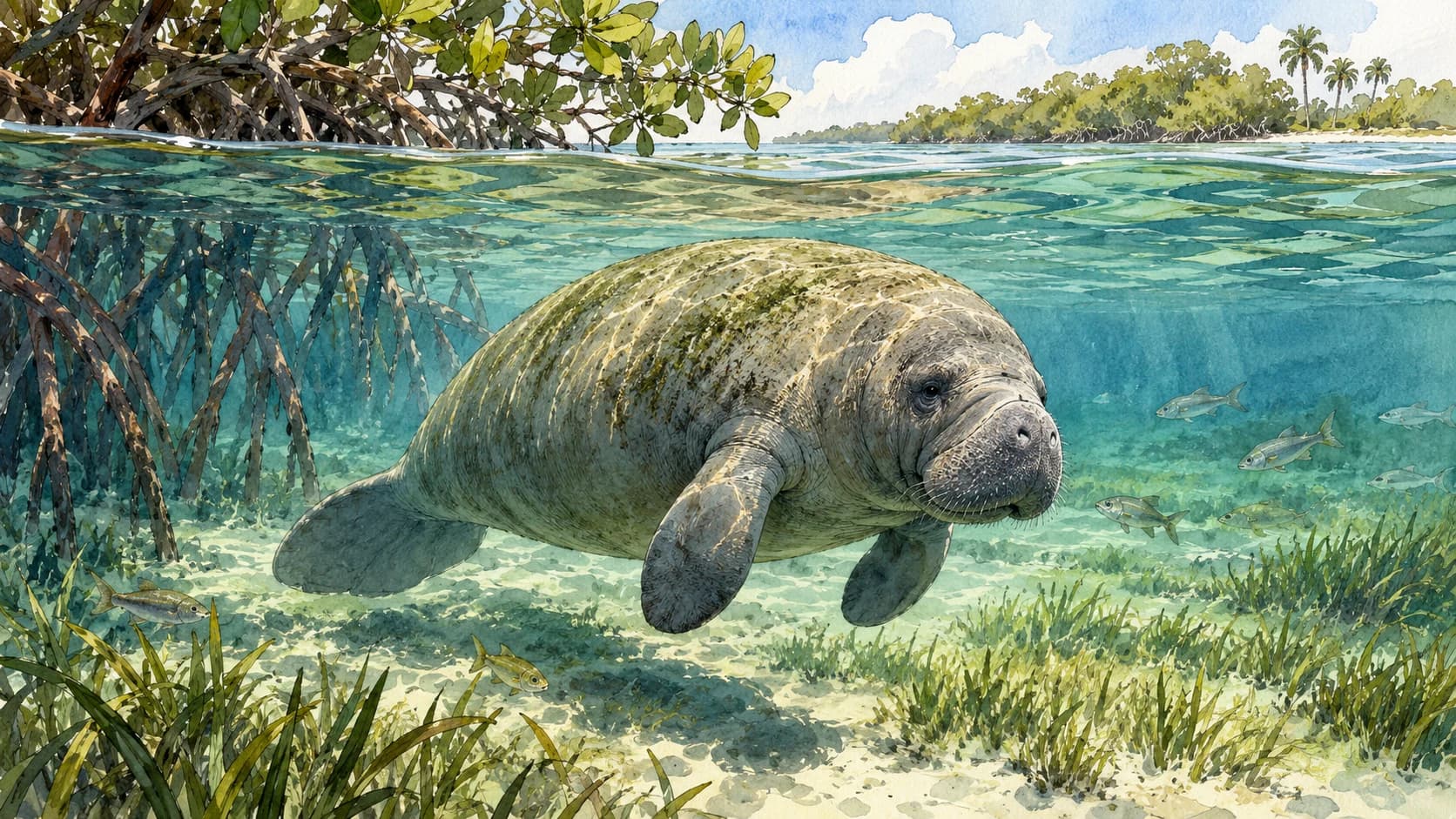
Winter is the best season to plan a Florida manatee-watching trip, especially at a warm-water refuge after colder weather. January and February are reasonable months to choose within that season, but there is no single best month that guarantees a sighting at every site. Water temperature and the place you visit are more useful than a calendar date alone. Florida’s Fish and Wildlife Conservation Commission explains that manatees gather near warm water in winter and disperse more widely during the rest of the year.
On the Treasure Coast, a waterfront observation stop can fit into a Fort Pierce or Vero Beach outing. A dedicated warm-water viewing attraction farther south offers a different kind of visit. The important distinction is between having a pleasant place to look and knowing that wild animals will be there. The access information below was checked September 30, 2026, including a current closure at Fort Pierce’s Manatee Center.
Related reads
Keep going without starting from scratch.
Quick list
The question this guide answers
- Winter offers the strongest seasonal opportunity at warm-water viewing sites. January and February are practical choices, but a cold spell, the chosen site and current animal movement matter more than a promise tied to one month.
Plan around cold weather and the observation site
FWC’s Florida manatee viewing directory explains the seasonal movement: winter draws animals toward springs and power-plant discharge basins, while warmer months spread them through Florida waterways. A warm-water refuge can therefore offer a more concentrated viewing opportunity than an ordinary stretch of lagoon. That does not make every riverfront park a winter gathering site. Choose the location first and ask its staff about recent viewing conditions.
FWC’s tracking research describes manatees seeking warmer habitat when surrounding water drops below about 68 degrees Fahrenheit. Animals also move to feed, so presence at a viewing site can change through the day. For a trip built mainly around manatees, leave yourself flexibility within a winter visit and check the operator’s updates before driving. For a short local stop, choose somewhere you would also enjoy for the water view or educational exhibits if no manatee appears.
Fort Pierce: check the Manatee Center’s closure first
The Manatee Center’s visit page currently says closed for the season during September 2026. Its regular listed hours are Tuesday through Saturday, 10 a.m. to 3 p.m., with Sunday and Monday closed. Regular admission is $3 per person, with children five and younger free with an adult. Those standard details are useful for planning after the closure, but they are not confirmation of a particular reopening date. Call 772-429-6266 or check the center’s current update before making a dedicated visit.
The center is at 480 N. Indian River Drive, beside Moore’s Creek and the Indian River Lagoon. FWC lists occasional winter manatee sightings here. The facility’s educational purpose makes it useful even when wild animals are absent, once normal visiting resumes. Combine it with a downtown Fort Pierce outing rather than spending the whole day waiting for a sighting. If the building is closed, respect any barriers or campus restrictions; the closure notice does not establish that every outdoor area remains accessible.
Local tip
Use the article for evergreen ideas and the newsletter for what is happening right now.
That combination gives you the best shot at finding something that fits the season, your schedule, and what is actually open or active this week.
Vero Beach: a lagoon-side stop with realistic expectations
For a Vero Beach waterfront stop, Royal Palm Pointe Park is at 2 Royal Palm Pointe. The county tourism listing identifies river views, a fishing dock, picnic tables and restrooms. Those amenities make it a practical place to pause at the lagoon and look for wildlife while enjoying the setting. The listing does not designate it as a warm-water manatee aggregation site, so it should not be presented as an equivalent to a power-plant viewing attraction.
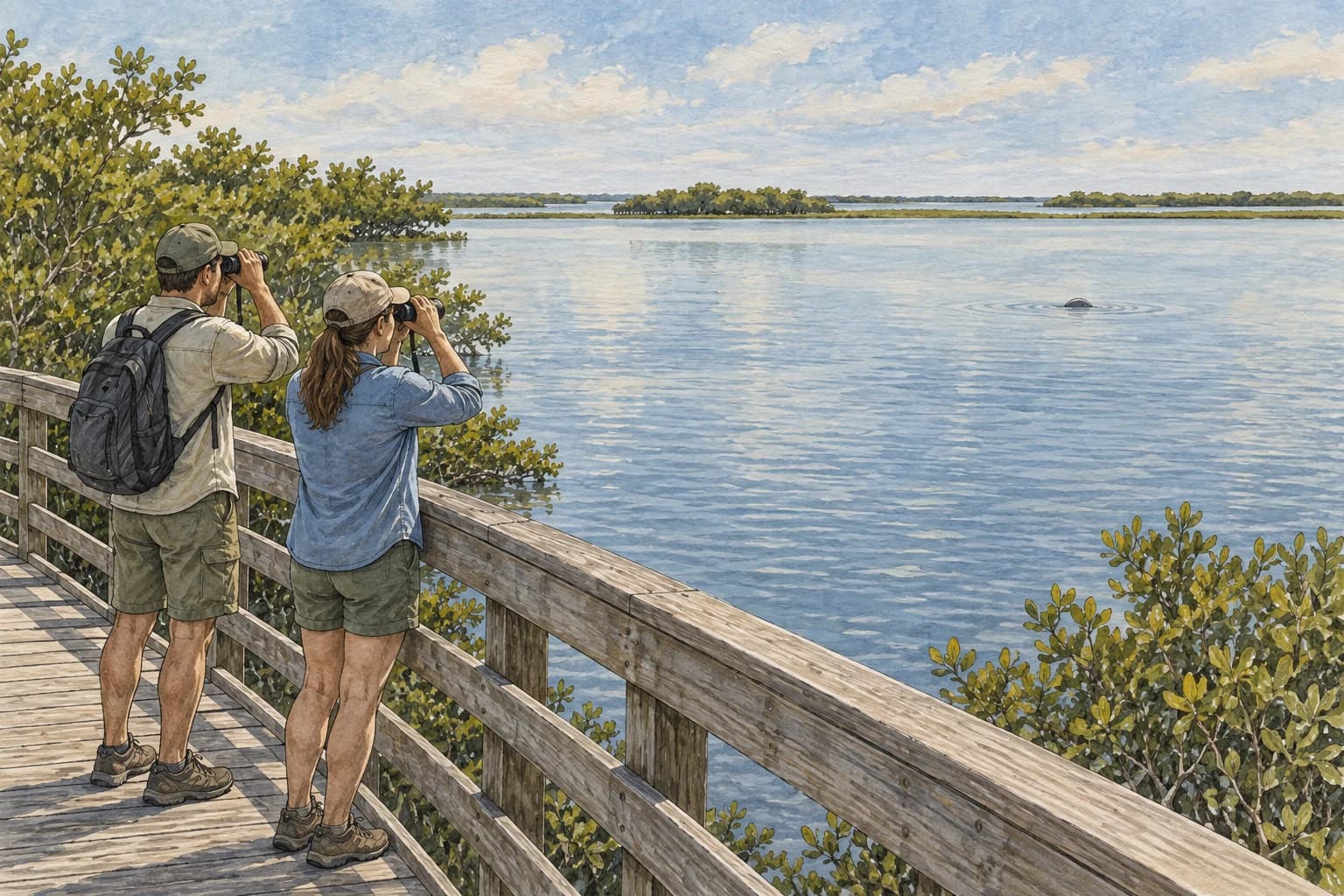
Approach a Vero lagoon stop as a chance to observe whatever is present. Look slowly across the water from a permitted public area and use binoculars if you have them. A fish, wave or floating object can resemble an animal at first glance; wait for a clear view rather than announcing every disturbance as a manatee. If seeing a manatee is essential to the trip, ask a dedicated viewing facility for recent information or choose a longer winter excursion. The ordinary park visit can remain worthwhile without that particular sighting.
A winter alternative south of the Treasure Coast
Manatee Lagoon’s visitor page describes a free educational attraction beside the FPL plant in West Palm Beach. Its published manatee season is November 15 through March 31. The observation area faces warm-water outflows where animals may gather on cold winter days. It is at 6000 N. Flagler Drive, south of the Treasure Coast, so include the drive in your decision rather than treating it as a Fort Pierce or Vero Beach attraction.
The operator lists free admission and parking, hours of 9 a.m. to 4 p.m., daily opening during manatee season, and Monday closures from April 1 through November 14. Check holiday arrangements and deck notices before departure: its visitor page warns that upstairs space and the observation deck can close for events or other reasons. The center explicitly says sightings are not guaranteed. The exhibits give you something useful to visit when animals are absent, which is a better backup than driving solely to stand at a closed or empty viewing area.
Observe passively and leave the animals room
FWC’s viewing guidelines call for passive observation. Do not feed a manatee, offer water, touch it or follow it for a closer view. Keep its route clear and avoid separating animals, especially a mother and calf. From shore, binoculars or a camera’s zoom let you see more without entering the water. Teach children to watch quietly from the designated viewing area and keep everyone clear of the water’s edge.
If you are already paddling and encounter a manatee, FWC’s guidance for paddlers says that a response to your presence means you are too close. Give the animal more space and limit viewing time. Do not turn this local observation guide into an invitation to swim beside wildlife. In-water experiences advertised elsewhere in Florida have site-specific restrictions, and a tour offered at one refuge does not authorize approaching animals in the Indian River Lagoon. Report an injured or distressed manatee through FWC’s Wildlife Alert line, 888-404-3922, rather than trying to handle it.
FAQ
Common questions
What is the best month to see manatees in Florida?
Winter offers the strongest seasonal opportunity at warm-water viewing sites. January and February are practical choices, but a cold spell, the chosen site and current animal movement matter more than a promise tied to one month.
Can you see manatees in Fort Pierce?
FWC lists occasional winter sightings near Moore’s Creek and the Indian River Lagoon at the Manatee Center. The center’s current visit page lists a September 2026 closure, so confirm reopening and access before going.
Are manatee sightings guaranteed in Vero Beach?
No. A lagoonfront park such as Royal Palm Pointe offers a public place to look at the water, but it is not listed as a dedicated warm-water gathering attraction. Plan a park outing that is enjoyable even without a sighting.
Sources
Reference links
- FWC: where to see manatees in Florida
- FWC: what tracking reveals about seasonal movement
- Fort Pierce Manatee Center: hours, admission and current closure
- Visit Indian River County: Royal Palm Pointe Park
- Manatee Lagoon: current visitor arrangements
- FWC: manatee viewing guidelines
- FWC: manatee guidance for paddlers
Written by
Derek Brumby
We publish Treasure Coast guides for residents, newcomers, and weekend planners. Our goal is to combine local context, linked source material, and ongoing page updates so a reader can act on the guide instead of just skim it.
Derek Brumby is the sole author and editor. On The Treasure Coast is owned and published by Brumby LLC.
Research and updates
Last verified September 30, 2026
This guide was written and edited by Derek Brumby using linked local and official sources, then reviewed for Treasure Coast planning context.